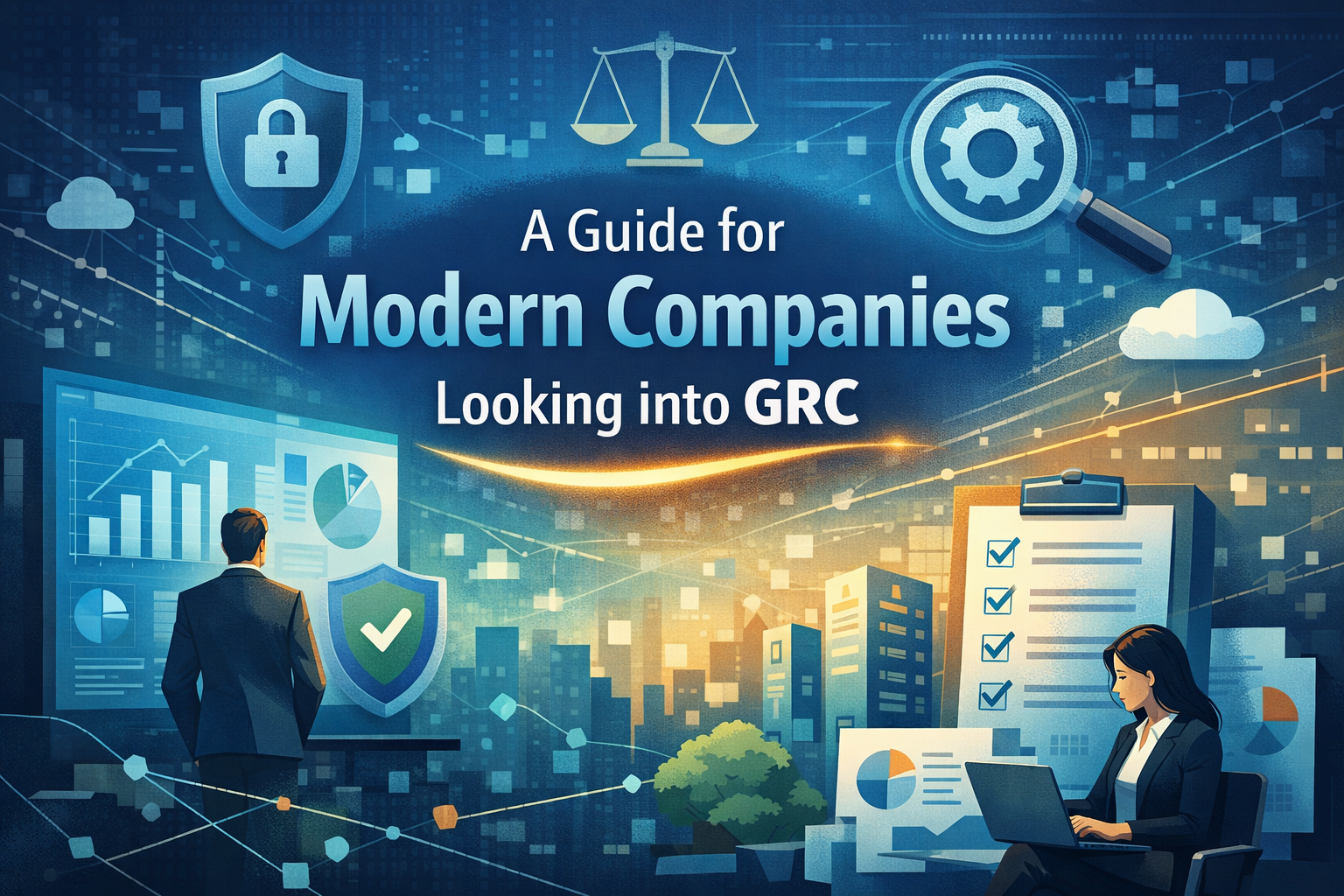
As businesses become more digital, interconnected, and regulated, Governance, Risk & Compliance (GRC) is no longer a concern reserved for large enterprises or highly regulated industries. Modern companies of all sizes are increasingly expected to demonstrate strong governance, proactively manage risk, and maintain consistent compliance. For organizations beginning their GRC journey, understanding what GRC really means and how it fits into everyday operations is the first step.
What GRC Means in Today’s Business Environment
At its core, GRC brings together three disciplines that are often managed separately. Governance defines how decisions are made and who is accountable. Risk management focuses on identifying and mitigating threats that could impact business objectives. Compliance ensures that laws, regulations, and internal policies are followed consistently.
When these areas operate in silos, organizations struggle with blind spots, duplicated effort, and slow responses to change. A unified GRC approach helps align strategy, operations, and oversight, creating a clearer picture of organizational health.
Why GRC Matters for Modern Companies
Today’s companies face a broader range of risks than ever before. Cybersecurity incidents, data privacy obligations, supply chain disruptions, and reputational issues can all escalate quickly. At the same time, regulatory requirements continue to expand across regions and industries.
GRC provides structure in this complexity. It allows leadership teams to understand how risks connect to strategic goals and how compliance requirements affect daily operations. Rather than reacting to issues after they arise, organizations can anticipate challenges and respond with confidence.
For growing businesses, GRC also supports scalability. Investors, partners, and enterprise customers increasingly expect evidence of mature governance and risk controls before committing to long-term relationships.
Getting Started With Governance
Governance is the foundation of any GRC program. For modern companies, this means clearly defining roles, responsibilities, and decision-making processes. Leadership teams should establish oversight structures that align with business strategy and ensure transparency.
Policies and procedures should be practical and accessible, not buried in documentation that employees never read. Technology can help by embedding governance into workflows, approvals, and reporting processes, making accountability part of everyday work.
Building a Practical Risk Management Approach
Risk management does not require complex models to be effective. The goal is to identify the most significant threats to business objectives and understand their potential impact.
Modern organizations benefit from continuous risk assessment rather than periodic reviews. This includes monitoring operational, cyber, financial, and third-party risks in real time where possible. A structured approach to GRC Risk Management helps teams prioritize what matters most, allocate resources effectively, and avoid being overwhelmed by low-impact issues.
Importantly, risk management should inform decision-making. When leaders understand risk trade-offs, they can pursue innovation while maintaining appropriate controls.
Making Compliance Sustainable
Compliance is often perceived as a burden, but it does not have to be. For modern companies, sustainability comes from integrating compliance into daily operations rather than treating it as a standalone activity.
Mapping regulatory requirements to internal controls, automating evidence collection, and maintaining continuous visibility into compliance status reduces manual effort and audit stress. This approach also improves consistency, particularly for companies operating across multiple regions.
GRC as a Strategic Capability
For modern companies looking into GRC, the key is to start with clear objectives, focus on integration rather than silos, and adopt tools and processes that can evolve as the business grows. With the right foundation, GRC becomes an enabler of resilience, confidence, and sustainable growth in an increasingly complex world.