A paved parking lot does more than provide a place to park vehicles. It improves safety, supports property value, and creates a better experience for visitors. Businesses, schools, hospitals, and retail centers rely on smooth surfaces to manage daily traffic. An unpaved or damaged lot can cause dust, mud, and vehicle wear. But a properly paved surface offers structure and order. It also reduces long-term maintenance concerns. Property owners often view paving as a practical investment rather than just an upgrade. The benefits of parking lot paving extend beyond appearance and directly affect daily operations.
Best Advantages of Parking Lot Paving
Below are some of the most amazing benefits of parking lot paving:
Improves Safety for Drivers and Pedestrians
Safety is one of the strongest benefits of paving. A smooth surface reduces trip hazards. It also protects tires and suspension systems from damage. Marked spaces and crosswalks guide traffic clearly. Drivers can see lanes and arrows without confusion. Pedestrians know where to walk.
For example, a medical clinic with painted walkways helps patients move safely from the car to the entrance.
And fewer surface gaps mean fewer risks. Parking lot paving reduces tripping hazards and protects vehicles from damage. It supports visible striping and improves night visibility to lower accident risk.
Strengthens Property Appearance
A paved parking lot gives a clean look. Visitors often judge a property before entering. Fresh asphalt or concrete looks organized. Clear parking lines create order. It sends a message that the property is maintained with care.
Have you ever parked in a lot with broken gravel and uneven ground? The experience feels different.
Appearance benefits include:
- Creates a neat first impression.
- Shows attention to maintenance.
- Highlights entry areas.
- Improves curb appeal.
- Reflects business professionalism.
Increases Property Value
Paving adds functional value to a property. Buyers and tenants look at infrastructure. A well-paved lot shows readiness for use. It reduces the need for immediate upgrades. Over time, proper care extends pavement life.
Then resale potential improves. Investors often consider surface conditions during property evaluation. Parking lot paving adds usable infrastructure. Supports a higher appraisal value. It also attracts tenants and buyers. Reduces future repair concerns and demonstrates long-term care.
Improves Drainage and Water Control
The ground layers become less stable because water creates weakening effects. The correct procedure for paving requires grading work that channels water away from the paved area. The system stops water from accumulating while it protects against soil erosion. The drainage systems collect rainwater and transport it to designated safe discharge points. The water flows into the ground through cracks when proper drainage systems do not exist.
The retail plaza maintains dry conditions after storms because its graded pavement system prevents large puddles from forming.
Why take the chance of causing structural problems when early drainage management exists as a solution?
- The system stops water from accumulating in specific locations.
- The system decreases the speed at which soil erosion occurs.
- The system establishes a protective barrier that safeguards the supporting elements of the building.
- The system keeps the surface area between different parts of the structure at constant height.
- The system makes driving on winter roads safer for all drivers.
Reduces Maintenance Over Time
Paved surfaces require routine care. But they often need fewer frequent repairs compared to loose gravel lots. Sealcoating and crack filling help preserve the surface. Scheduled inspections catch issues early.
And early repairs cost less than full resurfacing.
Maintenance advantages include:
- Easier cleaning and sweeping.
- Simple crack sealing.
- Less dust buildup.
- Longer surface lifespan.
- Predictable maintenance schedule.
- Lower long-term repair costs.
Supports Clear Organization and Traffic Flow
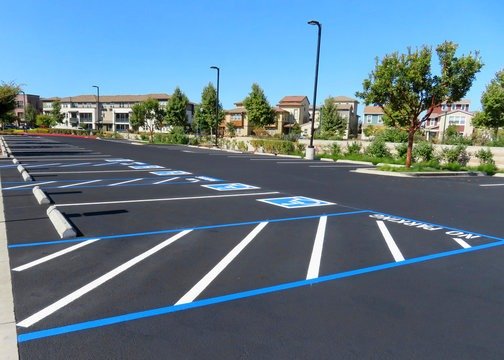
Parking lot paving allows proper layout planning. Marked spaces increase parking capacity. Directional arrows reduce congestion. Accessible spaces can be clearly identified. Traffic flows more smoothly when lines are visible.
For example, a busy grocery store benefits from marked entry and exit lanes during peak hours.
Would drivers park efficiently without guidance?
- Defines parking spaces.
- Improves vehicle flow.
- Reduces congestion.
- Supports accessibility compliance.
- Enhances customer convenience.
Handles Heavy Vehicle Loads
Parking lots must support constant weight. Delivery trucks and service vehicles apply pressure daily. Proper paving includes layered construction. These layers distribute weight evenly. Asphalt and concrete both provide strong support when installed correctly.
And stable pavement prevents sinking or shifting.
Load handling benefits include:
- Supports heavy vehicles.
- Distributes weight evenly.
- Prevents surface sinking.
- Maintains ground stability.
- Offers long service life.
Conclusion
Parking lot paving offers practical and financial benefits for commercial and public properties. It improves safety, strengthens appearance, increases value, and supports proper drainage. Maintenance becomes more manageable, and traffic flow becomes organized. Heavy vehicle loads are handled with stability. Over time, paving protects the structure beneath the surface and enhances daily operations. A properly paved parking lot is not just an upgrade. It is a structured solution that supports safety, efficiency, and long-term property performance.