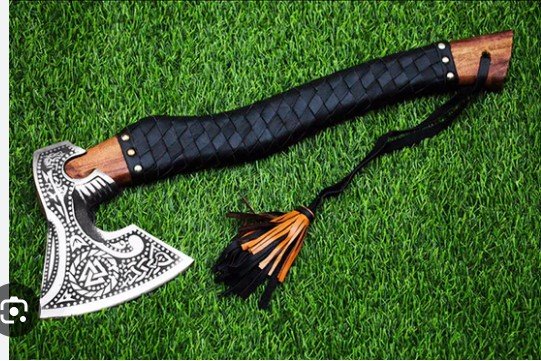
Everyday Tool of the North
Long before it became a weapon, Viking axe was an essential tool in Scandinavian life. It was used to cut timber, build homes, and construct ships. Because it required less iron and craftsmanship than a sword, it was affordable and widely owned. Nearly every free Norseman carried an axe, making it a natural choice when conflict arose.
From Work to Warfare
As Viking raids and battles became more common, axes were gradually adapted for combat. Blacksmiths refined the design, creating thinner, sharper blades and improving balance for faster, more powerful strikes. What began as a woodworking tool evolved into a purpose-built weapon capable of breaking shields and inflicting serious damage.
Specialized Battle Axes
Two notable types emerged during the Viking Age. Norse Axe (Skeggøx) featured an extended lower blade that allowed warriors to hook shields or weapons. Later, the two-handed Dane axe provided greater reach and devastating cutting power, often associated with elite fighters.
Legacy and Symbolism
The axe became more than just a weapon — it symbolized practicality, strength, and readiness. From shaping ships to shaping battles, Viking axe for sale stands as a powerful example of how a simple tool evolved into one of the most effective weapons of its time.