Why does stainless steel appear almost everywhere we look?
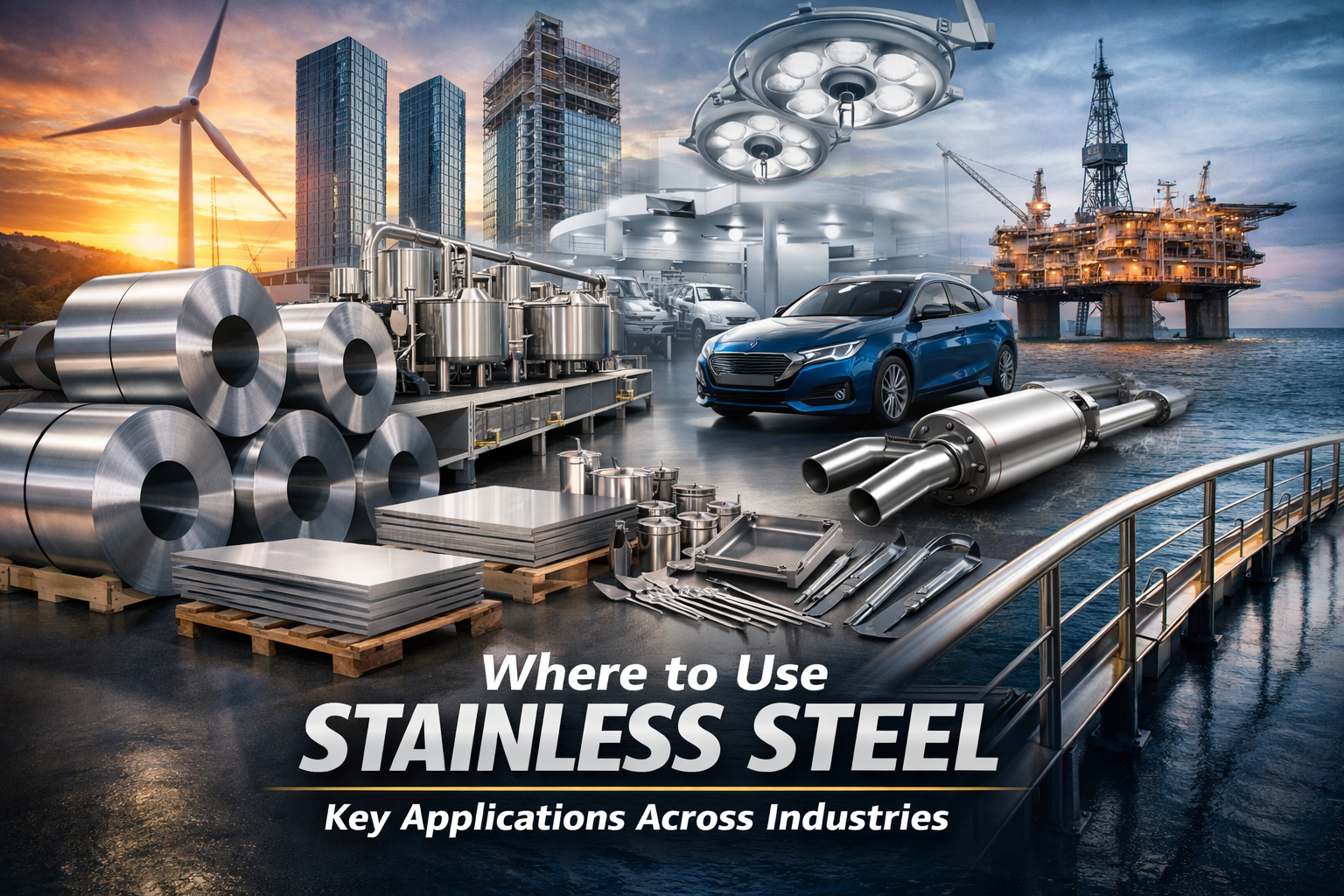
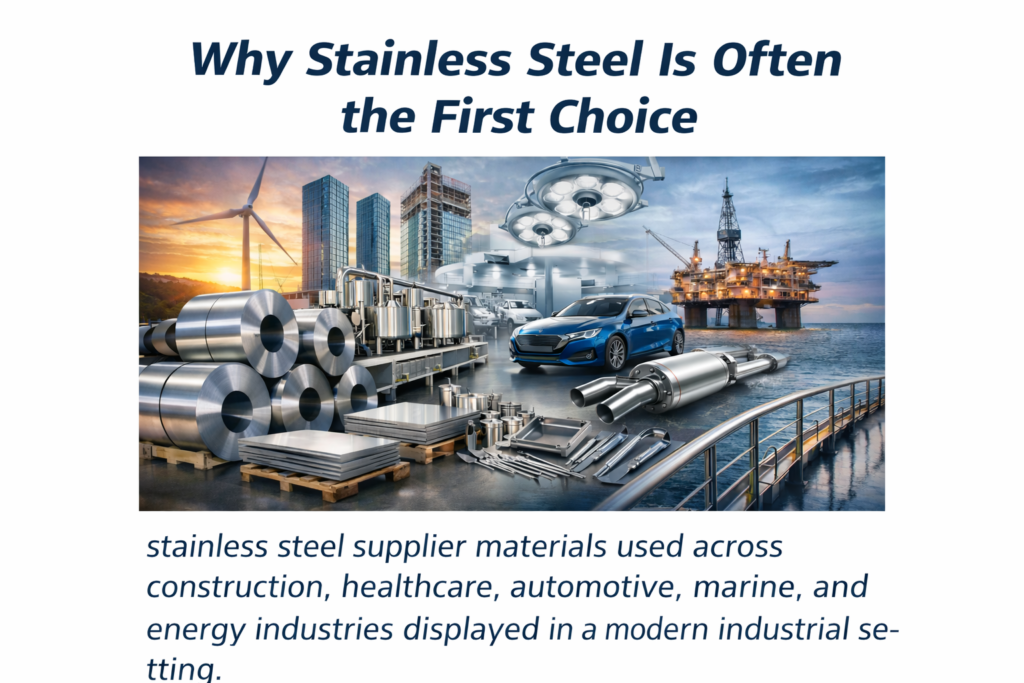
It is in the building we walk in, the food equipment that cooks our food, the hospitals that save our lives, the automobiles we drive and even the ships that journey through the ocean. In industries, decision-makers still prefer stainless steel over other materials, and they have a reason to.
In choosing materials, the wrong material may cause rusting, breakdown, contamination and high cost of repair. The right material will serve for decades with only little maintenance. That is why most people or industry decision-makers go for materials like stainless steel due to its durability. However, procurement specialists, engineers, and facility managers must know the correct grade and usage of stainless steel, and working with an experienced stainless steel supplier is the first step to ensuring access to the right grades and expert guidance for specific industrial needs.
But where exactly should stainless steel be used? And why is it in most cases the more suitable option over carbon steel, aluminum or coated metals?
The guide explains the major industries that depend on stainless steel and the properties that make it a smart long-term investment.
Why Stainless Steel Is Often the First Choice
It is worthwhile to consider the reasons why it is special before considering particular industries.
Strong Protection Against Rust
The stainless steel contains chromium, which is usually at least 10.5 percent by mass. This forms a thin protective layer of chromium oxide on the surface, which prevents rust and corrosion. Although the surface may be scratched, the layer repairs itself when exposed to oxygen. This renders it reliable in wet, moist or salty environments where carbon steel would easily deteriorate.
High Strength and Durability
It has numerous grades which are strong and tough. They are able to handle heavy weight, high pressure and being hit with force without easily breaking. This makes them appropriate for structures, pressure vessels, machinery and transport systems that require reliable performance under pressure.
Easy to Clean and Hygienic
It is smooth and non-porous. Bacteria and dirt do not usually stick easily and the material can be cleaned with disinfectant without any damage. It does not chip, peel or harbor microorganisms as opposed to painted or coated surfaces. This is the reason why it is extensively used in food manufacturing, medical and pharmaceutical purposes where cleanliness and contamination control are essential.
Long-Term Value
Stainless steel can be more expensive than carbon steel or aluminium. Nonetheless, it is usually cost-effective in the long run since it can be used longer and needs less maintenance. Coating expenses are zero, no repaint timetable in place and no replacement due to corrosion. It is also completely recyclable without quality being compromised, and this contributes to the sustainability goals.
Stainless Steel in Construction and Architecture
Stainless steel is used in the construction industry for both strength and appearance.
Structural Use
It is used in bridges, tunnels, high-rise buildings and parking structures to prevent corrosion caused by moisture, de-icing salts and industrial pollutants. It is significantly better than carbon steel in coastal regions, which needs regular maintenance and protective layer.
Its reinforcement bars are used in critical infrastructure where long service life is a major consideration. Corrosion-resistant reinforcement of bridge decks and waterfront structures lowers the cost of the life cycle and makes the structure safer.
Architectural Design
Stainless steel is also used to clad handrails, elevators, roofing and decorative finishes. It maintains its looks over a long period of time and is not prone to staining and discolouring. To create different effects on aesthetics, the material may be finished in different ways, such as brushed, polished, or patterned.
Due to its versatility, it is commonly found in airports, shopping malls, offices and government buildings. Iconic buildings like the Chrysler Building prove that stainless steel helps to preserve its visual image for decades without any serious repairs or changes.
Stainless Steel in Food Processing and Commercial Kitchens
The food industry depends on stainless steel to meet safety and hygiene requirements.
Food Processing Equipment
The mixers, storage tanks, conveyors, and preparation tables are normally fabricated using grades like 304 or 316 stainless steel. These grades are resistant to food acid, salts and cleaning chemicals corrosion. They also meet high hygiene standards that are prescribed by the regulatory agencies, such as the FDA and European food safety agencies.
Commercial Kitchens
It is also applied in counters, sinks, shelves and ventilation systems of restaurants, hotels and catering places. It can withstand heat, moisture and constant cleaning. It does not absorb odors, stains or moisture that can contribute to bacterial development, unlike wood or plastic surfaces.
Dairy and Beverage Production
Stainless steel pipes, tanks and processing equipment are used in dairy plants, breweries and wineries to ensure the products are safe and free of contamination. The material is not reactive with the majority of liquids, does not add flavors, and promotes safe cleaning activities such as steam sterilization.
Stainless Steel in Healthcare and Medical Practice
Medical centers and hospitals also need materials that are non-hazardous, durable and easy to clean.
Surgical Instruments
A lot of surgical equipment is manufactured out of stainless steel due to its high strength, resistance to corrosion, and high capacity to be sterilized repeatedly. They are capable of withstanding high temperatures in autoclave and disinfectant exposure without losing their advantages and construction.
Hospital Equipment and Surfaces
Stainless steel is frequently used in bed frames, medical carts, cabinets, sinks and operating room surfaces. Its non-porous surface is smooth and lessens the chances of growth of bacteria, and makes it easy and efficient to clean. It is used in places where the primary consideration is the existence of sterility.
Pharmaceutical Production
Stainless steel in pharmaceutical manufacturing plants is used for reactors, mixing vessels, storage tanks, and piping systems. It assists in ensuring the purity of the products and is of high CGMP standards.
Stainless Steel in the Automotive Industry
Performance, safety and efficiency in the automotive sector involve the use of stainless steel.
Exhaust Systems
Exhaust systems work under high temperatures and are exposed to moisture and corrosive gases. Stainless steel and especially the ferritic type, such as 409 and 439, is used to prevent rust and lengthen lifespan of these parts. These components have the potential to extend the life of the vehicle, provided they are composed of the right type.
Structural Parts and Electric Vehicles
It has been used in some vehicles to make them strong and durable. It assists in enhancing crash resistance and weight concerns. In electric vehicles, Stainless steel is used in battery enclosures and structural frames, providing strong corrosion and fire resistance.
Stainless Steel in Marine Applications
The marine environment is harsh because of its constant salt exposure and humidity.
Boats and Ships
Railings, ladders, propeller shafts and fasteners are commonly made from marine-grade stainless steel like 316 or 316L. This grade includes molybdenum that provides enhanced resistance to corrosion and pitting due to chlorides in saltwater conditions.
Offshore Platforms and Coastal Infrastructure
Oil and gas platforms involve the utilization of stainless steel in piping systems and structural elements. It is also effective in harsh offshore operations where carbon steel would need a lot of protective coating and constant repairs. It is used in coastal bridges, marinas, and desalination plants so that the structures would have less maintenance and longer life.
Stainless Steel in the Energy Sector
The energy sector needs materials that have the ability to withstand pressure, extreme temperatures, and harsh chemicals.
Oil and Gas
Pipelines, pressure vessels and downhole equipment need to withstand chemicals, heat and mechanical forces. Duplex and super duplex stainless steels are commonly used for their high strength and excellent corrosion resistance in sour gas environments.
Renewable Energy
Wind turbines use stainless steel materials that are expected to last for decades in the open air or outdoor conditions with minimal repairs. Also, it is used in the turbine components and water handling systems in hydroelectric facilities.
Power Plants
Power generation facilities use stainless steel in cooling systems, heat exchangers, and steam piping. The material can withstand high temperatures and pressure but does not get corrupted by cooling water and byproducts of combustion.
Comparing Stainless Steel with Other Materials
When comparing Stainless Steel with other materials, it is worth noting that it is a highly durable material that is resistant to corrosion.
In selecting materials, decision-makers tend to make comparisons with stainless steel as compared to another material.
Carbon steel is cheap at the beginning, but it can easily corrode without any protective coating. It has to be painted frequently, which increases the costs of maintenance in the long term. Carbon steel has a life span of 10-15 years under corrosive conditions, and stainless steel can have a life span of 50 years or more.
Aluminium is not as heavy, does not corrode, and is not a strong material in load-bearing works. It may be prone to galvanic corrosion in contact with other metals and may not be able to work in high temperature conditions.
Galvanized steel contains a zinc layer that may wear out or corrode with time, particularly when in acidic or marine conditions. When the coating is damaged, the underlying steel starts rusting.
Plastics can be unsuitable in terms of heat, UV, and heavy mechanical loads. They have a low service life and can be worn out during the service, and usually have a shorter service life compared to stainless steel when used in demanding applications.
Stainless steel is in most situations, better in long-term performance and reduced lifecycle cost, although it is costly at the start.
Choosing the Right Grade
Not all Stainless steel is the same. The choice of the grade is important for performance and cost-effectiveness.
The most widespread austenitic grade is 304/304L and can be used for indoor applications, food processing industries and architectural features. It has the ability to resist corrosion in non-chloride environments.
316/316L has molybdenum for enhanced corrosion resistance, and therefore it is good in marine environments, chemical processing and pharmaceutical manufacturing.
Duplex grades have the benefit of having a strength of about twice that of austenitic grades and are highly resistant to corrosion. They are applied in high-stress applications such as oil and gas and marine buildings.
Ferritic grades consist of magnetism, and they are cheaper, commonly used in automobile exhaust systems and appliances.
Martensitic grades offer additional hardness and wear resistance, which are applicable in cutting tools, as well as in surgical instruments.
The right grade guarantees the safety, durability, compliance with regulations and cost-effectiveness.
Final Thoughts
With the ever-growing demands of materials by industries for better and more enduring services, stainless steel is a time-tested material that provides a predictable outcome, regardless of the varying and demanding functions.
It is essential for industries in construction, food processing, health care, automotive production, marine systems and energy generation. It is a dependable option that can be used in rigorous industries due to its corrosion resistance, high mechanical capabilities, hygienic surface and long lifespan.
To decision-makers, the material choice of stainless steel does not depend only on the cost. It concerns long-term worth, safety, regulatory, and operational consistency. Being carefully chosen according to the needs of the applications and purchased with the best suppliers, it becomes an investment that will safeguard operations and reputation.