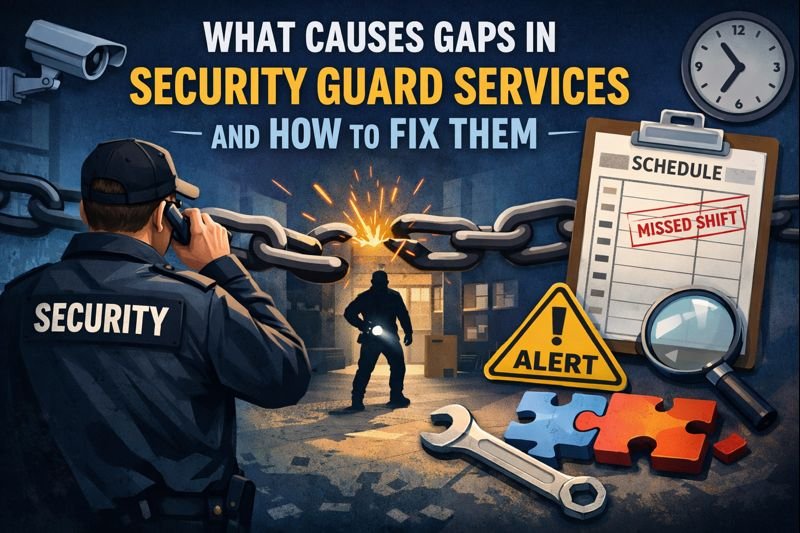
Security guard services offer security to humans, property, or assets. But sometimes there can be gaps in these services that can put some areas at risk. Enabling tracking and understanding triggers of these lapses and correcting them in real-time allows safety and reliability to be enhanced. In this post, we will take a look at some of the common reasons for these issues and how we can practically fix them.
Inadequate Training
Under-preparation is a prevalent cause for lapses in security services. One of the first answers to “How to improve security guard services” is proper training. Without proper training, guards may struggle to react during emergencies. Confusion, indecision, or failure to manage tricky situations appropriately is often a consequence of training gaps. Organizations need to provide more consistent and holistic training to help with this. Scenario-based refresher courses play an important role.
Lack of Communication
Successful security relies on a clear and timely communication system amongst team members. Without a free flow of information, guards may fail to receive vital news or orders. Misunderstandings can confuse and also cause a delay in response. The best communication among the team members consists of transparent and clear protocols that are communicated through dependable tools. Frequent briefs and debriefs help in better coordination.
Staff Shortages and Fatigue
A limited number of workers means the guards are stretched thin and overworked. Fatigue due to overworked staff leads to lower alertness and performance. Slower reactions or missing the threat are common in such cases. Staffing shortages mean hastily recruiting enough staff to cover all shifts without too much overtime. Shifts should be rotated, but sufficient rest periods should be allowed in between to prevent burnout. Keeping an eye on attendance and wellness supports a healthy, dependable team.
Inconsistent Supervision
Supervisors are the guardians of the standard. Without oversight, poor habits or mistakes can linger and grow. Over time, this saturation means that guards begin to slack rather than stay vigilant, or possibly miss an update in protocols or processes if they are not part of the initial communication to the staff.
Outdated Equipment
Even supervisors depend on tools and innovation for their work. Obsolete or defective equipment can offer points of vulnerability. Used car radios, broken cameras, or poor lighting may slow reaction times or visibility. Regular maintenance and timely upgrades keep all gear up and running. With advanced surveillance as well as communication devices, security and response capacity can be strengthened.
Poorly Defined Roles and Responsibilities
Job descriptions or statements of work that are vague may result in misunderstandings and mistakes. If guards are uncertain about what their duties are, they might skip patrols or misunderstand orders. The roles must be set out transparently so that every single person knows how to go about their work and what the paths are. Job descriptions should identify general duties, who the person reports to, and how he/she escalates issues.
Lack of Motivation and Engagement
When guards are demotivated, they do not give their best. Recognition, compensation, and career growth are the biggest factors that help employees to engage themselves more at their workplace. Motivation includes fair compensation, growth opportunities, and recognition. Morale and engagement are also enhanced through fun, team-building events and ongoing feedback sessions.
Inadequate Emergency Preparedness
Threats never appear as we expect, and security teams need to be prepared for the unexpected. Sites can be vulnerable to damage in the absence of good emergency planning. If guards are not given rehearsed procedures, they may move slowly or err during emergencies. Organizations also need to create easy-to-understand and practical emergency plans and test them regularly.
Inefficient Reporting and Documentation
Timely as well as accurate reporting of incidents would be needed to monitor incidents and notice trends. While leaders may do their best to be transparent in their oversight, poor recordkeeping can hide potentially problematic behavior or patterns. The guards should be instructed to document properly. Digital reporting tools can simplify and minimize mistakes in the process.
Conclusion
There are usually avoidable contributing factors to gaps in security guard services, such as poor communication, insufficient training, or a lack of supervision. However, regular training, definite roles, good supervision, and up-to-date equipment can fill these gaps and offer better protection. Being open with your staff and revising certain security protocols gives you the ability to be more responsive to threats and grow trust.