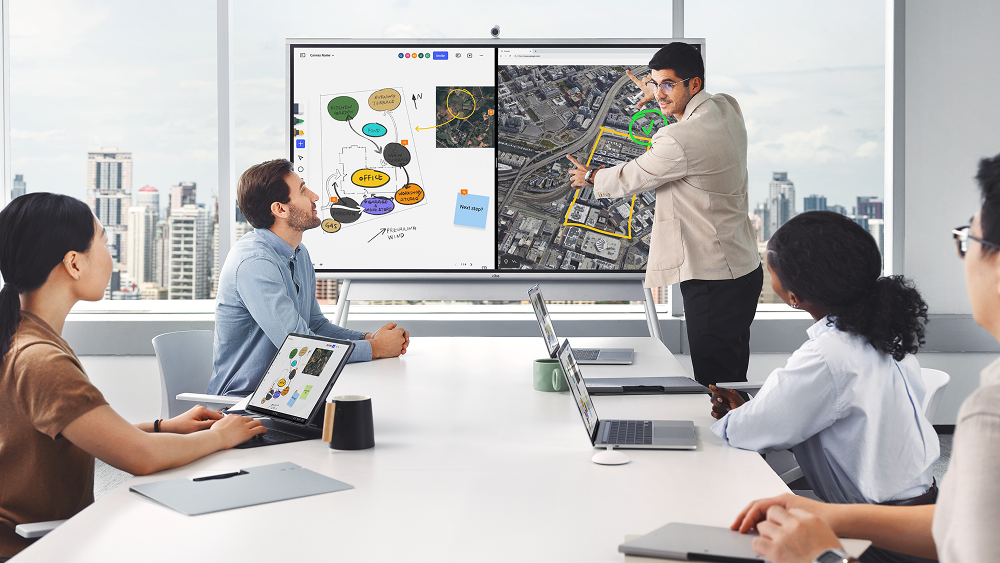
The rise of remote and hybrid work has reshaped how teams communicate, brainstorm, and deliver results. While video calls and chat platforms help teams stay connected, they often fall short when it comes to real-time ideation, visual thinking, and dynamic collaboration. This gap has been filled by the collaborative whiteboard—a digital workspace that allows distributed teams to think, plan, and create together as if they were in the same room. Today, the collaborative whiteboard is not just a tool; it is a fundamental part of modern remote team collaboration.
The Evolution of Collaboration in a Remote World
Traditional office collaboration relied heavily on physical whiteboards, sticky notes, and face-to-face brainstorming sessions. When teams moved online, much of that spontaneity and visual interaction was lost. Emails and shared documents were useful but static, often slowing down creativity and decision-making.
The collaborative whiteboard emerged as a solution to this challenge. By digitizing the whiteboard experience and enhancing it with cloud technology, teams gained a shared, interactive space accessible from anywhere in the world. This evolution has allowed remote teams to collaborate in real time, maintaining creativity and engagement despite physical distance.
What Is a Collaborative Whiteboard?
A collaborative whiteboard is a cloud-based digital canvas where multiple users can simultaneously add, edit, and interact with content. Team members can draw diagrams, write notes, upload images, create workflows, and leave comments—all in real time. Unlike traditional presentation tools, a collaborative whiteboard is flexible and free-form, supporting both structured planning and open-ended brainstorming.
What sets the collaborative whiteboard apart is its ability to bring visual thinking into remote collaboration. Whether teams are mapping ideas, designing products, or planning projects, the visual nature of a collaborative whiteboard helps clarify complex concepts and encourages active participation.
Real-Time Collaboration Without Boundaries
One of the most powerful ways collaborative whiteboards are transforming remote team collaboration is through real-time interaction. Team members can see changes as they happen, eliminating delays caused by back-and-forth emails or version control issues.
This immediacy is especially valuable for global teams working across time zones. While not everyone may be online at the same moment, collaborative whiteboards also support asynchronous collaboration. Team members can leave notes, feedback, or updates that others can review and build upon later. This blend of real-time and asynchronous work creates a more inclusive and efficient collaboration model.
Enhancing Creativity and Brainstorming
Creativity thrives when ideas can flow freely, and collaborative whiteboards are designed to support exactly that. Remote brainstorming sessions often struggle due to limited interaction, but a collaborative whiteboard encourages everyone to contribute visually and equally.
Participants can use sticky notes, sketches, mind maps, and diagrams to express ideas without interruption. This visual freedom helps quieter team members share their thoughts more comfortably and reduces the dominance of louder voices. As a result, teams generate more diverse ideas and arrive at better solutions faster.
Improving Clarity and Alignment
Miscommunication is a common challenge in remote work. Text-based messages can be misinterpreted, and lengthy explanations can slow progress. A collaborative whiteboard helps solve this problem by making ideas visible and tangible.
When teams visualize workflows, timelines, or strategies on a collaborative whiteboard, everyone gains a shared understanding of goals and responsibilities. This clarity reduces confusion, aligns expectations, and ensures that all team members are working toward the same objectives. Over time, this improved alignment leads to higher productivity and fewer errors.
Streamlining Project Planning and Execution
Project planning is another area where collaborative whiteboards are making a significant impact. Remote teams can use a collaborative whiteboard to create roadmaps, assign tasks, and track progress visually. Kanban boards, flowcharts, and process diagrams can all be built and updated collaboratively.
This visual approach to project management makes it easier to identify bottlenecks, adjust priorities, and keep stakeholders informed. Instead of switching between multiple tools, teams can centralize planning discussions within a single collaborative whiteboard, saving time and reducing friction.
Supporting Cross-Functional Collaboration
Modern organizations rely heavily on cross-functional teams, bringing together members from different departments with varying expertise. Collaborative whiteboards act as a neutral space where everyone can contribute regardless of role or technical background.
Designers can sketch concepts, marketers can add messaging ideas, developers can map system architecture, and managers can outline timelines—all on the same collaborative whiteboard. This shared space breaks down silos and fosters a culture of transparency and teamwork, which is essential for remote collaboration success.
Integration With the Remote Work Ecosystem
Another reason collaborative whiteboards are transforming remote team collaboration is their ability to integrate with other digital tools. Many platforms connect seamlessly with video conferencing, project management software, file storage systems, and communication apps.
These integrations allow teams to launch a collaborative whiteboard directly from a meeting, attach relevant documents, or turn brainstorming outcomes into actionable tasks. By fitting naturally into existing workflows, the collaborative whiteboard becomes an extension of the remote work ecosystem rather than an isolated tool.
Boosting Engagement and Team Connection
Remote work can sometimes feel isolating, leading to disengagement and reduced team morale. Collaborative whiteboards help address this issue by making collaboration more interactive and engaging. The act of creating something together—whether it’s a strategy map or a simple sketch—builds a sense of shared ownership.
Many teams also use a collaborative whiteboard for informal activities such as virtual icebreakers, retrospectives, or team-building exercises. These uses strengthen relationships and maintain a human connection, which is vital for long-term remote team success.
The Future of Remote Collaboration
As remote and hybrid work models continue to grow, the role of the collaborative whiteboard will only become more important. Advances in artificial intelligence, automation, and immersive technologies are expected to further enhance these tools, making collaboration even more intuitive and effective.
In the future, collaborative whiteboards may offer smarter suggestions, automated organization of ideas, and deeper integration with analytics and decision-making tools. What remains constant is their core value: enabling teams to think visually and work together seamlessly, regardless of location.
Conclusion
The collaborative whiteboard has become a cornerstone of modern remote team collaboration. By enabling real-time interaction, enhancing creativity, improving clarity, and supporting cross-functional teamwork, it addresses many of the challenges associated with distributed work. More than just a digital canvas, a collaborative whiteboard is a shared thinking space that brings people together and transforms how teams collaborate remotely.
For organizations looking to improve communication, boost productivity, and foster innovation in a remote environment, adopting a collaborative whiteboard is no longer optional—it is essential. As the way we work continues to evolve, collaborative whiteboards will remain at the heart of effective, connected, and successful remote teams.