When water damage strikes, the immediate concerns are the same: stop the water, prevent further damage, and restore the property as quickly as possible. But beyond those basics, residential and commercial water damage restoration in Charleston, SC are very different in scope, complexity, and execution.
Charleston’s coastal climate, frequent storms, high humidity, and aging infrastructure affect both homes and businesses—but the way restoration professionals respond varies greatly depending on the type of property involved. Understanding these differences can help homeowners and business owners know what to expect, why timelines vary, and why choosing the right restoration partner matters.
This guide breaks down the key differences between residential and commercial water damage restoration in Charleston, from equipment and scale to compliance and recovery timelines.
Why Water Damage Is a Serious Issue in Charleston
Before diving into the differences, it’s important to understand why water damage restoration is so critical in Charleston overall.
Local factors include:
- High humidity that slows natural drying
- Tropical storms and hurricanes
- Low elevation and high water tables
- Crawl space construction in homes
- Older plumbing and infrastructure
Because moisture spreads quickly and dries slowly in coastal South Carolina, both residential and commercial water damage restoration in Charleston, SC require fast, professional action to avoid mold growth, structural damage, and costly repairs.
Residential Water Damage Restoration: A Closer Look
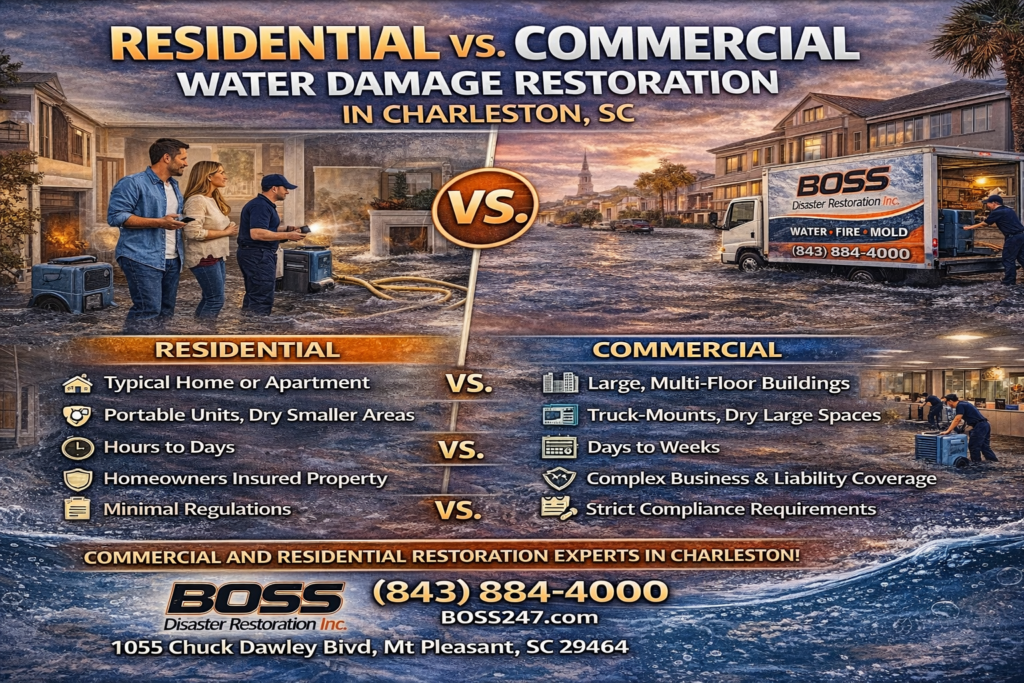
Residential water damage restoration focuses on homes, apartments, condos, and multi-family residences. While the scale is typically smaller than commercial projects, the work is highly detailed and personal.
Common Causes of Residential Water Damage
Charleston homeowners frequently experience water damage from:
- Burst or leaking pipes
- Appliance failures (washing machines, water heaters)
- Roof leaks during storms
- Crawl space flooding
- Overflowing toilets or tubs
Even minor incidents can become major problems if moisture is not fully removed.
Scope and Scale of Residential Projects
Residential restoration usually involves:
- One or several rooms
- Limited square footage
- Personal belongings and furnishings
- Structural materials like drywall, flooring, and insulation
Because families often remain in the home during restoration, work must be carefully planned to minimize disruption.
Equipment Used in Residential Restoration
While professional-grade equipment is always used, residential projects typically require:
- Portable water extractors
- Air movers sized for smaller spaces
- Dehumidifiers appropriate for homes
- Moisture meters for walls and floors
The goal is thorough drying without overloading living spaces with excessive equipment.
Timelines for Residential Water Damage Restoration
Residential timelines vary based on severity, but generally:
- Minor water damage: 2–5 days
- Moderate damage: 1–2 weeks
- Severe flooding: several weeks
Charleston’s humidity can extend drying times, making professional dehumidification especially important.
Commercial Water Damage Restoration: A Different Scale Entirely
Commercial water damage restoration involves businesses, offices, retail stores, restaurants, medical facilities, schools, warehouses, and industrial properties. These projects are typically larger, more complex, and more time-sensitive.
Common Causes of Commercial Water Damage
Charleston businesses often experience water damage from:
- Storm flooding and roof failures
- Sprinkler system malfunctions
- Plumbing failures in restrooms or kitchens
- HVAC system leaks
- Sewage backups
In commercial settings, water damage often affects operations, revenue, and customer safety.
Scale and Complexity of Commercial Projects
Commercial restoration projects often involve:
- Large square footage
- Multiple floors or units
- Complex mechanical systems
- High-value equipment or inventory
- Public access areas
Because of this scale, commercial water damage restoration in Charleston, SC requires more manpower, planning, and coordination.
Equipment Used in Commercial Restoration
Commercial projects demand heavier-duty equipment and more resources, such as:
- Truck-mounted water extraction systems
- High-capacity industrial dehumidifiers
- Large volumes of air movers
- Temporary power solutions
- HEPA air scrubbers for air quality control
This equipment allows teams to dry large spaces efficiently while maintaining safety and compliance.
Compliance and Safety Requirements in Commercial Restoration
One of the biggest differences between residential and commercial restoration is compliance.
Commercial Compliance Considerations
Commercial properties must often meet:
- OSHA safety standards
- Industry-specific regulations (healthcare, food service, education)
- Local building and fire codes
- ADA accessibility requirements
Restoration teams must work carefully to ensure the building is safe for employees, customers, and inspectors before reopening.
Residential restoration, while still safety-focused, generally does not involve the same level of regulatory oversight.
Timelines: Why Commercial Restoration Often Takes Longer
Commercial timelines depend on factors such as:
- Size of the affected area
- Type of business and compliance needs
- Extent of structural damage
- Coordination with property managers and insurers
While some businesses can resume partial operations quickly, full restoration often takes longer than residential projects due to inspections, approvals, and repairs.
Business Interruption vs. Personal Disruption
Residential Impact
For homeowners, water damage affects:
- Comfort and daily routines
- Personal belongings
- Health and indoor air quality
The focus is on restoring livability as quickly as possible.
Commercial Impact
For businesses, water damage affects:
- Revenue and cash flow
- Employee productivity
- Customer trust
- Legal and safety responsibilities
Commercial restoration prioritizes minimizing downtime while ensuring the property is safe and compliant.
Insurance Differences Between Residential and Commercial Claims
Insurance plays a major role in both types of restoration—but the process differs.
Residential Insurance Claims
Typically involve:
- Homeowners insurance
- Personal property coverage
- Simpler documentation
Commercial Insurance Claims
Often involve:
- Business property insurance
- Business interruption coverage
- Detailed documentation and reporting
- Multiple stakeholders
Experienced restoration companies help navigate both processes, but commercial claims are usually more complex and time-consuming.
Why Experience Matters in Charleston Restoration Projects
Charleston’s environment adds unique challenges to both residential and commercial restoration:
- High humidity slows drying
- Crawl spaces and older construction require specialized handling
- Storm surge and flooding patterns vary by neighborhood
Working with commercial and residential restoration experts who understand Charleston’s climate and building styles makes a significant difference in outcomes.
Providers like Boss 247 bring local knowledge, proper equipment, and experience handling both homes and businesses throughout the Lowcountry.
If you want to learn more about working with experienced commercial and residential restoration experts,
Choosing the Right Restoration Partner
Whether you’re a homeowner or business owner, the right restoration company should offer:
- 24/7 emergency response
- Experience with both residential and commercial projects
- Professional-grade equipment
- Clear communication and documentation
- Familiarity with Charleston-specific challenges
An experienced provider like Boss Disaster Restoration Inc. understands how to tailor restoration strategies to each type of property.
Final Thoughts: One Goal, Two Very Different Approaches
At their core, both residential and commercial restoration aim to remove water, prevent further damage, and restore the property. But the approach, scale, equipment, and timelines can be dramatically different.
Understanding the differences between residential and commercial water damage restoration in Charleston, SC helps property owners set realistic expectations and choose the right professionals for the job.
Whether you’re protecting your home or your business, fast action and experienced restoration experts are the keys to minimizing damage and getting life back to normal.
Contact Information (NAP)
Boss Disaster Restoration Inc.
1055 Chuck Dawley Blvd, Mt Pleasant, SC 29464
(843) 884-4000