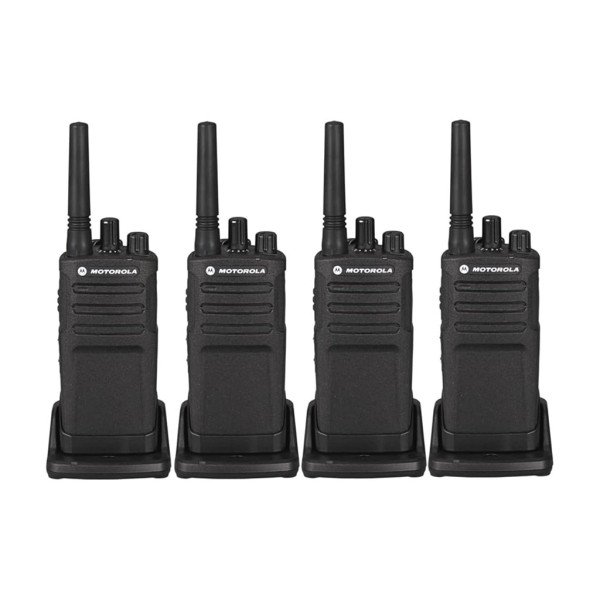
A walkie talkie is a handheld two-way radio that allows users to communicate wirelessly over short to medium distances. Unlike mobile phones, these devices do not rely on mobile networks or internet connections. Instead, they transmit and receive radio signals on specific frequencies, enabling instant communication at the push of a button. Walkie talkies have been used for decades and remain relevant due to their simplicity, reliability, and independence from external infrastructure.
The Basic Components of a Walkie Talkie
Most walkie talkies share the same core components. These include a transmitter, a receiver, an antenna, a speaker, a microphone, and a power source, usually a rechargeable or replaceable battery. When the user presses the push-to-talk button, the microphone converts sound into an electrical signal. This signal is then transmitted as a radio wave through the antenna. On the receiving end, the process is reversed, turning the radio signal back into audible sound.
The antenna plays a key role in determining range and clarity. Longer or external antennas generally provide better signal transmission, although they may reduce portability. Battery capacity also affects performance, as higher-powered transmissions consume more energy.
Frequencies and Channels Explained
Walkie talkies operate on designated radio frequency bands. Common bands include VHF (Very High Frequency) and UHF (Ultra High Frequency). VHF signals tend to travel further outdoors with fewer obstructions, making them suitable for open areas. UHF signals perform better indoors or in built-up environments, as they can pass through walls and obstacles more effectively.
Channels are simply pre-set frequencies that users can select to communicate with others on the same channel. Many devices also offer sub-channels or privacy codes, which help reduce interference from other users by filtering unwanted transmissions, though they do not provide true privacy.
Typical Uses Across Different Settings
The walkie talkie is used in a wide range of environments. In construction sites, they allow teams to coordinate tasks quickly without needing mobile coverage. In hospitality settings such as hotels or event venues, staff rely on instant communication to respond to issues efficiently. Outdoor activities including hiking, camping, and skiing also benefit from walkie talkies, especially in areas where mobile signals are unreliable or unavailable.
They are also commonly used in education, security, retail, and film production. In these settings, the ability to communicate instantly with multiple people at once is often more practical than one-to-one phone calls.
Range and Signal Limitations
The advertised range of a walkie talkie is often based on ideal conditions, such as flat, open terrain with no interference. In real-world use, buildings, trees, hills, and weather conditions can significantly reduce effective range. Lower-powered consumer models may work well within a few hundred meters in urban areas, while higher-powered or licensed models can cover several kilometers in suitable conditions.
Signal interference from other electronic devices or nearby radio users can also affect clarity. Adjusting channels or switching frequency bands can sometimes help mitigate these issues.
Licensing and Legal Considerations
In the UK, some walkie talkies operate on licence-free frequencies, such as PMR446. These are widely available and suitable for general use. More powerful radios may require a licence from Ofcom, particularly those used for business or professional purposes. Licensed radios allow access to dedicated frequencies, which can reduce interference and improve reliability.
Understanding the legal requirements is important, as using unlicensed equipment on restricted frequencies can lead to penalties. Manufacturers typically specify whether a device is licence-free or requires authorisation.
Modern Features and Advancements
While the basic concept has remained the same, modern walkie talkies often include additional features. These may include digital displays, GPS tracking, emergency alert buttons, noise-cancelling microphones, and weather alerts. Digital walkie talkies can offer clearer audio and better battery efficiency compared to analogue models, though they may be less compatible with older devices.
Some models also integrate with headsets or earpieces, allowing hands-free operation. These features can be particularly useful in environments where mobility and discretion are important.
Continued Relevance in a Connected World
Despite the widespread use of smartphones, the walkie talkie continues to serve a practical purpose. Its ability to function without networks, provide instant group communication, and operate reliably in challenging conditions ensures its ongoing use across many sectors. As technology evolves, walkie talkies adapt, combining traditional radio communication with modern enhancements while retaining their core simplicity.