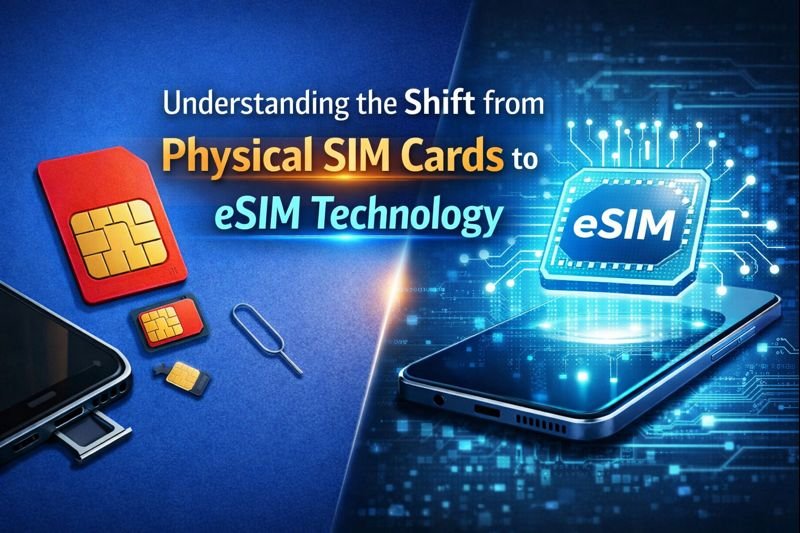
Mobile connectivity has undergone a quiet but fundamental transformation. For decades, physical SIM cards defined how users accessed mobile networks, switched operators, and managed devices. Today, that model is gradually being replaced by eSIM technology, which introduces a software-based approach to mobile connectivity. This shift is relevant across major markets such as the United States, the United Kingdom, and Canada, where smartphones play a central role in daily communication, work, and travel.
The transition to eSIM is not driven by convenience alone. It reflects broader changes in how digital infrastructure is designed, favoring flexibility, remote management, and reduced dependence on physical components. As more users encounter eSIM for the first time, understanding how it differs from traditional SIM cards becomes increasingly important.
eSIM vs Physical SIM: What Actually Changes
At a technical level, both eSIM and physical SIM serve the same purpose: they identify a device on a mobile network. The difference lies in how that identity is delivered and managed. A physical SIM requires manual insertion and replacement, while an eSIM profile is downloaded and activated digitally. This eliminates the need for physical handling and allows multiple profiles to coexist on a single device.
From a practical standpoint, this affects how users switch networks, prepare devices for travel, or manage multiple numbers. A clear explanation of these differences, including limitations and real-world implications, is outlined in eSIM vs physical SIM, which focuses on factual comparison rather than marketing claims.
For users in regions with frequent international movement, the ability to manage connectivity remotely can reduce friction. There is no need to search for local SIM cards, wait for delivery, or risk compatibility issues. Instead, connectivity becomes part of digital setup rather than a physical task.
Device Compatibility and Realistic Adoption
One common misconception is that eSIM is universally supported. In reality, compatibility depends on both device hardware and software configuration. While most newer smartphones include eSIM functionality, not all models support it in the same way. Some devices allow multiple active profiles, while others restrict usage to one eSIM at a time.
This makes device verification a necessary step before relying on eSIM-based connectivity. A structured overview of supported models and platforms is available through eSIM compatible phones, which helps users assess whether their devices are technically ready for embedded SIM usage.
Understanding compatibility is especially relevant in markets like India, where a wide range of devices coexist, and in North America and the UK, where users frequently upgrade hardware but may not explore all available features. Informed adoption prevents unrealistic expectations and reduces setup issues.
Why eSIM Aligns with Broader Digital Trends
The rise of eSIM mirrors developments seen across digital services. Cloud computing replaced local storage, streaming replaced physical media, and digital wallets reduced dependence on physical cards. eSIM follows the same pattern by shifting connectivity management from hardware to software.
This approach supports scalability and remote configuration, which are increasingly important for users who work remotely, travel frequently, or manage multiple devices. It also simplifies logistics for manufacturers, who no longer need to design region-specific hardware variations for SIM slots.
From an educational perspective, the eSIM Europe brand has positioned itself as a reference point for explaining these changes in a neutral, implementation-focused way. Rather than framing eSIM as a product, it presents it as part of a wider evolution in mobile infrastructure.
As mobile networks continue to develop and device ecosystems mature, the role of physical SIM cards is likely to diminish further. That does not mean immediate replacement, but rather a gradual shift driven by user awareness, device compatibility, and practical use cases.
For users seeking well-researched, factual insight into mobile connectivity, understanding eSIM is less about following trends and more about recognizing how foundational technologies evolve. The move from physical SIM to eSIM represents a structural change in how devices connect to networks, with long-term implications for flexibility, accessibility, and digital independence.