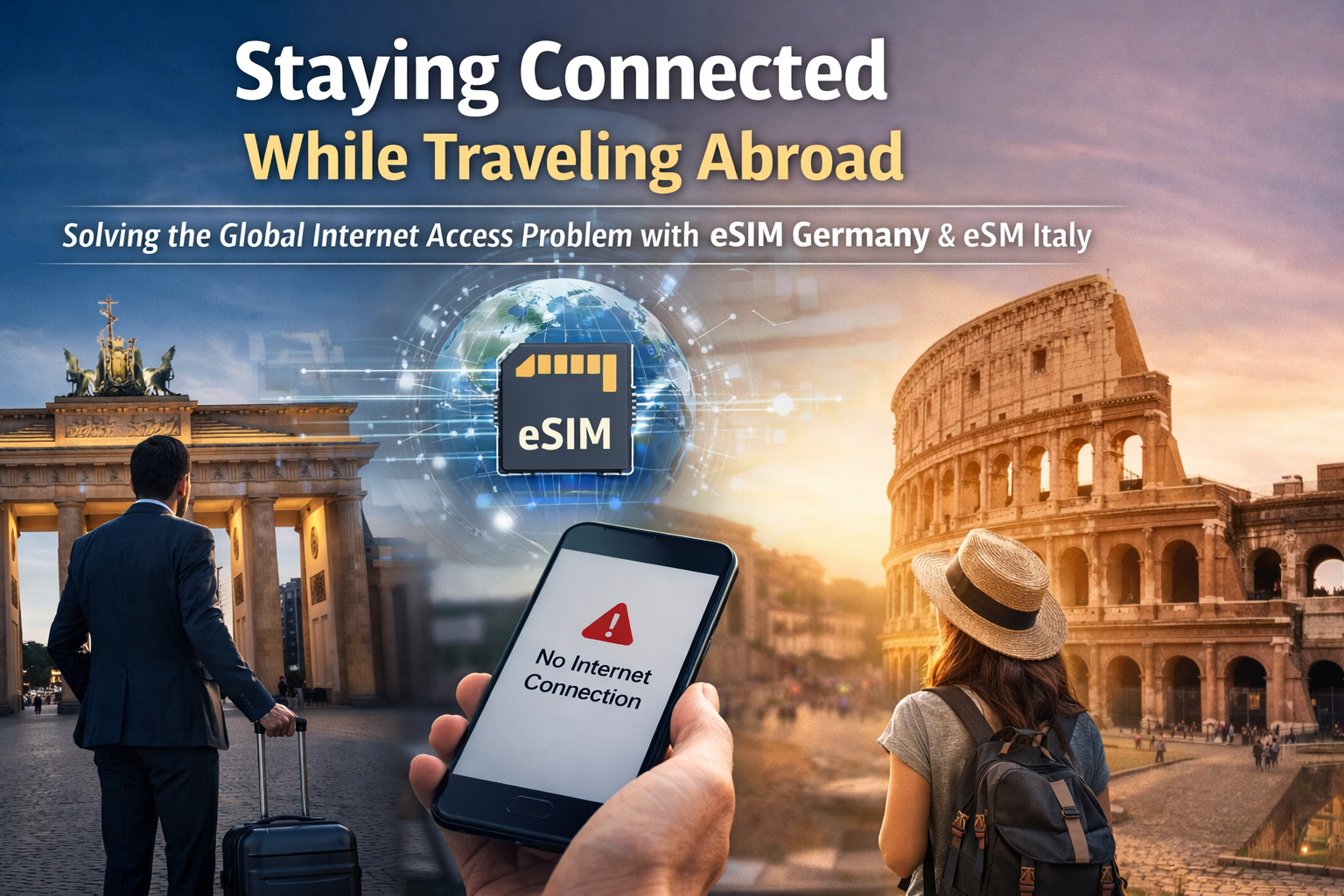
International travel has never been more accessible, yet one challenge continues to frustrate travelers: reliable internet connectivity. From navigating unfamiliar cities to accessing boarding passes, hotel confirmations, and translation apps, modern travel depends heavily on staying online. Unfortunately, traditional options often fail travelers the moment they land.
Whether you’re arriving in Berlin for a business conference or exploring the historic streets of Rome, the question is the same—how to stay connected without stress, high costs, or wasted time.
The Reality of Internet Problems While Traveling
Many travelers assume their mobile network will “just work” abroad. In practice, this is rarely true. International roaming charges can be unpredictable and expensive, public Wi-Fi networks are often slow or insecure, and buying a local SIM card requires time, documentation, and local know-how.
In countries like Germany and Italy—two of Europe’s most visited destinations—connectivity issues can become surprisingly disruptive. Trains, airports, and tourist hotspots may offer Wi-Fi, but coverage is inconsistent and rarely reliable for navigation, work, or urgent communication.
Why Germany and Italy Pose Unique Connectivity Challenges
Germany is known for efficiency, yet mobile data access can be unexpectedly complex for visitors. Network regulations, SIM registration requirements, and limited short-term plans make instant connectivity difficult. Business travelers, in particular, often struggle to stay online during meetings, transit, or intercity travel.
Italy presents different hurdles. While mobile networks are widely available, tourists frequently face language barriers, confusing prepaid plans, and coverage gaps when moving between cities or rural regions. Relying solely on cafés or hotel Wi-Fi can quickly become impractical.
This is where eSIM and global eSIM solutions come in, offering travelers a modern way to stay connected.
Moving Beyond Physical SIM Cards
For years, physical SIM cards were the go-to option. However, this method comes with limitations: swapping SIMs, losing access to your main number, visiting stores, and waiting for activation.
As travel habits evolve—especially among digital nomads, remote workers, and frequent flyers—there’s a growing demand for instant, flexible, and fully digital connectivity solutions.
How eSIM Technology Helps Travelers Stay Connected
An eSIM (embedded SIM) removes the need for a physical card. Travelers can activate a local or regional data plan digitally, often before leaving home. Once installed, the device connects automatically upon arrival.
With a global eSIM, travelers can access multiple countries on a single digital plan. This means staying online from the moment the plane lands—no queues, no paperwork, and no language barriers. Travelers can also keep their primary SIM active for calls or messages while using local or regional data for navigation, work, and communication.
A Practical Solution Without the Hassle
Platforms like eSIMfo simplify access to regional and global data plans. For someone traveling between Germany and Italy—or multiple European countries—global eSIMs reduce friction. Instead of managing multiple SIM cards or worrying about roaming charges, travelers can rely on one digital solution that adapts to their route.
The key appeal is convenience, predictability, and control—not marketing hype.
Why Connectivity Planning Matters More Than Ever
Seasoned travelers now plan internet access with the same care as flights and accommodations. Connectivity affects safety, productivity, and the overall travel experience. Missing a train update, failing to access maps, or losing communication during an emergency can turn a smooth trip into a stressful one.
Digital solutions like eSIMs and global eSIMs are no longer niche tools—they are standard considerations for travelers who value efficiency and independence.
Travel Without Friction
International travel should be about discovery, not logistics. While internet access may seem minor, it has a major impact on the overall experience. Technology that removes barriers—rather than adding steps—aligns with how people want to move across borders today.
By adopting eSIM and global eSIM solutions early, travelers reduce uncertainty and gain confidence. Seamless internet access is quietly becoming an essential part of modern travel.
Final Thoughts
The internet problem isn’t disappearing—but the way travelers solve it is evolving. Moving beyond physical SIM cards and unreliable Wi-Fi is no longer a luxury; it’s a practical necessity.
Understanding options like eSIM, global eSIM, and platforms such as eSIMfo can make the difference between a connected journey and a disconnected one—without turning travel into a tech headache.