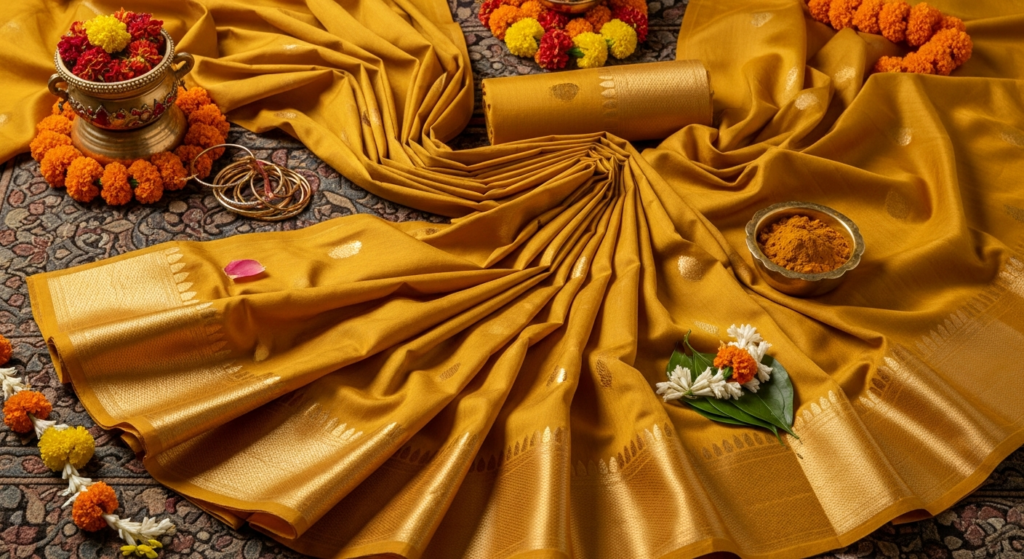
Haldi ceremonies are beautifully imperfect. There is laughter, hands streaked with turmeric, elders chanting blessings, and moments that can’t be rehearsed. So in the midst of all this warmth, your outfit shouldn’t feel too heavy and weighed down. And that’s why a simple Haldi saree is just right, it mingles tradition, ease, and grace without wanting to be the centre of attraction.
In this article, you will read why simplicity is best with haldi and how to drape your saree in such a way that it looks traditionally authentic but not photo-staged for Instagram.
Why Plain Simple Haldi Sarees for a Traditional Look?
Historically, haldi ceremonies were modest affairs at home, not theatrical spectacles. The clothing reflected that simplicity.
A simple saree means freedom of movement, a must when you’re sitting on the floor, straining to bend for rituals, or suddenly tugged into chaos punctuated with laughter. Light materials such as cotton, handloom silk, or fine quality linen soak in turmeric stains looks lovely rather than untidy.
There’s also a cultural reason. If it’s a ritual for purification, then Haldi is! Its spirit is belied by the heavy sequins, the excess of adornment, and dramatic drapery. Choli A Simple Haldi Saree. Focus on what is supposed to be focusing: blessings, joys, and being together.
Simple sarees also age and photograph well. Years later, when you’re reflecting on the trends of that era, status quo feels cool and stylish in a waythat trend-heavy outfits rarely do.
4 Steps to Drape a Haldi Saree for a Traditional Look
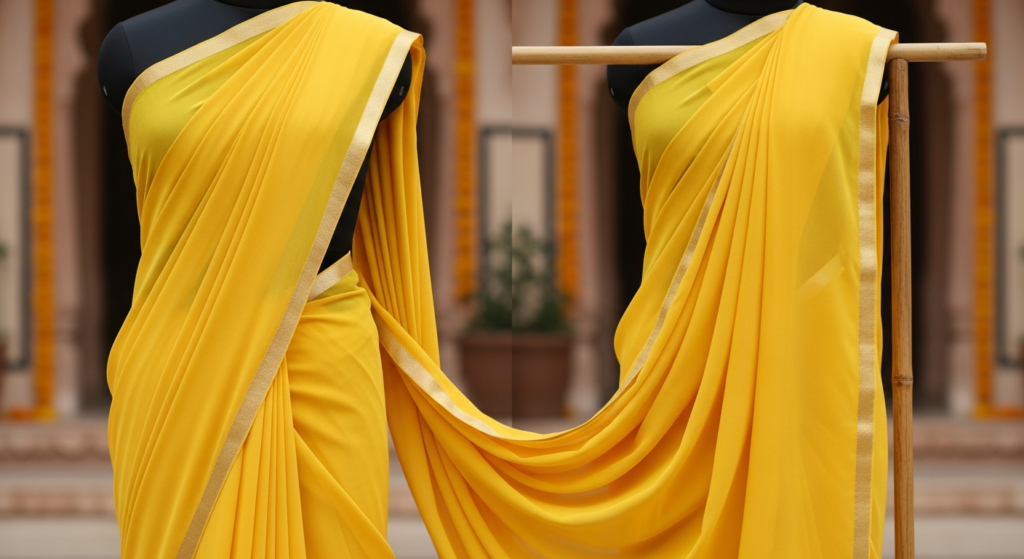
Draping for Haldi doesn’t need to be precise. It’s a matter of being easygoing, balancing things , and having some cultural instinct. Here are five practical ways to get a traditional drape without the stress.
Step-1: Create a Comfortable Base Wrap
Begin by tucking the plain end of your saree into your petticoat just to the right of your navel. Wind it around your waist once, with the hem just off the floor. It enables you to move without walking on the material.
Do not fit the saree too much. Classical draperies are loose, not formal. A touch of slack gives the drape that lived-in, ceremonial feel.
Step-2: Make Soft, Natural Pleats
Make 5-7 pleats, all in the same direction. Unlike party drapes, no need to make these pleats razor sharp. Slightly relaxed pleats look more natural and feel more comfortable.
Fold them in toward the center of your waist and pin securely. It is an essential step—nicely-set pleats will let you move freely throughout the ceremony.
Step-3: Drape the Pallu Traditionally
Now take the other end over your left shoulder to make a pallu. For a classic Haldi look, just keep it short. A breeze of a veil, either loose and flowing or pinned sloppily at the shoulder.
No exaggerated back pallus or thick pleating in that area, please. The charm lies in restraint.
Step-4: Style with Ritual-Friendly Elements
Careful styling is your best bet with traditional draping. Opt for a simple blouse—short sleeves, round necks or boat necks in cotton or raw silk. Green, Red or off-white contrast blouse looks lovely with yellow sarees.
Less is more in jewellery: flower jewelry, small gold studs, bangles or a thin chain shall do! Keep makeup soft and breathable. Kajal, understated skin, and perhaps a tiny bindi are plenty.
Hair wears soft, low buns or loose braids with fresh flowers.
Where to Get Original Haldi Sarees?
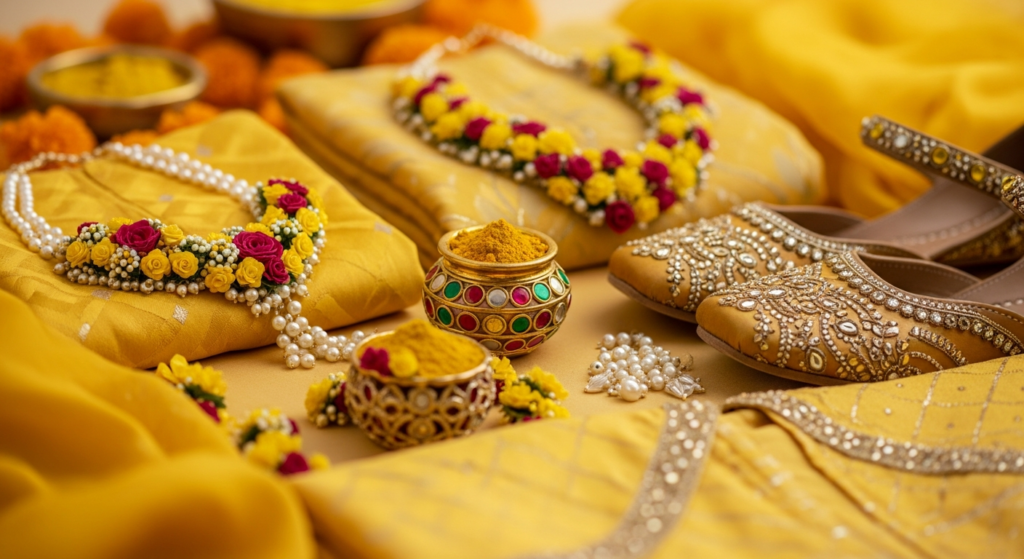
This is something everyone realizes towards the end of wedding planning: It’s harder to get real sarees than you thought it would be. Markets are full of synthetic fabrics and factory prints that look good for five minutes but have no soul.
This is where Kalyanja excels. If you wish to shop for genuine handloom sarees online for traditional occasions such as haldi, Kalyanja has a well-curated selection inspired by Indian craftsmanship. Their sarees are breathable, handcrafted, and fall in the most flattering way, perfect for what a haldi ceremony calls for.
You’re not dressing in something that was created primarily for the photo. You are draping a saree that feels connected to tradition and craftsmanship, not image.
Conclusion
Haldi is about joy, blessings , and cultural continuity, not one-upping each other on who can wear the latest fashion. When wrapped with intention, a Simple Haldi Saree stands as the best companion for this sacred ritual. It’s accommodating, tradition-embracing, and timeless-appearing without trying too hard to be what it looks.
Concentrate on delicate fabrics, easy draping and simple styling. And don’t compromise when it comes to selecting your saree; authenticity is more important than being trendy. Well, the most gorgeous haldi wear isn’t created to impress, it’s borrowed to belong.