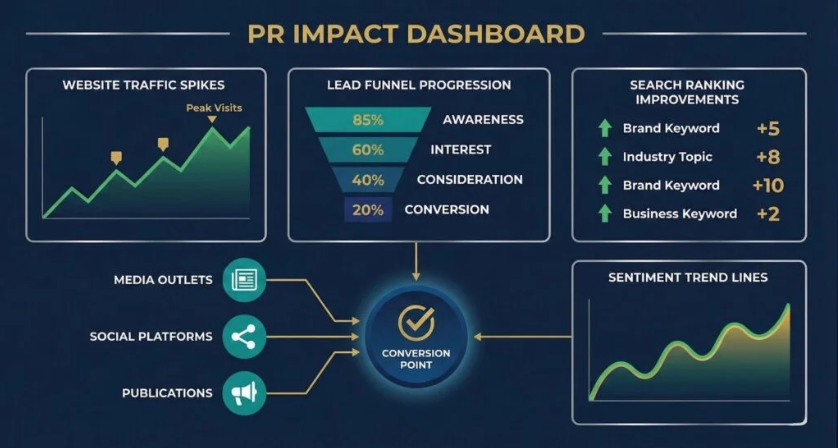
Digital PR services have evolved dramatically from their traditional counterparts. Where legacy PR focused on media placements and coverage metrics like impressions, circulation, and earned media value, modern digital PR services emphasize measurable business outcomes, audience engagement, and strategic visibility. For marketing leaders evaluating PR effectiveness, understanding this shift is critical.
The PR Evolution: From Vanity Metrics to Business Impact
Traditional PR success was measured in clips and impressions, with a feature in a major publication counting as a win regardless of whether it drove actual business results. Digital PR services operate differently by prioritizing channels, audiences, and metrics that tie directly to business outcomes like website traffic, lead generation, brand authority, and search visibility. This fundamental shift reflects a new reality in how marketing leaders evaluate PR’s contribution to revenue.
This represents more than just a rebranding of old tactics. Digital PR services fundamentally recalibrate how earned media contributes to marketing strategy. Rather than settling for brand awareness alone, they transform PR into a revenue-generating function by connecting coverage directly to measurable business impact. When executed effectively, digital PR services become indispensable to the modern marketing stack.
What Digital PR Services Actually Encompass
Modern digital PR services extend far beyond press releases and media outreach. Effective digital PR services include:
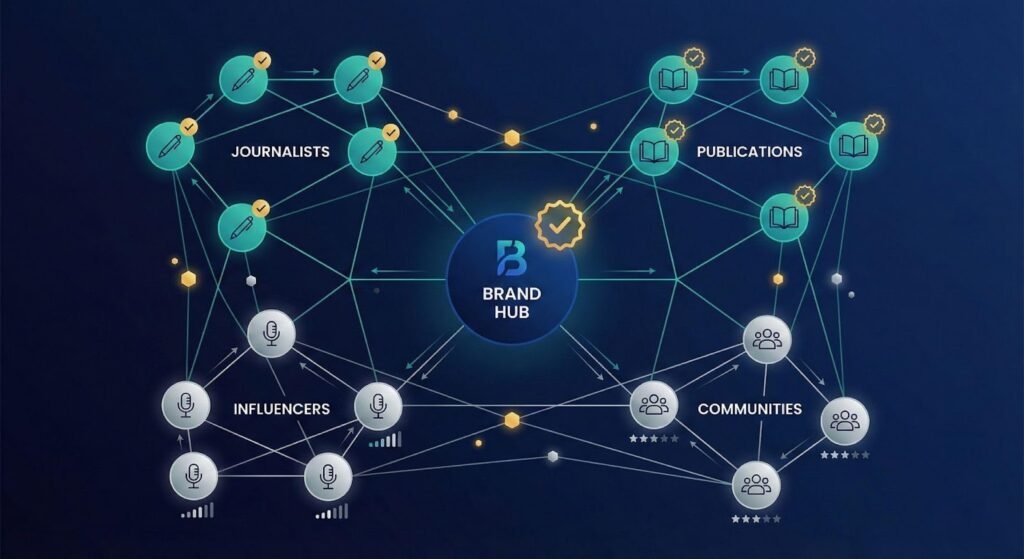
Targeted Media Outreach: Identifying journalists, publishers, and platforms where your target audience is already engaged, then pitching stories that resonate with their audiences. This requires research and relationship-building, not mass email campaigns.
Owned-Channel Amplification: Digital PR services coordinate earned coverage with owned channels, your website, email lists and social platforms, in order to maximize reach and drive traffic from coverage directly to your properties.
Search Visibility Optimization: Ensuring that press coverage and earned media are discoverable through search engines and structured so they rank prominently for relevant queries. Many digital PR initiatives fail to drive traffic simply because the coverage isn’t optimized for search visibility.
Influencer and Authority Partnerships: Collaborating with recognized experts and influencers in your space to generate authentic third-party endorsement. This extends beyond sponsored content to genuine partnership and collaboration.
Community and Platform Engagement: Build presence and authority on communities where your target audience gathers. LinkedIn groups, industry forums, Slack communities, and Reddit are key platforms where digital PR services can establish thought leadership and drive conversation.
Content Syndication and Distribution: Strategically distributing your content through high-authority platforms and publications, extending reach and building backlinks and authority signals simultaneously.
Reputation and Sentiment Monitoring: Tracking how your brand is discussed, perceived, and positioned in earned media and public conversation. Using these insights to refine messaging and identify emerging opportunities.
The connective tissue across all these tactics is a single objective: generate high-impact visibility among your target audience that drives measurable business outcomes. Explore how digital pr services integrate these elements into comprehensive, results-driven programs.
Why Digital PR Services Matter to Your Marketing Mix
In crowded markets, earning third-party validation is one of the most cost-effective ways to build credibility and influence buyer decisions. Digital PR services accomplish this through earned media rather than paid advertising, making them particularly valuable when marketing budgets are constrained.
Trust and Credibility: A feature in a relevant industry publication carries more weight than any paid advertisement. Prospects inherently trust third-party coverage more than brand messaging.
Search Authority: Coverage in authoritative publications builds backlinks and topical authority, which directly influences search rankings. Digital PR services thus contribute directly to organic visibility. Learn more about earned media impact on search authority to understand the SEO dimension of PR
Audience Targeting: Unlike traditional PR’s broad reach, digital PR services focus on platforms and communities where your specific target audience is engaged. This increases relevance and conversion likelihood.
Cost Efficiency: Compared to paid media, the cost per qualified impression through earned coverage can be significantly lower, especially when coverage drives organic traffic and ranking improvements.
Content Multiplier: Digital PR services amplify your content’s reach. A thought leadership piece that might reach hundreds through owned channels can reach thousands through earned coverage, syndication, and social amplification.
Measuring Digital PR Services: Beyond the Press Release
The challenge many organizations face is measuring PR effectiveness. Here’s how to evaluate whether your digital PR services are delivering ROI:
Website Traffic Attribution: Track traffic driven by PR coverage using UTM parameters and referral source analysis. Quality digital PR services should drive consistent, qualified traffic to your website.
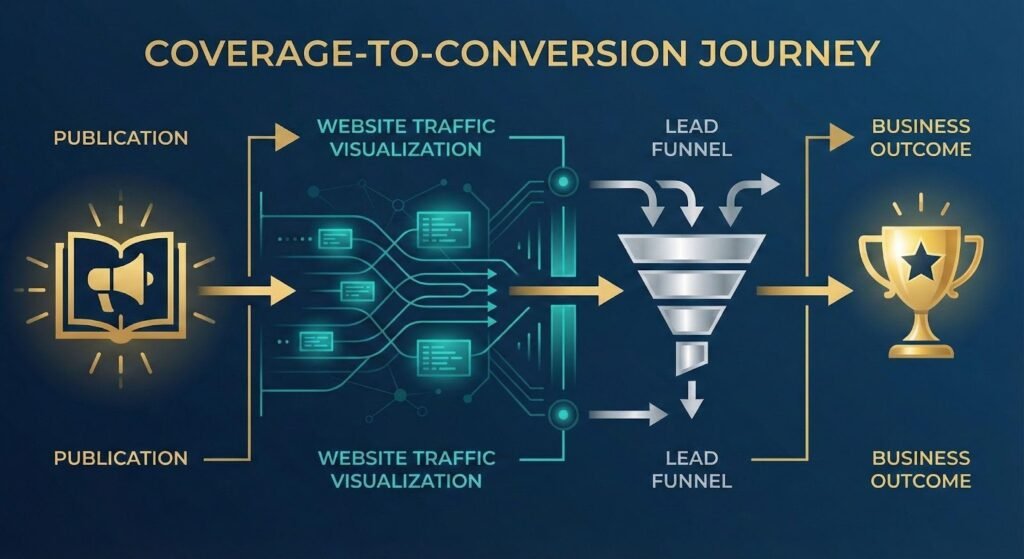
Lead Generation: Beyond traffic, measure leads generated from PR-sourced traffic. Attribution should connect coverage to leads, inquiries, and ultimately, conversions. This is where traditional PR typically falls short; digital PR services excel here because digital channels are inherently trackable.
Search Visibility Improvements: Monitor search rankings for key terms before and after coverage. Quality coverage in authority publications builds backlinks and topical authority that improve organic visibility.
Brand Sentiment and Perception: Use social listening and sentiment analysis tools to track how your brand is being discussed and perceived following coverage. Positive sentiment shifts indicate messaging resonance. Explore options for social listening and sentiment analysis tools to find the right platform for monitoring PR impact.
Authority Metrics: Track domain authority, topical authority indicators, and your brand’s visibility in industry conversations and search results. Digital PR services should strengthen these metrics over time.
Engagement Metrics: Measure engagement on coverage, including comments, shares, and citations, which indicates audience resonance and extends the visibility of individual campaigns.
Sales Impact: The ultimate metric is whether PR-influenced prospects convert to customers. Progressive organizations tie PR coverage to pipeline, deal velocity, and customer lifetime value.
Building an Effective Digital PR Services Strategy
Implementing digital PR services that drive measurable outcomes requires a strategic approach:
Audience Mapping: Identify exactly who your target audience is, where they consume content, and what channels and publications they trust. Digital PR services should be channeled toward these specific audiences.
Message Development: Create clear, differentiating messages that resonate with your target audience. Effective digital PR services amplify messages that are distinctive and relevant, not generic brand positioning.
Platform Selection: Prioritize quality over quantity. Instead of seeking coverage anywhere possible, focus on platforms and publications where your target audience is engaged and where coverage will drive meaningful traffic and leads.
Relationship Building: Digital PR services are relationship-driven. Journalists, editors, and influencers are more likely to cover you when they know and understand your story. Invest in ongoing relationship building, not just transactional pitching.
Distribution and Amplification: Don’t stop at securing coverage. Amplify coverage through owned channels like email, social, and your website to extend reach and drive traffic.
Attribution and Analysis: Set up proper tracking so you can measure traffic, leads, and outcomes from each coverage initiative. Use these insights to refine targeting and messaging for future campaigns. Review best practices for attribution and PR campaign tracking to connect coverage to pipeline impact.
Continuous Optimization: Treat digital PR services as an ongoing program, not individual campaigns. Track what’s working, iterate on messaging and targeting, and scale successful approaches.
The Competitive Advantage of Strategic Digital PR Services
Organizations that treat digital PR services as a strategic growth channel, rather than simply another brand awareness tactic, are outpacing their competitors. They recognize a fundamental truth: earned media represents one of the most credible, scalable, and cost-effective ways to reach qualified prospects, build lasting authority, and meaningfully influence buyer perception in crowded markets.
Digital PR services, when executed with strategic precision, transcend their traditional role and become a true revenue-generating function. They drive qualified traffic to your website, generate sales-ready leads, build topical authority in your space, and directly influence purchasing decisions at critical moments in the buyer journey. For marketing leaders wrestling with budget constraints and competing priorities, digital PR services represent one of the highest-ROI channels available, delivering measurable returns when executed strategically and consistently.