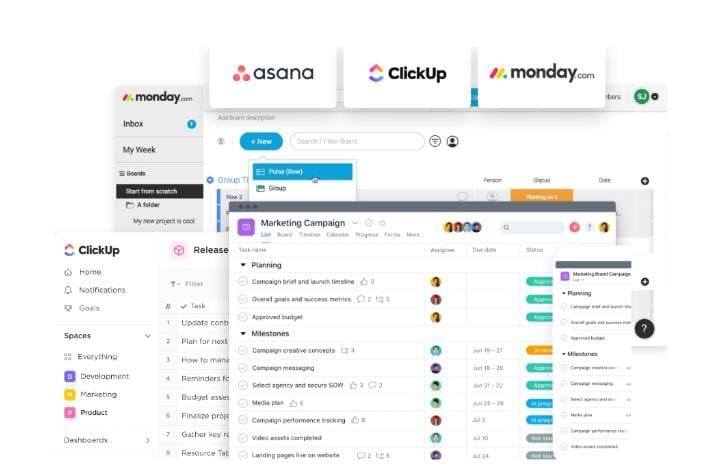
Most businesses don’t realise they’re losing productivity until something breaks. A marketing team misses their campaign deadline. Nobody knew the designer was still waiting on copy approval. The sales department duplicates work because last quarter’s territory assignments exist in someone’s forgotten spreadsheet. These aren’t occasional mishaps. They’re symptoms of organisations outgrowing their coordination methods. Work management solutions address the invisible friction that builds up when human memory and informal systems can’t keep pace anymore.
The Context-Switching Trap
Here’s what actually happens without proper work management. People toggle between different tools just to figure out what they should be doing. Email for one project. Slack for another. Spreadsheets for tracking. Someone’s personal notes for everything else. It takes serious time to regain focus after each interruption. Multiply that by every instance of hunting down information. Suddenly half the workday vanishes into digital wandering. Centralised platforms eliminate this tax on attention.
When Transparency Actually Matters
Visibility isn’t about micromanagement. It’s about removing awkward conversations. No more messages that really mean you have no idea if someone’s started yet. No more surprises when someone casually mentions they’ve been stuck for days. Work management solutions surface problems early, when they’re still manageable. The project manager spots the bottleneck forming early instead of discovering it during a panic meeting later in the week.
The Real Cost of Manual Updates
Consider the weekly status meeting where everyone recites what they’ve accomplished. All that collective time spent reporting information that should already be recorded somewhere. Then someone compiles it all into a summary for leadership. These platforms capture progress automatically as work happens. The meeting shifts from narrating history to solving actual problems. Those reclaimed hours compound significantly over time.
Why Busy Doesn’t Mean Productive
Some team members appear constantly overwhelmed. Others seem perpetually underutilised. Without visibility into actual workload distribution, managers guess based on who complains loudest. Work management solutions reveal the truth. The overwhelmed person might be juggling numerous tiny tasks. The quiet one could be handling massive projects. Rebalancing based on actual capacity rather than perceived busyness transforms team dynamics completely.
The Institutional Memory Problem
Every organisation has that person who knows where everything lives and how things really work. Then they go on holiday and productivity grinds to a halt. Or worse, they leave and months of tribal knowledge walks out with them. Proper documentation isn’t about creating bureaucracy. It’s insurance against knowledge evaporation. When decisions and context live inside the system rather than inside heads, teams become resilient instead of fragile.
Accountability Without Micromanagement
There’s a difference between surveillance and clarity. Nobody wants a manager breathing down their neck. But everyone benefits from knowing exactly what success looks like. These platforms create mutual accountability in both directions. Team members can flag blockers without seeming like they’re making excuses. Leaders can see genuine obstacles instead of assuming missed deadlines equal laziness. Trust grows when expectations are explicit and visible to everyone involved.
The Integration Advantage
Most businesses already use multiple tools. That’s fine. The problem isn’t the tools themselves but the gaps between them. When the project management system talks to the time tracking software, information flows instead of stagnating. When that connects to the client communication platform, even better. Manual data entry disappears. Errors from transcription vanish. The technology stack becomes an ecosystem rather than a collection of isolated islands.
Pattern Recognition Over Gut Feeling
Experienced managers develop instincts about project timelines and team capacity. But instinct has limits. Which types of projects consistently run over schedule? Do certain team combinations perform better than others? Are estimates accurate or do they reveal optimism bias? Analytics transform vague impressions into actionable patterns. Organisations stop repeating the same mistakes because they can actually see them happening in real time.
Work management solutions don’t fix broken processes automatically. They expose them. That exposure is precisely the point. Teams can’t improve what remains invisible to them. These platforms illuminate the gap between how work is supposed to flow and how it actually moves through an organisation. Closing that gap isn’t about working harder. It’s about working with clarity instead of confusion, with systems instead of hope.