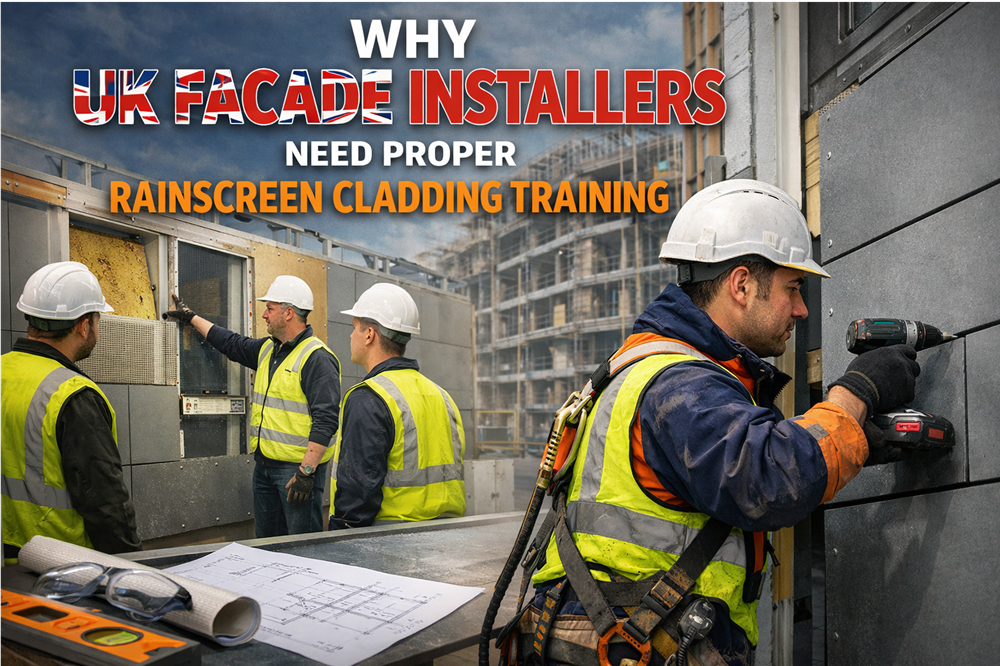
Rainscreen facades are now one of the most common ways to protect commercial buildings from weather and help them meet safety expectations. They only work well when installed with accuracy and expertise. So the demands placed on installers have increased due to regulatory changes.
Many installers now feel the pressure to keep their skills current and understand the latest best practice. However, you can turn that pressure into an advantage and a chance to upgrade yourself and your skills. Carry on reading to see why proper training supports safer work and better results.
Why Training Matters for Today’s Installers
Facade installers deal with complex building envelopes that must meet strict UK safety standards. Even small errors can affect ventilation, fire performance or moisture control. This is why many professionals now look for rainscreen cladding installer training to help them understand correct cavity construction, fixing systems and quality checks.
When installers know the right methods, they reduce installation faults and improve the performance of the whole facade system.
Installer training also supports project leads who want predictable results across large sites. When every installer follows the same principles, the team can work with consistency and avoid delays caused by extensive reworks. This helps supervisors manage deadlines while keeping safety at the forefront of every task.
Improved Compliance With UK Regulations
As I mentioned before, rainscreen facades are heavily guided by UK building safety requirements, so installers must understand the current rules and best practices. Proper rainscreen cladding training for installers explains how cavity barriers work, how to assess backing walls, how to identify issues before panels are fixed and so much more.
These details matter because fire safety rules changed significantly after recent reviews of building regulations. Installers who understand these updates can work confidently and help employers stay compliant throughout the project.
Training also teaches you how to follow method statements and safe systems of work, which are widely required across building sites in the UK. This reduces mistakes and supports a safer installation process from start to finish.
Safer Working Practices
Facade installation involves cutting panels, handling heavy materials and working at height, so training is essential for safety. Proper courses explain how to use tools safely, move materials without strain and avoid risks linked with poor manual handling. Installers who understand these techniques can reduce injuries and keep daily tasks safe and manageable.
Rainscreen cladding training also supports employers because it helps meet their duty of care. Skilled installers can identify hazards more easily and work to site rules without constant supervision, which supports a safer and more efficient site.
Stronger Workforce Capability and Efficiency
Teams complete work faster and more accurately when they understand each part of the system. Rainscreen cladding training helps installers recognise components, plan their sequence of work and check the quality of their work at each stage. This reduces downtime and helps projects run smoothly, especially when working on large commercial sites with tight schedules.
For employers, trained staff offer more flexibility on site. You can assign tasks more confidently because you know your team understands the correct installation approach. This raises productivity across the project and reduces the need for repeated inspections.
Wrapping Up
Proper rainscreen cladding training gives installers the knowledge to work safely, meet regulations and deliver high-quality facades.
It supports individual career growth and helps both installers and supervisors complete projects on time and with confidence. When you invest in the right skills, you set your team up for better performance and safer work with every installation.