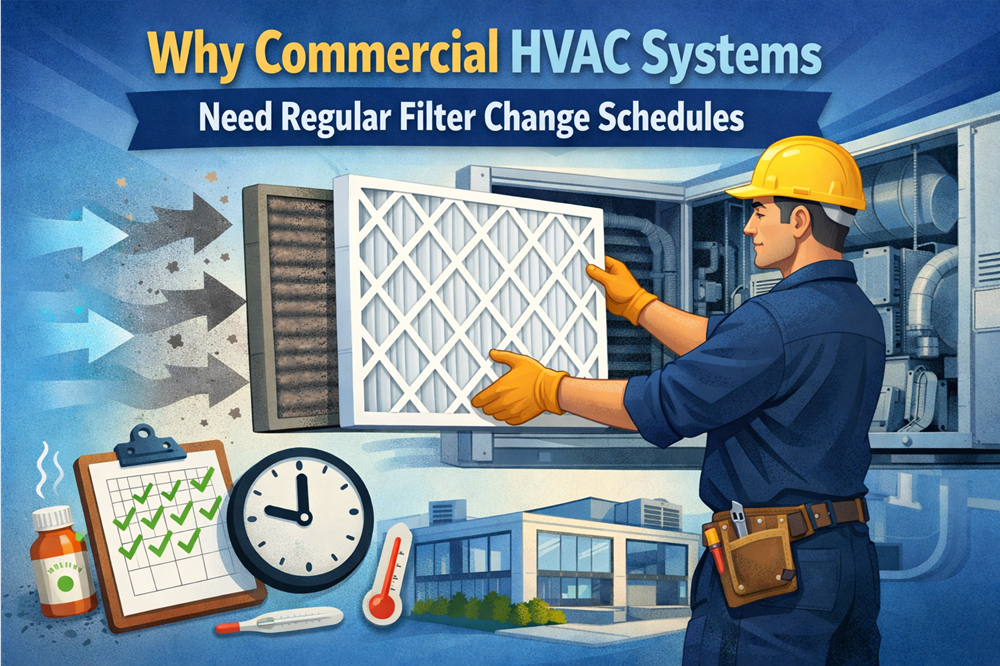
Commercial HVAC filter replacement tends to be a maintenance item like an oil change for a vehicle, everyone knows they should do it, but it’s put off until something feels wrong. Unfortunately, by the time a commercial HVAC system feels clogged, the damage is done. Filters don’t just randomly break one day; they wear out over time, and in that time, that gradual wear costs businesses far more in ways that they never see.
For example, when filters look dirty or the system is laboring to keep up, it’s easy to rationalize waiting until the next scheduled maintenance to act. But this is not preventative maintenance, this is damage control. Damage control gets costly for commercial HVAC systems.
Regular maintenance of commercial HVAC systems is crucial for optimal performance and energy efficiency. One often overlooked aspect is the timely replacement of air filters. Clean filters ensure better air quality and system longevity. For businesses in Barrie, partnering with an experienced hvac contractor barrie can streamline this process, ensuring that filter changes are scheduled and executed efficiently. This proactive approach not only enhances indoor air quality but also reduces the risk of unexpected breakdowns, ultimately saving on costly repairs. By prioritizing regular filter maintenance, businesses can maintain a comfortable and healthy environment for employees and customers alike, while also extending the lifespan of their HVAC systems.
What Really Happens When Filter Replacement is Delayed
Here’s what many people don’t realize: dirty filters hinder air movement, which means the entire HVAC unit must work even harder for each degree of heating and cooling obtained. The longer the blower motor runs the more effectively the system can produce heat or AC, which in turn allows the compressor to cycle to push cold air. Parts expected to work 15 years instead work ten at best. The longer replacement parts are replaced, the more often HVAC technicians come on site.
When a filter is dirty, it keeps the air that passes through as an ineffectively dense structure; this creates vent resistance and resistance makes the blower motor draw more energy to put out the same volume of airflow in the necessary direction. Consequently, energy bills increase a little at a time but not enough for anyone to realize it immediately; over a six-month period, it could cost additional hundreds or thousands in energy usage, especially for larger buildings.
More importantly, however, is excessive wear and tear on motors that cannot handle such consistent pressure. Motors run hot, bearings degenerate, belts stretch, and cracks form sooner than later. This costs businesses thousands over time when repeat pieces and parts expected to last multiple years are made obsolete sooner than expected.
How Filters Impact System Operation and Performance
Commercial HVAC systems operate as designed by the cubic feet per minute. Engineers design how much air needs to be moved in a space and subsequently size components with plenty of information to ensure they’re fully functional as needed. When filters obstruct that airflow, they’re nullifying the entire purpose.
From unfortunate temperature extremes within a space to occupants complaining about temperature (meaning they go and adjust the thermostat, further compounding the sense of urgency because once a variable CFM shifts down, it will always require more effort to cool or heat), complaints arise about temperature extremes that originate with insufficient filtration before spiraling into system shock.
From poor indoor air quality to mixed temperatures in spaces that should feel congruous to one another, these inconveniences are merely visual warnings when filters should’ve been replaced weeks ago; data now adds complication from compliance concerns, from healthcare facilities to food service operations, to customer complaints that ripple through internal revenue channels.
This is why many facilities trying to maintain constant performance turn toward solutions like a commercial hvac air purification system that requires little if any intervention in knowing when its filters should be replaced.
Why “Change When Dirty” Doesn’t Apply to Commercial Systems
Sure, when a filter looks dirty, change it, sounds great, but in commercial settings it’s anything but practical. Commercial filters are often not visible without taking down access panels and by the time someone reaches in to feel around, they could’ve been caked well beyond any usable capacity.
Moreover, what’s “dirty?” A clean but compromised filter with fine particles already embedded in it? Or one that’s completely dust on the exterior but has more capability? Visual inspections don’t work with commercial systems that process thousands of CFMs every day, they need schedule replacements.
In addition, when working in a commercial space, especially one providing ongoing services, changing a filter is not a five-minute event; it’s going to require some access for proper shut down and planned implementation. Without time on the books, this becomes maintenance which costs more once it’s reacted and forgotten about down the line until something else goes wrong.
The Numbers Game
Most commercial HVAC filters need replacements every thirty days through ninety days. A manufacturing facility will require monthly; a commercial office space could get away with quarterly; it doesn’t matter as much as it matters to have a set time or at least one day having past since it was supposed to have been done.
Now say there’s a 30-ton split system where a compressor is $15 and labor is $300 per issued concern (which is conservative). Over 12 months per increase from budget, $75 comes out to $900 annually which equals $2,400, significantly higher in labor costs based upon premature failure (extra maintenance and consideration).
However, all day long over multiple years of equipment failure, that’s where dirty filters precluding functioning prematurely could be the reason to justify replacing filters.
The Humble Approach
The best approach for filter replacement schedules is not complicated if someone knows the right environment factors. How many people are in the building? What kind of activities occur? Is this more of an industrial setting? Is there foot traffic? Is there a seasonal concern for air quality?
Once these things are known, it’s easy enough to best fit a schedule that recommends calendar-based efforts versus condition-based efforts because this way it’s out of sight/out of mind unless someone is prepared with something they need ahead of time.
Above all else, someone needs to have replacements on hand before they’re needed, running out last second defeats purpose for having a schedule, and rotated correctly so parts are used within their aesthetically designed windows.
What Happens When Schedules Don’t Happen
Schedule procrastination happens to even the best facility manager, from vendor delays in shipping parts and pieces or manpower shortages or budget freezes where business owners don’t buy what’s needed on time. One hiccup here or there isn’t going to derail a filter replacement by a week or so, at least it shouldn’t.
The problem becomes compounded, one week delay means two weeks delayed next time; unless someone actively works overtime, as more often than not, they don’t—and before one knows it, “schedule” just becomes a suggestion reserved for preventative maintenance fails after someone has already put their own system at risk.
Systems that stay on target have accountability implemented, be it reminders automatically or a vendor who comes on site with required hours; someone needs to own up to making sure this gets done regardless of how someone might feel about their own schedule along with everything else going on inside a building.
The Cost of Getting It Right
Maintenance systems requiring upfront planning and consistent discipline is probably why many tenants skip filter changes, it’s easier just to wait until there’s an issue, but the expense associated with prevention versus damage control adds up quickly for commercial HVAC systems.
Filter maintenance won’t save tenants who allow all other issues compounded through time catch up to them, equipment ages naturally whether it’s pent-up frustration from systems downed compounded through excessive wear by stupidly waiting too long, but replacing filters before they pose one of the most common costly concerns creates reliability without mistake.
It’s easy to brush off the boring stuff nobody will be hailed for recognizing as part of providing consistent heating and cooling efforts, but it’s these little things that separate the buildings with reliable HVAC systems from those that are forced between heating and cooling complaints year-round.