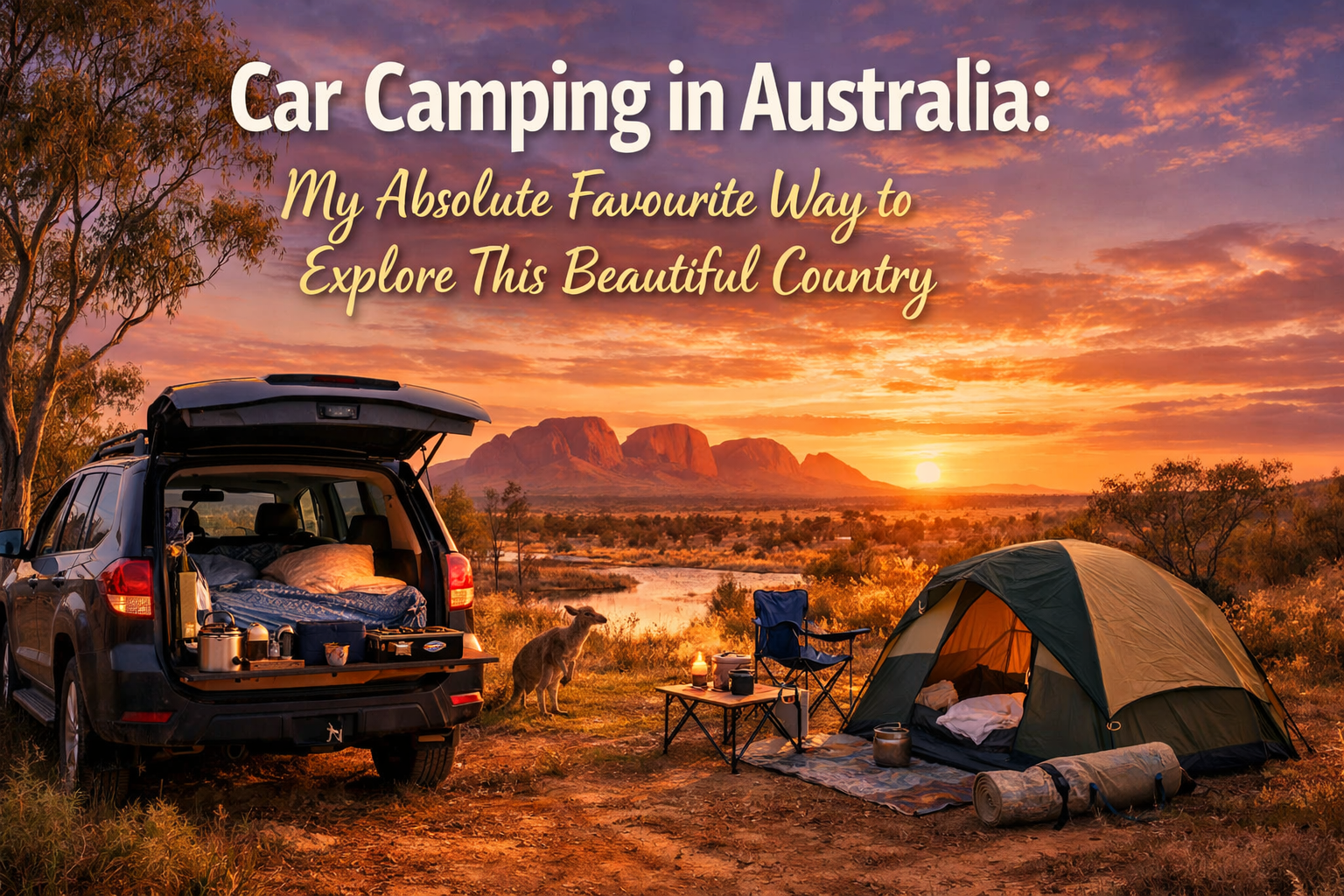
Hey fellow adventurers! Let me tell you about something I’m genuinely obsessed with – car camping around Australia. After years of exploring this incredible country, I can honestly say there’s no better way to experience our diverse landscapes than with your trusty vehicle as your basecamp. Grab a cuppa and let me share what I’ve learned from countless weekends (and quite a few epic road trips) sleeping under the stars.
Why I’m Hooked on Car Camping
Look, I’ll be straight with you – I used to think “real” camping meant hiking for hours with everything on your back. Then a mate convinced me to try car camping on the Great Ocean Road, and it completely changed my perspective. The freedom is incredible! You’re not committed to one spot. If the weather turns rubbish or you’re just not feeling the vibe, you can literally pack up and drive somewhere better. No dramas.
What really got me hooked though? The comfort-to-adventure ratio is just perfect. I can bring my actual pillow (life-changing, trust me), a decent esky full of cold drinks and fresh food, proper camping chairs instead of sitting on logs, and even my guitar for those campfire sing-alongs. You’re still completely immersed in nature, waking up to kookaburras and breathing in that crisp morning air, but you’ve got all the gear that makes the experience genuinely enjoyable rather than just survivable.
Plus, and this is huge for me, it’s made camping accessible for my whole family. My parents can come along now because they don’t have to worry about hiking capabilities, and my young nieces and nephews get to experience the outdoors without their folks stressing about carrying all their gear. It’s brought us all closer and created memories I’ll treasure forever.
The Aussie Advantage
Australia is absolutely made for car camping, mate. We’ve got this incredible network of campgrounds, national parks, and – here’s the kicker – heaps of free camping spots. I’m talking pull up along a creek in the outback, park near a secluded beach, or find a spot in state forests where you’ll see more kangaroos than people.
Some of my best memories are from free camps. There was this one time near Coober Pedy where we camped under the most insane starry sky I’ve ever seen – no light pollution for hundreds of kilometres. Cost us nothing except petrol to get there. Or that beach camp up in Queensland where I watched dolphins from my swag at sunrise. These experiences would cost hundreds at resorts, but car camping makes them accessible to anyone.
My Essential Gear List (Hard-Won Wisdom)
Right, let me save you from my early mistakes. Here’s what actually matters:
First up, your tent. Don’t cheap out here – I learned this the hard way during a storm in Tasmania. Get something quality with decent waterproofing, and make sure you’ve got the best cam buckle straps to properly secure it, especially if you’re strapping it to a roof rack or packing it down tight for travel. I’ve got a four-person tent for just me and my partner because that extra space is clutch when you’re spending a few days weathering rain or just want to spread out. Standing height tents are worth every cent if you can fit them.
Sleeping gear is non-negotiable. Australian nights can be bloody freezing even when the days are scorchers. I’ve got sleeping bags rated to -5°C and still bring extra blankets in winter. A decent sleeping mat or air mattress is the difference between waking up refreshed or feeling like you’ve been hit by a truck.
For cooking, I swear by my dual-burner camp stove and a portable fridge rather than an esky. Yeah, the fridge was an investment, but it runs off my car battery and keeps things actually cold for days. Game changer for longer trips. I’ve still got my trusty BBQ plate for those classic Aussie camp meals – nothing beats snags and steak cooked outdoors.
Lighting is something I obsessed over after one too many stubbed toes in the dark. I’ve got headlamps for everyone (keep them in the tent at night!), a couple of rechargeable lanterns, and solar-powered string lights that create the perfect vibe around camp. My solar panel setup charges everything during the day, so I’m not draining the car battery.
And here’s something people forget – entertainment! Books, cards, a speaker for music (respectful volume, obviously), and activities for different weather. Some of my favourite camping memories are from rainy days spent playing cards in the tent or reading by lamplight.
Heads Up About Kayak Roof Racks – Learn from My Mistakes!
Okay, this is really important if you’re thinking about bringing a kayak on your camping adventures. I love combining car camping with paddling – exploring gorges, fishing from the kayak, or just cruising along coastal waters. But I nearly learned the hard way about proper roof rack setup.
First time I transported my kayak, I thought “she’ll be right” and just strapped it down with what I had. Mate, driving down the highway at 110km/h with a kayak rattling and shifting is genuinely terrifying. Never again.
Here’s what I should have done from the start: invested in a proper roof rack system. You need solid crossbars rated for your vehicle (check your car’s manual – seriously, do it), and then kayak-specific carriers. I went with J-cradles because I sometimes take two kayaks, and they’re fantastic. The saddle-style racks are brilliant too if you’re only carrying one.
But here’s where things get really interesting – I recently discovered car lift assist kayak rack systems, and honestly, they’re a game-changer for solo paddlers or anyone who struggles with the physical challenge of hoisting a kayak onto the roof. These clever systems use hydraulic or pulley mechanisms to help you load and unload without throwing your back out. After watching my partner struggle one too many times, we invested in one, and it’s made our kayak trips so much more enjoyable.
I also picked up a car door step from Tooenjoymall – absolute ripper bit of kit! It’s this little platform that hooks onto your car door frame and gives you a solid step to reach your roof more easily. Before this, I was doing this awkward half-climb, half-jump maneuver that probably looked ridiculous. Now I just step up confidently, and it makes the whole loading process so much safer and easier. The Tooenjoymall one is sturdy, folds up compact, and has a grippy surface that works even when it’s wet. Cost me less than fifty bucks and has paid for itself in saved chiropractor visits!
The car door step is especially brilliant when you’re checking your kayak straps during road trips – you can quickly hop up to inspect everything without needing to find something to stand on. I keep mine in the door pocket so it’s always handy.
Australian regulations are pretty clear about this stuff, and for good reason. Your load can’t extend more than 1.2 meters past your vehicle’s rear without proper marking (red flag required), and everything must be secured properly. I’ve seen kayaks fly off cars on the highway – it’s dangerous and potentially fatal for other drivers.
Pro tips from experience: Always use bow and stern tie-downs in addition to the rack straps. I attach mine to my tow points, and it makes the whole setup rock solid. Check your straps every time you stop – I do it at every fuel stop and break. The vibration and wind can loosen things gradually. Having that car door step makes these checks quick and easy, so you’re more likely to actually do them.
Also, heads up about fuel economy. My usual 8L/100km jumps to nearly 11L/100km with the kayak on top. Budget for that extra fuel, especially on long trips through remote areas where servos are few and far between.
And load capacity matters! My roof can handle 75kg including the rack system. The rack is about 15kg, my kayak is 25kg, so I’m well within limits. Don’t just guess this – overloading can damage your car and is seriously unsafe.
If you’re in the market for kayak gear, definitely check out brands like Tooenjoymall – they’ve got a solid range of accessories that make the whole car camping and kayaking combo much more manageable. Their stuff is well-priced too, which matters when you’re kitting out for adventures on a budget.
Finding Your Perfect Spot
After camping all over this country, I’ve developed a system for finding the best spots. WikiCamps Australia is my bible – worth every cent of the subscription. It’s got user reviews, photos, facilities info, and even GPS coordinates for free camps. CamperMate is another ripper app I use.
My favourite coastal spots include places along the NSW South Coast where you can wake up to beach views, Western Australia’s coastline (absolutely stunning and less crowded), and anywhere along the Great Ocean Road. For national parks, I keep returning to Grampians in Victoria, Flinders Ranges in SA, and the Daintree up north – each offers something completely different.
Free camping though? That’s where the real magic happens. The Murray River has incredible free spots along its banks. Outback Queensland and SA have rest areas that feel like private paradises. Just remember – “free camp” doesn’t always mean unlimited stay. Most have 24-48 hour limits, and some are genuinely just rest areas where you can’t set up a full camp. Always check the signage and local council regulations.
One thing I’ve learned: popular spots during school holidays and long weekends need booking months in advance. I’m talking about places like Wilson’s Prom, Freycinet in Tassie, or anything near major cities. Plan ahead or be flexible with backup options.
Real Talk: Tips That Actually Matter
Arrive with daylight to spare. I aim to be setting up camp by 3-4 PM, which gives me time to scout the area, set up properly, and maybe even explore a bit before dark. Setting up in the dark is miserable – been there, done that, never again.
When choosing your exact spot, I look for level ground first (your back will thank you), then consider sun and shade patterns. In summer, shade is gold. In winter, I position to catch morning sun. Check overhead for dead branches – we call them widow makers for a reason, and Australia’s eucalypts drop branches without warning.
Camp etiquette is huge for me. I keep noise down, especially after 9 PM. My rule is: if I can hear your music from my camp, it’s too loud. Pack out everything you bring in – Leave No Trace isn’t just a suggestion, it’s how we preserve these places for everyone.
Fire safety in Australia is serious business. Check the fire danger rating before you leave home and throughout your trip. Total fire bans mean NO fires, not even gas stoves in some cases. When fires are allowed, use existing fire pits, never leave it unattended, and drown it completely before bed – I’m talking wet ash you can touch with your hand. Pour water, stir, repeat.
Food storage keeps wildlife safe and your supplies intact. I’ve had possums get into everything, goannas steal my breakfast, and even a cheeky crow fly off with my car keys (seriously, keep an eye on shiny objects). In some northern areas, proper food storage protects against dingoes too.
Getting Your Car Adventure-Ready
My car’s seen some things – dusty outback tracks, beach sand, mountain ranges, the lot. Here’s how I keep her reliable:
Before any trip, I check tyre pressure and tread, all fluid levels, battery condition, and make sure my spare’s actually inflated (you’d be surprised how often people forget this). I carry extra engine oil, coolant, a basic tool kit, and spare fuses. For remote trips, I add a shovel, MaxTrax, and a portable air compressor.
My recovery kit’s saved me more than once – got bogged on Fraser Island and would’ve been stuffed without proper equipment. If you’re heading off sealed roads, recovery gear isn’t optional.
I’ve got NRMA roadside assistance that covers remote areas, and I checked the fine print about where they’ll actually come get you. Some policies won’t cover you past certain distances from major roads. Know before you go.
Why This Life Chose Me
Car camping has given me so much more than just weekends away. It’s taught me self-reliance, deepened my appreciation for Australia’s incredible diversity, and connected me with a community of like-minded people who value experiences over possessions.
Every trip is different. Sometimes it’s a quick overnighter at a beach two hours from home. Other times it’s three weeks circumnavigating Tasmania or following the outback tracks through South Australia. The flexibility means I can camp my way – whether that’s social campgrounds with amenities or remote free camps where I don’t see another soul for days.
The addition of kayaking to my car camping adventures has opened up even more possibilities. Being able to explore waterways, reach secluded fishing spots, and see landscapes from a completely different perspective adds another dimension to the experience. And with the right gear – proper roof racks, car lift assist systems, and handy accessories like that car door step – it’s surprisingly easy to make it all work together.
For anyone considering car camping: just do it. Start small if you’re nervous – a night at a campground close to home. But I reckon once you experience that first morning watching the sunrise from your camp chair, coffee in hand, you’ll be planning your next trip before you’ve even packed up. This country is absolutely made for exploring, and car camping is hands-down the best way to do it. See you out there, legends!