Luxembourg, a small yet vibrant European nation nestled between France, Belgium, and Germany, may not be the first place that comes to mind when thinking of renowned glasswork traditions like those of Murano in Italy or Bohemia in the Czech Republic. However, the Grand Duchy boasts a rich and multifaceted relationship with glass, spanning artistic craftsmanship, historical stained glass mastery, modern industrial production, and contemporary creative expressions. From centuries-old stained glass studios preserving architectural heritage to innovative float glass manufacturing and unique glassblowing ateliers, glasswork in Luxembourg reflects the country’s blend of historical depth, cultural preservation, and forward-looking industry.
Historical Roots: Stained Glass as National Heritage
The story of artistic vitrerie Luxembourg begins prominently with stained glass, an art form that has adorned the country’s churches, public buildings, and private residences for over a century.
In 1891, Pierre Linster (also known as Hyppolite Linster), a Luxembourg-born artist trained in Paris at the prestigious Champigneulle studio, returned home to found the nation’s first stained glass atelier alongside Alexandre Schmit in Mondorf-les-Bains. This marked the birth of a true national glasswork tradition. The studio quickly became a hub for craftsmanship, producing leaded stained glass, painted works, and restorations that combined traditional techniques with emerging modern styles.
Today, this legacy lives on through Vitraux d’Art Bauer, a family-run studio that has operated for generations since the early 20th century. Specializing in creation, conservation, and restoration, Bauer collaborates closely with the National Institute for Architectural Heritage (INPA) to preserve Luxembourg’s stained glass treasures. Their works feature intricate glass painting, leaded designs, and fusions of historical authenticity with contemporary artistry. Many of Luxembourg’s cathedrals, chapels, and historic buildings bear their mark, making stained glass a cornerstone of the nation’s visual cultural identity.
While Luxembourg lacks ancient Roman glass artifacts on the scale of neighboring regions, its medieval and modern architectural glass has played a key role in illuminating history—literally and figuratively.
Contemporary Artistic Glass: Glassblowing and Unique Creations
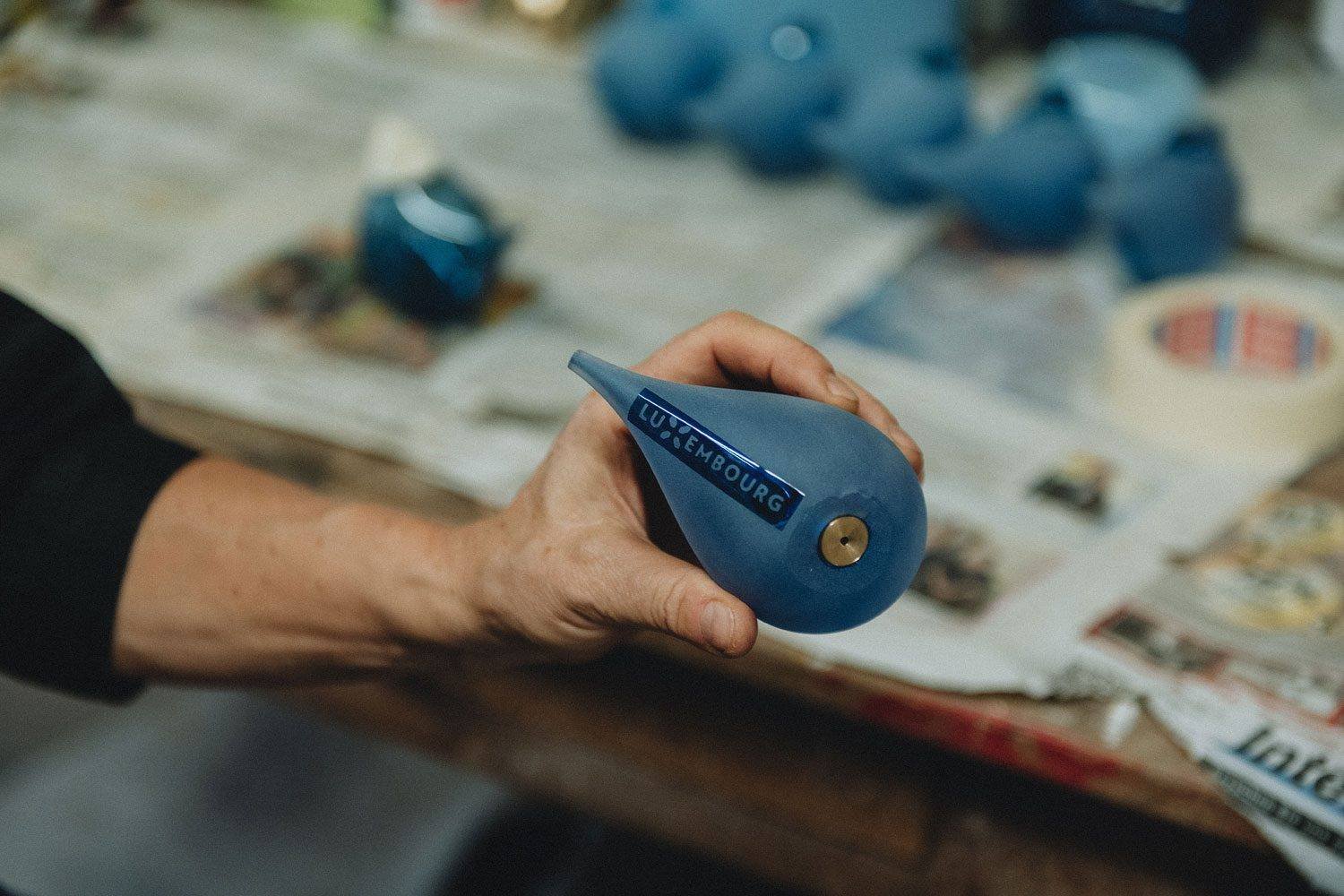
In the realm of hot glass—glassblowing and sculptural work—Luxembourg’s scene is intimate but passionate. Pascale Seil stands out as one of the country’s few dedicated glassblowers, often described as the only professional practitioner in the Grand Duchy.
Based in the picturesque village of Berdorf in the Mullerthal region (known as Luxembourg’s “Little Switzerland”), Seil discovered glassblowing during her studies at the École des Arts Décoratifs in Strasbourg. Facing barriers in traditional apprenticeships (notably gender restrictions in Italy), she honed her skills in France at the Centre Européen de Recherches et Techniques des Arts du Verre (CERFAV). Her studio produces delicate mouth-blown objects, from decorative vases and sculptures to functional pieces.
One of Seil’s signature creations is a modern reinterpretation of the Péckvillchen—a traditional Luxembourgish clay bird whistle dating back centuries, symbolizing spring and sold at the famous Emaischen festival. In glass, these translucent birds become ethereal collector’s items, blending folklore with contemporary art.
Another notable figure is Aurélie Adam, working under the brand L’Hermine Flamboyante. A certified glassblower and engraver, Adam offers workshops in Luxembourg, creating engraved nature-inspired pieces and sculptural glass that celebrate fauna and intricate drawings.
These artisans keep the flame of hot glass alive, often in small, visitor-friendly studios where one can observe the mesmerizing process of gathering molten glass from a 1,300°C furnace and shaping it into art.
Industrial Glasswork: Innovation and Global Reach
While artistic glasswork captures the soul, Luxembourg excels in industrial glass production, leveraging its central European location for high-tech manufacturing.
Guardian Glass operates a major float glass plant in Bascharage, established in 1981 as the company’s first facility outside the U.S. Recently upgraded with one of the world’s most energy-efficient furnaces, it produces advanced flat glass, including low-iron varieties for architectural applications. Innovations here focus on sustainability, with heat recovery systems reducing energy use by up to 25%.
In Grevenmacher, Webasto Luxembourg (formerly Carlex) specializes in automotive glass, producing panoramic roofs, heated windshields, and smart glass for vehicles worldwide. This high-tech line incorporates features like infrared reflection and integrated sensors, serving premium and mass-market automakers.
These facilities highlight Luxembourg’s role in modern glass innovation, supplying materials for buildings, cars, and beyond—far removed from artisanal roots but equally vital.
Crystal and Tableware: Influences and Collections
Luxembourg has no major historical crystal manufacturers like Baccarat or Lalique in France, but crystal glassware features prominently in collections and retail. Notably, French luxury brand Lalique has produced pieces inspired by Luxembourg, such as cherub-adorned sculptures and bowls in frosted crystal.
Villeroy & Boch, with deep historical ties to the region (early patterns like “Old Luxembourg” from the 18th century, though primarily porcelain), has also produced crystal stemware lines appreciated in Luxembourg homes and exports.
Exhibitions, Museums, and Experiencing Glasswork Today
Luxembourg’s museums occasionally feature glass in exhibitions, though no dedicated glass museum exists. The National Museum of History and Art (MNHA) uses advanced glass in displays for artifact preservation, while temporary shows in venues like Villa Vauban or Casino Luxembourg may highlight contemporary glass art.
Craft fairs like Expo Creativ include glasswork sections, showcasing beads, painting, and decorative items. For hands-on experiences, visiting ateliers like Seil’s or Adam’s offers workshops and demonstrations.
Nearby influences, such as French Moselle region’s glass Christmas bauble production, are easily accessible for day trips.
Conclusion: A Transparent Gem in Europe’s Heart
Glasswork in Luxembourg may be understated compared to larger neighbors, but it shines through dedicated artisans preserving stained glass heritage, innovative glassblowers reinterpreting traditions, and cutting-edge industries pushing boundaries. Whether admiring a restored cathedral window, watching molten glass take form in Berdorf, or driving a car with Luxembourg-made panoramic roof, glass touches daily life and culture here in profound ways. In this compact nation, glasswork exemplifies resilience, creativity, and adaptation—a clear reflection of Luxembourg itself.