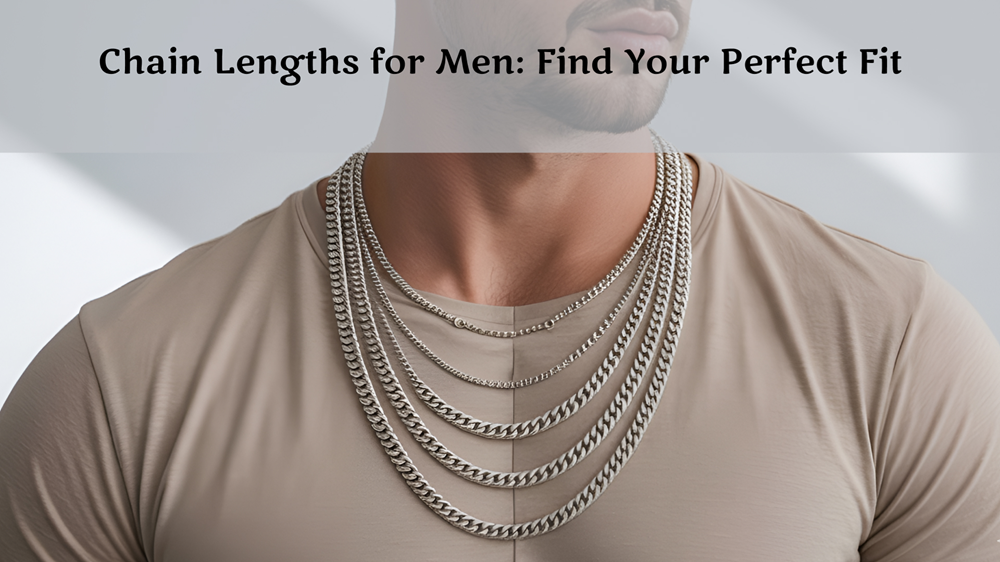
The difference between looking styled and looking lost often comes down to two inches of chain length. A chain that’s too short feels restrictive and disappears under your collar. Too long, and it throws off your proportions, making even premium pieces look like costume jewelry. The right length sits naturally on your frame, complements your wardrobe, and feels invisible while looking intentional.
This matters more than most guys realize. Whether you’re building your personal style from scratch or elevating your existing wardrobe, understanding chain lengths is as fundamental as mastering your grooming routine; both are investments in how you present yourself.
This guide breaks down exactly which length works for your body type, how to measure at home, and what each size actually looks like when you’re wearing it. You’ll learn the styling rules that matter and which ones you can ignore.
By the end, you’ll know your exact size and how to wear it with confidence.
The Fundamentals: How Men’s Chains Are Measured
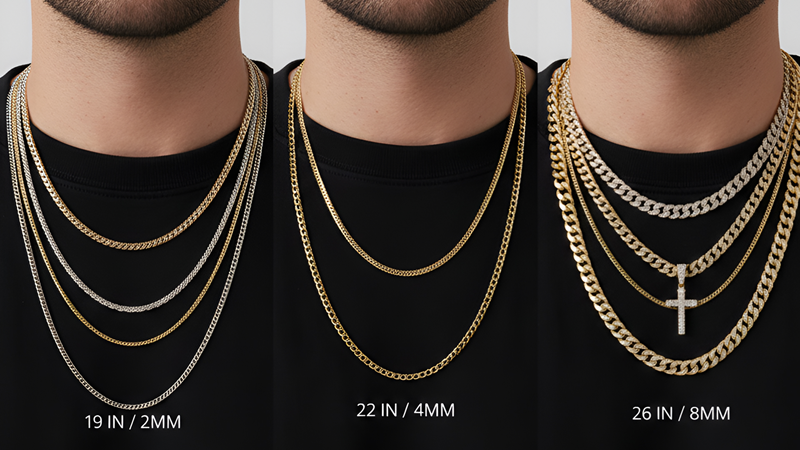
Chain length is measured from end to end, including the clasp. A 20-inch chain is exactly 20 inches when laid flat. This precision matters because even a 2-inch difference changes where the chain sits on your chest.
Most men’s chains come in standard 2-inch increments: 18, 20, 22, 24, 26, 28, and 30 inches. These intervals exist because smaller gaps (like 1 inch) don’t create enough visual difference to justify separate sizes, while larger gaps (4+ inches) skip over too many body types.
The Length-Width Connection
Chain length and width work together to create balanced proportions. A 24-inch chain at 3mm looks thin and lost on your chest. The same length at 7mm makes a statement.
Here’s the basic pairing:
- 18-20 inches: 2-5mm widths work best
- 22-24 inches: 4-7mm creates balance
- 26-30 inches: 6-10mm prevents the chain from looking fragile
In hip-hop and urban fashion trends, chain length isn’t just about fit; it’s about statement and authenticity. From iced-out Cuban links to custom pendants, the right length showcases your piece rather than hiding it.
Material Considerations
Gold chains come in different purities that affect durability. 10K and 14K gold handle daily wear better than 18K or 24K, which are softer and scratch more easily. For longer chains (24 inches and up) that experience more movement and stress, lower karat gold or sterling silver makes practical sense.
When choosing between genuine gold and alternatives, moissanite jewelry offers the same visual impact with better durability for everyday wear, especially in longer chain lengths that experience more movement.
The standard 20-inch chain became the industry norm because it fits 80% of adult men between the collarbone and the first shirt button, the most versatile position for both casual and formal wear.
Complete Chain Length Breakdown
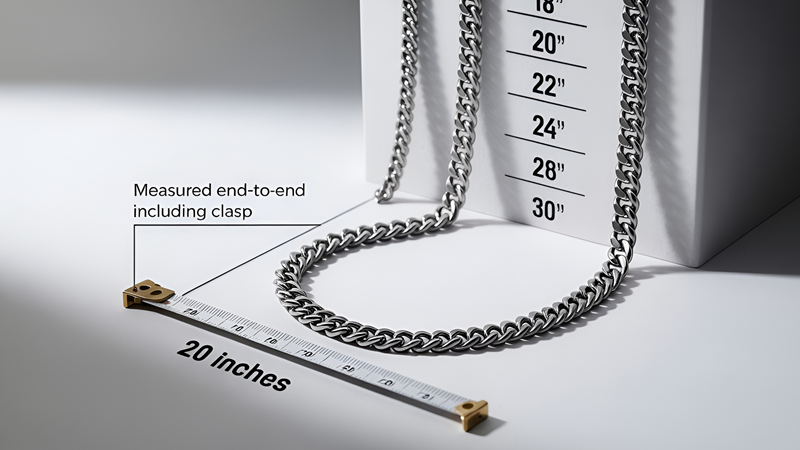
Each chain length creates a different look and serves different purposes. Here’s what you need to know about every standard size.
18-Inch Chain: The Minimalist Choice
An 18-inch chain sits at the base of your neck, almost like a collar. It’s the shortest standard length for men and creates a tight, choker-style fit.
Best for:
- Smaller builds under 5’8″
- Neck sizes 14-15 inches
- Minimalist and modern aesthetics
- Formal events and professional settings
This length works well if you never wear collared shirts or prefer jewelry that stays completely visible above your neckline. It’s not suitable for pendants since there’s no room for them to hang freely.
The 18-inch fits a specific style profile: clean, intentional, and understated. If you’re unsure whether you want your chain this tight, size up to 20 inches.
20-Inch Chain: The Universal Standard
The 20-inch chain falls at your collarbone, right between the first and second buttons on a dress shirt. This is the most popular length for good reason.
Best for:
- Average builds between 5’8″ and 6’0″
- Neck sizes 15-17 inches
- All occasions, casual to formal
- Everyday wear that works with any outfit
You can wear a 20-inch chain inside or outside your shirt. It sits in the natural hollow of your neckline, which makes it visible without demanding attention. This versatility makes it the safe choice for gifts when you don’t know someone’s exact preference.
If you’re buying your first chain, start here. It works with or without small pendants and pairs well with most necklines. For those just starting their jewelry collection, exploring custom baguette chains at this length offers a sophisticated entry point into luxury accessories.
22-Inch Chain: The Layering Sweet Spot
A 22-inch chain hangs 2-3 inches below your collarbone, grazing the top of your sternum. This creates more visual presence while staying versatile.
Best for:
- Athletic builds and broader shoulders
- Heights between 5’10” and 6’2″
- Casual wear and layering systems
- Medium-sized pendants
The 22-inch length gives you enough drop to layer comfortably with a 20-inch chain while maintaining separation. It’s the sweet spot for guys who want more than the standard 20-inch but aren’t ready for the statement impact of 24 inches.
This length works particularly well with open-collar shirts and casual button-ups, where the chain becomes part of your outfit rather than hiding beneath it.
24-Inch Chain: The Statement Length
At 24 inches, your chain falls mid-chest, roughly centered between your collarbone and belly button. This is where chains transition from accessory to focal point.
Best for:
- Taller men over 6 feet
- Statement pieces and bold styles
- Large pendants, crosses, and medallions
- Streetwear and creative industries
At 24 inches, your chain becomes a focal point perfect for showcasing statement pendants like custom name plates or iced crosses that demand attention.
This is the standard length in hip-hop culture because it maximizes pendant visibility. Your piece sits front and center on your chest, catching light from every angle. The 24-inch works best worn outside your shirt, especially when paired with medium to thick chain widths (5-8mm).
If you’re under 5’10”, this length might overwhelm your proportions. Test it before committing.
26-30 Inch Chains: Maximum Impact
Chains at 26 inches or longer fall into the lower chest area, approaching your sternum’s base. These lengths make bold statements and work best as part of layered systems or with oversized fashion.
Best for:
- Heights over 6’2″
- Layering is the longest piece in a stack
- Thick chains (8-10mm minimum)
- Fashion-forward and experimental styles
At these lengths, you need thicker chains to maintain visual balance. A thin 3mm chain at 30 inches looks disproportionate and fragile. Go for 8mm or thicker to carry the length with confidence.
The 30-inch length is uncommon as a standalone piece but works well for creating layered looks where it serves as the bottom layer beneath 22 and 24-inch chains.
How to Measure for Your Perfect Chain Length
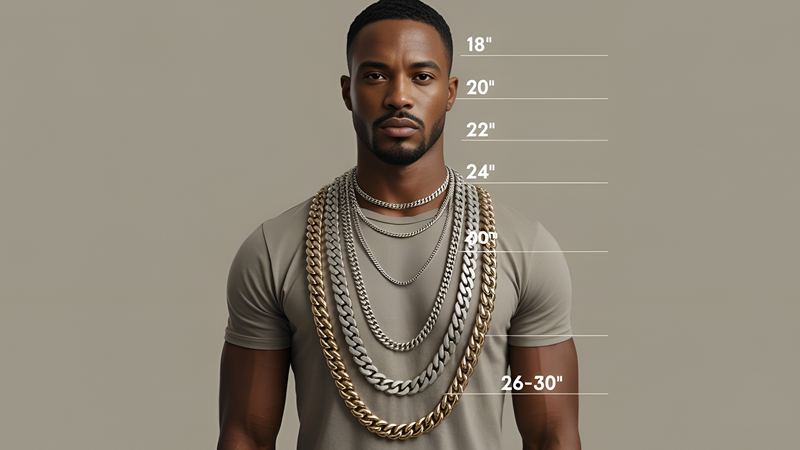
You don’t need to guess your chain size. Three simple methods give you accurate measurements at home.
Method 1: The Neck Measurement Formula
This is the most reliable approach if you’re starting from scratch.
What you need: Soft measuring tape or ribbon, plus a ruler
Steps:
- Wrap the measuring tape around your neck at the base, where a chain would naturally rest
- Note the measurement in inches (most men measure 15-17 inches)
- Add 2 inches for a standard fit that rests at your collarbone
- Add 3 inches for a more relaxed fit that hangs below the collarbone
- Round up to the nearest standard size (18, 20, 22, or 24)
Formula: Neck Size + 2 inches = Minimum comfortable chain length
Example: If your neck measures 16 inches, you’d want a minimum 18-inch chain, but 20 inches would be more comfortable and versatile.
Method 2: Using an Existing Necklace
If you already own a chain or necklace, use it as a reference point.
Lay it completely flat on a table and measure from end to end, including the clasp. If it fits perfectly, buy the same length. If it feels too tight, go up one size (add 2 inches). If it hangs lower than you’d like, go down one size.
This method works best when you’re trying to match a length you already know works for your body.
Method 3: Shirt Collar Conversion
Your dress shirt collar size provides a reliable starting point.
Check the tag on a fitted dress shirt (usually 15-17.5). Add 3-4 inches to this number for your comfortable chain length.
Example: A 16-inch collar typically means a 20-inch chain will fit well.
Adjustment Factors You Can’t Ignore
Standard measurements work for average builds, but you might need to adjust based on specific factors:
Larger chest or athletic build: Add 1-2 inches to your calculated length. Muscle mass in the upper chest changes how chains drape.
Longer torso: Even if you’re shorter in height, a long torso means you can comfortably wear 22-24 inch chains without looking overwhelmed.
Heavy pendants: Add 2 inches to your base measurement. The weight of the pendant pulls the chain down and changes where it sits.
Choosing Chain Length by Body Type
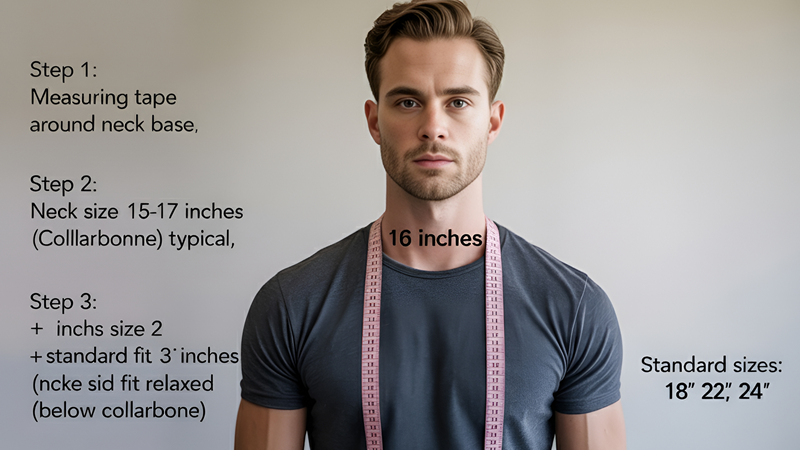
Your height and build determine which lengths create balanced proportions. Here’s what works for different physiques.
Shorter Men (Under 5’8″)
Stick to 18-20 inch lengths. Longer chains extend too far down your chest and make your torso look compressed.
Choose thinner chain widths (2-4mm) to avoid overwhelming your frame. A thick 7mm Cuban link at 24 inches will dominate your proportions, while a 20-inch chain at 4mm creates a clean, intentional style.
Keep layering minimal one or two chains maximum. More than that creates visual clutter on a shorter frame.
Average Build (5’8″ to 6’0″)
The 20-22 inch range is your sweet spot. These lengths work with your proportions, whether you’re wearing a t-shirt or a button-up.
You have the most versatility in chain widths. Anywhere from 4-6mm creates a balanced look. You can experiment with layering up to three chains using 20, 22, and 24-inch combinations.
This build handles most chain styles well, from delicate rope chains to medium-thickness Cuban links.
Taller and Athletic Men (Over 6’0″)
Start at 22 inches minimum. A 20-inch chain on a 6’2″ frame sits too high and looks disproportionately small.
Your ideal range is 22-24 inches for single chains, with 26-28 inches working well for layered looks. You can carry thicker chains (6-8mm and up) without them looking oversized.
Taller builds also handle bolder chain styles better. Thick Cuban links, chunky rope chains, and statement pieces work with your proportions in ways they don’t for shorter frames.
Broader Shoulders and Thick Neck
If your neck measures 17 inches or more, skip anything under 20 inches. An 18-inch chain will feel restrictive and look too tight.
Start at 22 inches for comfortable wear. Wider chains (6mm and up) match the proportions of a broader upper body. Thin chains get lost visually against wider shoulders.
Your evening look should be as intentional as your daily routine. Just as you’d invest in premium grooming products to refine your appearance, choosing the right chain length elevates your entire presence.
Styling Chain Lengths for Different Occasions
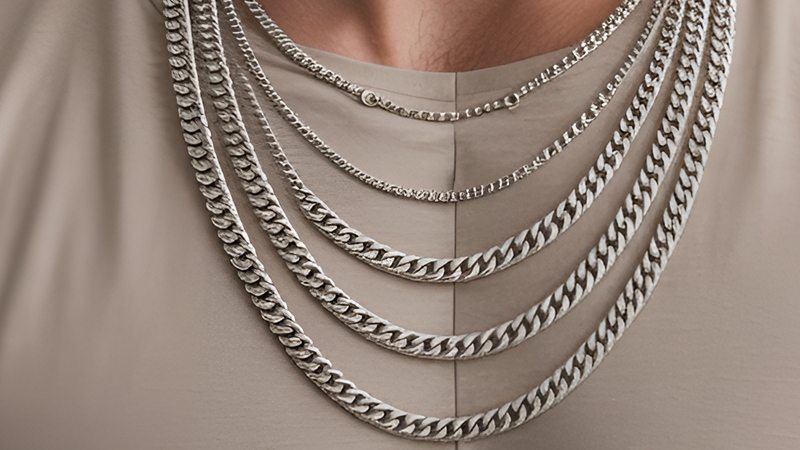
The same chain length works differently depending on where you’re wearing it. Match your length to the situation.
Formal and Professional Settings
Choose 18-20 inch chains in thin to medium widths (2-4mm). The chain should sit mostly hidden under your dress shirt collar or tie, creating a subtle touch rather than a statement.
White gold and silver work better than yellow gold in conservative environments. The cooler tones read as more understated.
If your chain is visible, it should be because of an open collar, not because it’s hanging far below your neckline. Keep it close to your neck and simple in design.
Business Casual
The 20-22 inch range works well with open-collar button-ups and polo shirts. You want the chain visible but not dominant.
Medium widths (4-6mm) strike the right balance. Go with classic styles like curb or rope chains rather than attention-grabbing Cuban links or iced-out pieces.
The chain should complement your outfit, not compete with it. If someone notices your chain first before your overall appearance, it’s probably too bold for business casual.
Casual and Weekend Wear
This is where you have the most freedom. Any length from 20-24 inches works, depending on your preference and what you’re wearing.
T-shirts and Henley shirts pair well with 22-24 inch chains that sit visibly on your chest. You can experiment with pendants at these lengths since casual wear gives you room to make bolder choices.
Thicker chains and statement pieces work here. If you’ve been conservative with jewelry in professional settings, casual environments let you express more personality.
Athletic and Gym Settings
Keep it short and secure. 18-20 inch chains with reliable lobster clasps prevent the chain from swinging during movement.
Choose durable materials like lower-karat gold (10K or 14K) or sterling silver. Avoid delicate chains that can break under stress, and skip pendants entirely, as they become distracting during workouts.
If your chain feels like it’s moving around too much while you’re active, it’s too long for athletic wear.
Nights Out and Social Events
Go for 22-24 inch statement lengths with bolder widths (6mm and up). This is where you can wear attention-grabbing pieces confidently.
For those drawn to the unmistakable flash of iced-out tennis chains, the 20-22 inch range ensures your stones catch every angle of light while maintaining sophisticated proportions.
Layer multiple chains if that matches your style. The evening setting supports more intentional, fashion-forward choices that would feel out of place in daytime professional environments.
Layering Multiple Chains
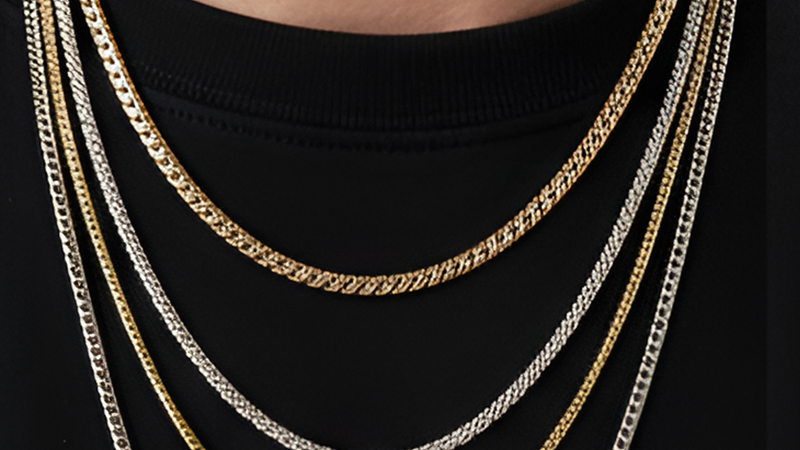
Wearing multiple chains creates depth and visual interest, but it requires planning to avoid looking cluttered.
The 2-Inch Rule
Always maintain at least 2 inches of separation between chain lengths. This prevents tangling and creates distinct visual layers.
Classic combinations that work:
- Starter stack: 20″ + 22″
- Balanced triple: 20″ + 22″ + 24″
- Bold statement: 22″ + 24″ + 26″
Anything closer than 2 inches (like 20″ + 21″) sits too similarly on your chest. The chains blend together instead of creating separate layers.
Mixing Styles and Widths
Keep all your chains within the same metal family. All gold or all silver maintains cohesion. Mixing gold and silver reads as unintentional unless you’re deliberately going for a maximalist look.
Vary your chain styles for visual interest. A rope chain, a Cuban link, and a Franco chain in the same stack create texture. Three identical curb chains look flat and repetitive.
Mix widths strategically. Your shortest chain should be the most delicate, with each longer layer getting slightly thicker. For example:
- 20″ at 3mm
- 22″ at 5mm
- 24″ at 7mm
Never pair a very thin chain (2mm) with a very thick one (8mm+); the contrast is too extreme and looks imbalanced.
Common Layering Mistakes
Lengths too close together: Chains within 1 inch of each other tangle constantly and defeat the purpose of layering.
All the same chain style: Wearing three identical curb chains at different lengths creates boring repetition. Mix it up.
Bottom layer too thin: Your longest chain should be substantial enough to anchor the look. A 24-inch chain at 2mm gets lost beneath a 20-inch chain at 6mm.
Mismatched metals: Combining yellow gold with white gold or silver looks unplanned. Commit to one metal tone.
Pairing Chain Lengths with Pendants
Adding a pendant changes the chain length you should choose. The pendant needs room to hang freely and be visible.
Small Pendants (Under 1 Inch)
Recommended chain length: 20-22 inches Chain width: 2-4mm (must fit through the pendant bail)
Small pendants like minimalist crosses, single initials, or delicate charms work best with shorter chains. At 20-22 inches, they sit just below your collarbone where they’re visible without being overwhelming.
Make sure your chain width fits through the pendant’s bail (the loop that connects to the chain). A 5mm chain won’t work with a pendant designed for thin chains.
Medium Pendants (1-2 Inches)
Recommended chain length: 22-24 inches Chain width: 4-6mm
This category includes religious medallions, dog tags, and standard crosses. These pieces need more drop to be fully visible and look proportional.
At 22 inches, a medium pendant sits in the upper chest area. At 24 inches, it centers on your mid-chest. Choose based on how much prominence you want the pendant to have.
The chain needs to support the pendant’s weight. Go for at least 4mm width to prevent the chain from looking fragile or breaking under stress.
Large Pendants (Over 2 Inches)
Recommended chain length: 24-26 inches Chain width: 6-8mm (supports weight and maintains proportion)
Large custom name plates, oversized medallions, and iced-out pieces demand 24 inches minimum. Any shorter and the pendant crowds your neckline.
When showcasing premium pieces like custom moissanite pendants, the 24-inch length provides maximum chest visibility while ensuring the chain complements rather than competes with your centerpiece.
Your chain width needs to match the pendant’s scale. A large 3-inch pendant on a thin 3mm chain looks disproportionate. Go for 6-8mm chains that visually balance with the pendant’s presence.
Weight Considerations
Heavy pendants pull the chain down, which changes where it sits on your chest. Add 2 inches to your normal chain length if your pendant has significant weight.
A pendant that weighs several ounces needs a sturdy chain. Anything under 4mm will stretch or break over time. Choose chains specifically rated for pendant wear, and look for reinforced clasps that handle the additional stress.
Popular Chain Styles and Their Ideal Lengths
Different chain designs look best at specific lengths. Match your style to the right size range.
Cuban Link Chains
Best lengths: 20-24 inches Minimum width: 6mm (looks best chunky and substantial)
Cuban links are the defining chain style in hip-hop culture. Their flat, interlocking links create a bold presence, but they need enough width to show the design clearly.
At 20 inches, a Cuban link sits tight and creates a collar-like effect. At 22-24 inches, it becomes a statement piece that drapes across your chest. The 24-inch length is most common because it maximizes visibility.
Thin Cuban links (under 5mm) miss the point of the style. If you’re going Cuban, commit to 6mm minimum, with 8-10mm being the sweet spot for that classic look.
Rope Chains
Best lengths: 18-22 inches. Versatile in all widths: 2-8mm
Rope chains work across the entire width spectrum. A delicate 2mm rope at 18 inches creates understated elegance. A thick 8mm rope at 22 inches makes a statement.
The twisted design catches light from every angle, which makes rope chains stand out even at smaller widths. This versatility makes them popular for both minimalist and bold styles.
Rope chains are particularly durable due to their woven construction, making them reliable for daily wear at any length.
Franco Chains
Best lengths: 20-24 inches Best widths: 2-5mm (designed to be sleek)
Franco chains feature a square, box-like pattern that creates a modern, sharp aesthetic. The design works best in thinner to medium widths, where the pattern remains distinct.
At 6mm and above, Franco chains start to look bulky in ways that don’t suit the style’s clean lines. Keep it sleek, 3-4mm at 20-22 inches is the classic Franco look.
These chains pair well with both casual and formal wear because of their refined appearance.
Figaro Chains
Best lengths: 22-26 inches Best widths: 5-8mm (pattern needs visibility)
Figaro chains alternate between shorter and longer links, creating a distinctive pattern. This design needs length to show the pattern clearly.
At 18-20 inches, the pattern sits too close to your neck to be fully appreciated. At 22-26 inches, the alternating links become a visible design element.
Figaro is an Italian classic that works particularly well at medium to thick widths, where the pattern contrast is obvious.
Tennis Chains
Best lengths: 18-22 inches Standard width: 3-5mm
Tennis chains feature continuous stones (usually diamonds or moissanite) set in a linked pattern. The iced-out look works best close to the neckline, where every stone catches light.
At 24 inches and longer, tennis chains can look excessive unless you’re deliberately going for maximum flash. The 20-inch length hits the sweet spot for formal and evening wear.
These chains are evening and occasion pieces rather than everyday wear. Pair them with outfits that can handle the attention they draw.
Maintaining Chains at Different Lengths
Longer chains require different care than shorter ones. Here’s what you need to know to keep your chains looking new.
Length-Specific Care
Shorter chains (18-20 inches): Less prone to tangling and kinking. Easier to clean thoroughly since you can lay them flat without excess material. These lengths experience less stress from movement.
Longer chains (24 inches and up): Higher risk of kinking, especially with delicate link styles. Store these chains hanging or in jewelry rolls to prevent tangles. The added length means more surface area that gets exposed to skin oils, sweat, and environmental factors.
Clean longer chains more frequently since they experience more contact with your body and clothing throughout the day.
Material Durability by Karat
10-14K Gold: Most durable for daily wear at any length. Resists scratches and holds up well to the stress of movement. Best choice for chains 22 inches and longer that experience more motion.
18-24K Gold: Softer and more prone to scratching and bending. Better suited for shorter chains (18-20 inches) that stay relatively stable on your body. These higher purities work for occasional wear but struggle with daily use at longer lengths.
Sterling Silver: Durable but tarnishes when exposed to air and moisture. Longer chains tarnish faster because more surface area is exposed. Polish weekly if wearing daily, and store in anti-tarnish bags.
Moissanite settings: Clean regularly with mild soap and water to maintain brilliance. The stones won’t scratch or dull like softer gems, making them practical for chains you wear frequently.
Storage Methods
Hang chains longer than 22 inches to prevent kinking. Use jewelry stands with hooks or wall-mounted organizers that keep each chain separated.
For chains 20 inches and under, flat storage in jewelry boxes works well. Use compartments or soft pouches to keep chains from tangling with each other.
Never store multiple chains together in a pile. The clasps catch on other chains and create knots that can damage delicate links when you try to separate them.
Cleaning Schedule
Gold chains: Clean monthly with mild dish soap, warm water, and a soft toothbrush. Focus on the links where dirt accumulates.
Sterling silver: Clean weekly if worn daily. Use silver polish or a silver cleaning cloth to remove tarnish before it builds up.
Chains with stones (tennis chains, iced pieces): Clean every two weeks. Oils from your skin dull the stones’ brilliance. Soak in warm soapy water, brush gently around each stone, and rinse thoroughly.
Longer chains collect more debris simply because they have more surface area and movement. Adjust your cleaning frequency based on the length.
Buying Your First Chain
If you’ve never bought a chain before, these guidelines prevent expensive mistakes.
Start with the Standard
Your first chain should be 20 inches in 14K gold or sterling silver at 4-5mm width. This combination works with the widest range of situations, body types, and styles.
It’s versatile enough to wear daily but substantial enough to feel like a real piece. You can dress it up for formal events or down for casual wear. It works with or without pendants.
Once you know how a 20-inch chain feels and looks on you, you can make informed decisions about sizing up or down for your next purchase.
Budget Allocation
- Under $200: Sterling silver or moissanite, 20-22 inches, 3-5mm width
- $200-$500: 14K gold, 20-24 inches, 4-6mm width
- $500-$1,000: 18K gold, any length, 5-8mm width
- $1,000+: Premium pieces, custom widths (8mm and up), designer styles
Spend on quality, not just karat. A well-made 14K chain at 5mm looks better and lasts longer than a thin, poorly constructed 18K chain at the same price point.
What to Check When Shopping Online
Read return policies carefully. You need the option to exchange if the length doesn’t work for your body. Look for at least 30-day return windows.
Check weight specifications. Heavier chains feel more substantial and durable. A 20-inch chain should weigh at least 15-20 grams for 14K gold at 4mm width. Anything significantly lighter might be hollow or poorly made.
Verify clasp type. Lobster clasps are most secure for daily wear. Spring ring clasps work, but are harder to fasten yourself. Avoid chains with flimsy or overly small clasps that won’t hold up long-term.
Look for size comparison photos. Photos of chains on models help visualize how the length actually looks when worn. Flat product shots don’t show you where the chain will sit on your chest.
Gift-Buying Strategy
When buying a chain as a gift without knowingthe exact measurements, default to 20 inches. It fits most men comfortably and rarely feels too short or too long.
Choose classic styles (rope or curb chains) over trendy designs. Classic pieces age better and suit more personal styles.
Include a gift receipt for easy exchanges. Even with a 20-inch standard, individual preferences vary, and the recipient might want to adjust the length.
Stick to medium widths (4-5mm) that work for most builds. Very thin chains look insubstantial, and very thick chains might not match the recipient’s style.
Finding Your Perfect Chain Length
Chain length determines whether your jewelry looks intentional or accidental. The right size complements your build, works with your wardrobe, and feels natural when you wear it.
Start with your neck measurement, add 2 inches, and round to the nearest standard size. For most men, this lands at 20 or 22 inches. Consider your height and build; taller frames need longer chains to maintain proportions.
Match your length to how you’ll wear the chain. Formal occasions call for shorter lengths (18-20 inches) that stay subtle. Casual wear and statement pieces work at 22-24 inches, where the chain becomes part of your look. Add 2-4 inches if you’re wearing pendants.
When in doubt, the 20-22 inch range with 4-5mm width works for 90% of men in most situations. It’s versatile enough to transition between different contexts while looking balanced on your frame.
Building your personal brand, whether through strategic social media content or curated accessories, is about authentic self-expression. Your chain length should reflect your confidence, not follow rigid rules.
Measure once, choose carefully, and wear what feels right for you.