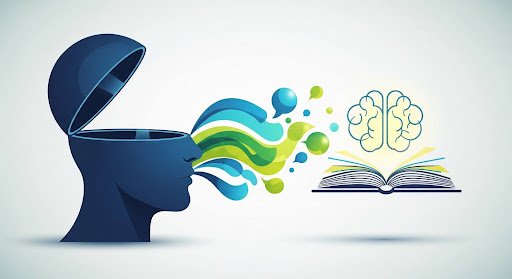
Every day, we are surrounded by ideas spoken aloud. Conversations spark insight. Lectures unfold complex thinking in real time. Personal reflections emerge when we talk through a problem or narrate an experience to ourselves. These moments often feel meaningful while they are happening. Yet, hours or days later, much of what was said fades.
This is not a failure of attention or intelligence. It is simply how human memory works. Spoken ideas move quickly. They arrive in sequence, shaped by tone and context, and then move on. Listening is a beginning, not a guarantee of learning.
Lasting knowledge forms later. It takes shape when ideas are revisited, examined, and connected. The challenge of modern knowledge work is not a lack of information, but the difficulty of transforming spoken moments into something durable, searchable, and reusable. AI is beginning to play a quiet but important role in closing that gap.
Why Spoken Knowledge So Often Disappears
Spoken communication is powerful precisely because it is fluid. Conversations adapt in real time. Lectures respond to questions and energy in the room. Reflections spoken aloud help us think through uncertainty. This flexibility makes speech engaging, but also fragile.
Unlike written text, spoken ideas are not naturally fixed. They depend on memory, and memory is selective. We tend to remember conclusions, not the reasoning that led there. We recall moments that felt emotional or surprising, while subtle insights slip away.
There is also the problem of pace. Speech moves forward without pause. Even when an idea resonates, there is rarely time to stop, reflect, and integrate it fully. The result is familiarity without depth—a sense that we understand something without being able to articulate or apply it later.
This gap matters across many areas of life. Students forget nuances from lectures. Professionals lose valuable context from meetings. Individuals miss insights that surfaced during personal reflection. Spoken knowledge is abundant, but it often fails to accumulate.
Making Spoken Ideas Revisit-able
The first step toward lasting knowledge is making spoken ideas visible beyond the moment they are spoken. Writing has long served this role. By externalizing thought, we slow it down and give it shape.
When spoken content is captured and preserved, it becomes something we can return to. We can reread it, question it, and notice patterns that were invisible in real time. This is where AI begins to assist—not by interpreting meaning for us, but by helping ensure that meaning does not vanish.
In many learning and work contexts, capturing speech has become more feasible through audio transcription tools, which allow spoken conversations or reflections to be transformed into text that can later be reviewed. The value here is not automation for its own sake, but the opportunity it creates for reflection after the fact.
Once ideas are no longer trapped in memory, they gain the chance to mature.
From Capture to Understanding
Capturing spoken content is only the beginning. Raw transcripts, like raw notes, are not yet knowledge. They are material. Understanding emerges through organization, emphasis, and return.
AI supports this stage by helping structure what was said. Themes can be grouped. Repeated ideas can be highlighted. Key questions and decisions can be separated from background discussion. This does not replace human judgment; it prepares the ground for it.
What matters most is that this process happens after the conversation or lecture has ended. Reflection requires distance. When we revisit spoken ideas later, we bring new context, calmer attention, and a clearer sense of what matters.
This shift—from immediate capture to later interpretation—is what turns information into learning.
Lectures, Talks, and the Problem of One-Time Exposure
Lectures and presentations are a classic example of fleeting knowledge. They often contain carefully structured ideas delivered over a limited time. Yet for many listeners, the experience is passive. Notes are partial. Attention drifts. Key connections are missed.
When spoken material from lectures can be revisited, learning changes. Students are no longer limited to what they managed to capture in the moment. They can return to explanations, reconsider arguments, and integrate new understanding gradually.
In contexts where visual and spoken elements are combined, video transcription tools make it possible to revisit not only what was said, but how ideas were introduced and developed over time. This supports deeper engagement without requiring repeated live exposure.
The important point is not the technology itself, but the learning behavior it enables: returning to ideas instead of letting them pass.
Personal Reflection as a Knowledge Source
Not all spoken knowledge comes from others. Some of the most valuable insights emerge when people talk through their own thoughts. Speaking aloud helps clarify uncertainty. It reveals assumptions. It allows half-formed ideas to surface.
These reflections are often private and unstructured. They might happen during a walk, while driving, or in quiet moments alone. Because they feel informal, they are rarely preserved. Yet they often contain the seeds of meaningful understanding.
When personal reflections are captured and revisited, they become a form of dialogue with oneself over time. Patterns emerge. Growth becomes visible. Past questions illuminate present answers.
AI can assist here by reducing friction—making it easier to preserve these moments so they can later be examined with fresh eyes.
Why Visibility Changes Thinking
Ideas change when we can see them. What felt clear in the moment may look incomplete on review. What seemed minor may reveal deeper significance. Visibility invites scrutiny, and scrutiny deepens understanding.
When spoken ideas become visible, several things happen:
- Connections between separate moments become easier to notice
- Repetition highlights what truly matters
- Gaps in reasoning invite further exploration
This process turns scattered inputs into a developing body of knowledge. Learning becomes cumulative rather than episodic.
From Individual Memory to Shared Understanding
In collaborative settings, the benefits multiply. Conversations often produce shared understanding that exists nowhere outside the minds of participants. When that understanding is not preserved, teams rely on informal recall, which is uneven and unreliable.
When spoken discussions are captured and organized, knowledge becomes collective rather than personal. New participants can understand past reasoning. Decisions retain their context. Misunderstandings are reduced.
This is not about surveillance or over-documentation. It is about continuity. Work becomes easier when people do not have to reconstruct history from fragments.
The Role of AI in Structuring Knowledge
AI’s strength lies in handling volume and helping impose gentle structure on complexity. It can organize large amounts of spoken content without demanding constant attention from humans. It can surface themes, highlight changes over time, and make information searchable.
What AI cannot do is decide what matters most to an individual or a team. That remains a human task. Meaning is personal. Insight depends on goals, values, and experience.
The healthiest relationship between AI and knowledge work respects this boundary. AI handles preservation and organization. Humans handle interpretation and judgment.
Turning Reuse Into a Habit
Lasting knowledge is not created in a single pass. It grows through reuse. When people return to past ideas, they refine them. They correct misunderstandings. They apply insights in new contexts.
This requires habit more than effort. Small, consistent acts of revisiting matter more than perfect systems. AI helps by making reuse easier—by ensuring ideas are findable when curiosity returns.
Over time, this creates a quiet compounding effect. Learning deepens. Thinking sharpens. Conversations build on one another instead of starting over.
From Information to Insight
Information is everywhere. Insight is rare. The difference lies not in access, but in engagement. Insight forms when ideas are revisited, questioned, and connected across time.
Spoken conversations, lectures, and reflections are rich with raw insight. They simply need space to evolve. When these moments are preserved and structured, they stop being fleeting experiences and become part of an ongoing intellectual landscape.
This is where learning becomes personal and meaningful. Knowledge is no longer something received once and forgotten. It becomes something lived with.
Learning After the Words Fade
Listening is only the first step. The real work of learning begins later, when the words have faded and reflection takes their place. AI helps by ensuring that spoken ideas are still there when we are ready to think more deeply.
By turning conversations, lectures, and reflections into lasting knowledge, we honor the effort that went into speaking and listening in the first place. We give ideas the time they need to grow.
In a world full of voices, lasting understanding belongs to those who return, reflect, and connect.