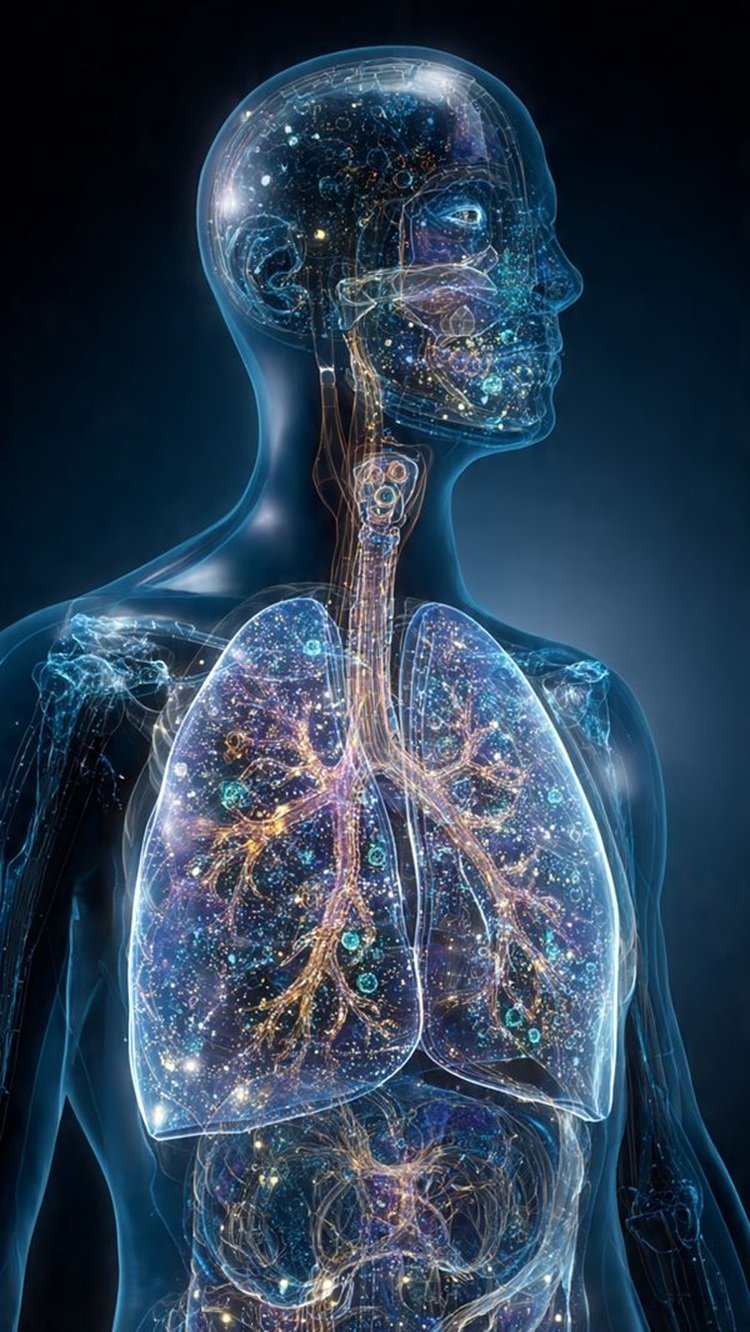
One of the most common activities of the body that a majority of people hardly consider is breathing whereby the body is able to inhale oxygen, utilize it as a source of energy as well as eliminating carbon dioxide. The respiratory system Labor’s hard delivering oxygen to billions of cells and eliminating wastes gases that may cause damage to the body should they be left to build up. Each breath facilitates metabolism, supplies organ work and assists in internal balance. Although breathing sounds very natural, the process of physiological mechanisms involved is both intricate, exact and exquisitely integrated.
This article is intended to describe in simple and interesting terms the path that the air follows, in the body, through the nose to the lungs, how gas exchange takes place in the alveoli, the way in which oxygen is transported to the tissues and carbon dioxide is eliminated by the lungs. In the course of this, we shall explore issues that affect respiratory efficiency such as exercise, environment and prevalent respiratory diseases.
Learning How Oxygen gets into the Body
The process of breathing commences way before the oxygen makes its way into the bloodstream. When air comes in through the nose or mouth, it begins a highly ordered process which includes the filtration, warming, humidification and the diversion of the air into the lungs. The respiratory system will maintain the purity of air that passes through the fine alveoli where gases are exchanged to a proper temperature and humid.
Upon intake of air using nose, minute hairs and mucous membranes captures dust, pathogens, and other particles. It is a natural filter system that does not allow the harmful materials to get to the lower part of the lungs. Through the mouth, some of this filtration is bypassed, however, the throat as well as the airway lining offers some protection. When the air goes through the pharynx and reaches the larynx, it goes past vocal cords and is then sent to the trachea.
The trachea (or windpipe) contains rings of cartilage which hold the trachea open. Its walls are lined with cilia that vibrate in motion to push any particles that are trapped upwards, and this could be swallowed or passed out. The trachea is further divided into two bronchi that lead to each lung respectively. It is repeated and these branches give rise to bronchioles, which become successively narrower until they terminate in groups of fine air channels called alveoli.
This branching airways system maintains the provision of oxygen with deep penetration into the lungs and provides the best possible area of gas exchange. The lungs have millions of alveoli that give it a massive surface area of approximately the size of a tennis court through which oxygen diffuses to the bloodstream. The respiratory system is designed in such a manner that every time a person breathes, new air moves to the alveoli in an efficient and predictable manner.
The Physiology of Breathing: Inhalation and Exhalation
Ventilation is facilitated by alterations in the air pressure in the chest cavity. A central role is played by the diaphragm which is a dome shaped muscle that is found below the lungs. When one inhales, the diaphragm contracts and goes downward enlarging the chest cavity. Simultaneously, the intercostal muscles between the rib cage also raise and expand the rib cage. This growth decreases pressure within the lungs causing the rush of air.
In the exhalation phase the rib cage goes back to the rest position and the diaphragm relaxes and raises. This makes the lungs get smaller and the internal pressure rises forcing air out. Exhalation is usually passive and it does not need a great deal of muscle effort. But when one is physically active or when taking a breath becomes difficult, other abdominal and chest muscles will help in forcing air out at a higher rate.
Such mechanical processes as contracting, expanding, relaxing are controlled by the brainstem, but we can consciously adjust our breathing to speak, exercise, or relax. This capacity to alternate automatic and voluntary control of the respiratory system is one of the most outstanding features of the respiratory system.
Gas Exchange: Between the Alveoli and Bloodstream
The most crucial process starts when the air gets into the alveoli: gas exchange. A network of capillaries (the tiniest blood vessels in the body) is surrounding every alveolus. Both alveoli and capillary walls are extremely thin, which enables oxygen and carbon dioxide to be readily diffused across the walls.
As the oxygenated air gets into the alveoli, Oxygen molecules get diffused into the blood, since the concentration of oxygen will be less in the capillaries than in the alveolar air. Simultaneously, carbon dioxide as a product of cell metabolism is diffused through the blood into alveoli where it is able to be exhaled. This diffusion is facilitated by simple diffusion on the basis of concentration gradients.
Efficiency of gaseous exchange is determined by the following factors: the thickness of the wall of the alveoli, the quantity of the area accessible, the velocity of blood passing through capillaries, and the concentration differences of oxygen and carbon dioxide. Diseases that destroy alveoli like emphysema or acute pneumonia decrease the surface area on which exchange takes place. The build-up of fluids such as in heart failure raises the distance that gases have to cover. These two disorders render breathing ineffective.
In normal circumstances, gaseous exchange takes place fast. The blood flowing into the lungs is fully oxygenated within some fraction of a second and is now capable of supplying the tissues around the body.
Hemoglobin: The Transporter of Oxygen
Most oxygen is transported by the large molecule haemoglobin in blood plasma even though it dissolves a little in blood plasma itself. All the molecules of haemoglobin have iron, which is effective in binding oxygen. A haemoglobin molecule has a capacity of up to four oxygen molecules and therefore it is a very effective transporter.
As blood circulation is going through the lungs, haemoglobin binds with oxygen, and an oxyhemoglobin form is formed. In the tissues where blood is of lower oxygen, haemoglobin gives up the oxygen where required. The release is affected by temperature, pH and concentration of carbon dioxide. As an example, active muscles generate heat and carbon dioxide and this gives an indication to haemoglobin to release additional oxygen in those areas.
This active system is used to make sure that oxygen is carried to the right place and time. The absence of haemoglobin would slow down the process of oxygen delivery that cannot sustain the organs of the body, particularly the brain and muscles.
It is also important in the movement of carbon dioxide. A portion of the carbon dioxide dissolves directly in the plasma, part is absorbed to haemoglobin and the majority is changed to bicarbonate ions through the enzyme in red blood cells. This buffer mechanism is useful in keeping the right pH of the blood and in the process of carrying carbon dioxide to the lungs so that it can be given out.
The Route of Carbon Dioxide Excretion
The process of removal of carbon dioxide is equally crucial as that of oxygen. After blood flows to the lungs, the mechanisms that aided the transportation of carbon dioxide are inverted. The bicarbonate ions are reverted to carbon dioxide which is diffused into the alveoli. Carbon dioxide is also released by Haemoglobin, making it add to the process.
When one exhales, carbon dioxide is eliminated by the same route as oxygen was used; this is alveoli to bronchioles to bronchi to trachea to mouth or nose. This is an ongoing elimination process that averts the accumulation of carbon dioxide that would have caused acidity in the blood. An increase in CO 2 may bring about headaches, disorientation and even unconsciousness unless remedied.
Breathing efficiency is important in maintaining the stability of blood pH. Even slight alterations in respiratory rate may impact the level of carbon dioxide. Quick breathing lowers carbon dioxide level and slow breathing raises it. This relationship is the reason breath control training may influence relaxation and why respiratory diseases may interfere with acid-base homeostasis.
Factors which affect the breathing efficiency
The respiratory system is automatic and yet there are various factors affecting the efficiency of how the oxygen gets into the body and the efficiency of the carbon dioxide release. The factors are age, physical fitness, altitude, and environmental pollutants.
During old age, the elasticity of the lungs becomes less, the respiratory muscles might become weak. This has the ability of decreasing the lung capacity and making it slightly inefficient in gaseous exchange. Exercising on a regular basis is a way to overcome some of these changes by keeping respiratory muscles strong and blood circulating well.
Working out improves the efficiency of the respiration in general. When exercising the breathing is deeper and faster inhaling more and more oxygen in the lungs. The muscles will also require more oxygen and the heart will pump quicker to supply this oxygen. Regular exercises over time increase the capacity of the lungs and enhances the uptake of oxygen.
The other significant factor is altitude. Oxygen concentration of air is less at high elevations. The oxygen concentration does not change, however, the air pressure decreases, which decreases the quantity of oxygen per breath. Human beings in high altitudes adjust to this scenario through the production of more red blood cells, elevated hemoglobin level and efficiency of the lungs.
The respiratory system can be irritated and damaged by the environmental pollution (smoke of cigarettes or smog, or chemical fumes, etc.). Airways become inflamed, lung capacity decreases, and gaseous exchange becomes impaired by pollutants. Excessive exposure is likely to raise the occurrence of chronic respiratory illnesses.
Lung Diseases and the Effects of the Lung Diseases on Breathing
A number of conditions disrupt the normal functions of respiratory system. The effect of the disorders in connection with breathing is useful in comprehending the essence of having sound respiratory health.
Asthma is a disease that involves the inflammation and constriction of airways due to the influence of some triggers, including pollen, exercise, or cold air. When one is having an asthma attack, the airways contract, preventing the oxygen flow to the alveoli. Drugs like inhalers are used in relaxing the airway muscles and to decrease the inflammation.
COPD comprises of emphysema and chronic bronchitis. The chronic bronchitis is characterized by the irritation and swelling of the airways and the emphysema ruins the alveolar walls. The two conditions impair the efficiency of gas exchange. Individuals affected by COPD usually develop shortness of breath, fatigue, and breathlessness during full exhalations.
Pneumonia is a disease that inflames alveoli with fluid or pus to prevent gas exchange. Pneumonia may severely affect the delivery of oxygen and breathing depending on its severity.
Influenza or COVID-19 can cause respiratory infections that cause inflammation of the airways and alveoli, making breathing strenuous and decreasing the oxygen level in blood.
The awareness of these disorders indicates why breathing is necessary as a whole to well-being.
The respiratory system and exercise
Exercise stresses the respiratory system in a significant manner. When exercising, the muscles demand a lot more oxygen and generate more carbon dioxide. To address this demand, respiratory rate rises up, and breathing becomes deeper. This improves lung ventilation and speed of gaseous exchange.
Athletes tend to increase the size of the lungs and build muscles that are more powerful in breathing. Their bodies are better in the capability to carry oxygen and get rid of carbon dioxide. These adaptations are also enhanced by high altitude training that prompts the production of red blood cells.
Nevertheless, the severe exercise may also work the respiratory system. In the absence of proper conditioning, the breathing process might become a strain and the delivery of oxygen to the body might fall behind the muscle needs. This is the reason why warm ups, pacing and gradual training progressions play a role in preserving respiratory efficiency.
The Interaction between the Respiratory System and the Cardiovascular System
It is impossible to separate breathing and circulation. The respiratory system takes in oxygen and takes out carbon dioxide in the body, and it is the cardiovascular system that takes out and puts in the gases between the lungs and tissues. The blood is Oxygenated by the lung and pumped to the organs by the heart. The tissues burn the oxygen to generate energy which leaves carbon dioxide as a byproduct. The carbon dioxide is transported by the blood to the lungs where it is released.
This collaboration helps the body to keep the internal conditions stable. Unless respiratory and cardiovascular activities are synchronized, cells will be unable to get the fuel required or remove the waste.
Conclusion
The process of breathing is not only inhalation and exhalation. It is a complicated and very sensitive physiological activity that maintains all the body parts. The knowledge of oxygen uptake into the body, the process of gaseous exchange in the alveoli, haemoglobin bearing of oxygen, and the elimination of carbon dioxide provides a better understanding of the significance of the respiratory system.
The respiratory system becomes adjusted to the exercise, elevation, and climate difficulties. It shields the body against particles that are harmful, aids in metabolism and keeps the acid-base level. Its failure is felt throughout the body when the disorders interfere with the normal operation of the body. People can understand the great processes that occur in the respiratory system with each breath and thus, value them.