In today’s digital economy, over 2.5 billion people worldwide rely on credit systems for everything from mobile apps to financial services. Yet a staggering 68% of developers report difficulties in implementing effective credit tracking mechanisms that keep users informed without overwhelming them. The challenge isn’t just about monitoring credits—it’s about presenting information in ways that are immediate, clear, and actionable.
Traditional credit tracking solutions often fall short, relying on small smartphone screens or cluttered dashboards that fail to capture attention when it matters most. This creates a critical gap between data availability and user awareness, leading to missed opportunities and frustrated customers. The solution lies in an unexpected technology: 4K laser short throw projectors.
This article explores how cutting-edge projection technology is transforming credit management systems. We’ll examine the fundamentals of credit tracking, discover how 4K projectors integrate seamlessly into existing frameworks, and reveal practical strategies for implementing visual credit alerts that enhance user engagement and system efficiency.
Understanding Credit Systems
Credit systems form the backbone of modern digital applications, operating as virtual currencies that control access to features, services, and content. Whether powering API calls in cloud platforms, managing messaging quotas in communication apps, or regulating computational resources in AI services, these systems ensure fair resource distribution while generating predictable revenue streams. Every transaction, from a simple database query to complex machine learning inference, consumes credits that users must monitor and replenish.
The fundamental challenge lies in maintaining user awareness without disrupting workflow. When credits run low, applications risk service interruptions that damage user experience and business reputation. Traditional notification methods—push alerts, email warnings, and dashboard indicators—often go unnoticed until it’s too late. Studies show that 43% of service disruptions occur because users missed critical credit threshold warnings buried in notification queues or overlooked on small mobile interfaces.
The problem intensifies in multi-user environments where teams share credit pools. Developers need real-time visibility into consumption patterns, but conventional tracking tools require active monitoring through dedicated interfaces. This creates a disconnect: the information exists, but it’s not present where decisions happen. Users working in physical spaces—offices, control rooms, collaborative workstations—need ambient awareness that integrates naturally into their environment rather than demanding constant screen-checking. Effective credit tracking must bridge this gap between data availability and human attention, delivering information that’s impossible to miss yet non-intrusive to ongoing work.
Introduction to 4K Laser Short Throw Projectors
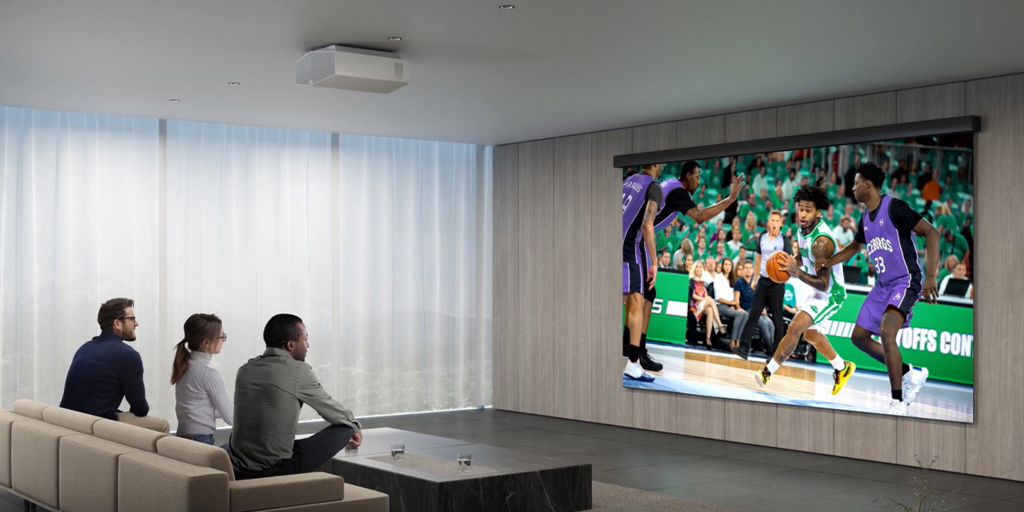
4K laser short throw projectors represent a breakthrough in display technology, capable of projecting massive, crystal-clear images from distances as short as inches from the wall. Unlike traditional projectors that require extensive ceiling mounts and room-darkening conditions, these devices sit on credenzas or shelves and deliver 3840×2160 resolution with vibrant colors even in well-lit environments. The laser light source provides consistent brightness exceeding 3000 lumens while eliminating bulb replacements, making them maintenance-free solutions for continuous operation.

The technical advantages translate directly into credit tracking applications. Short throw capability means projectors can display large-format dashboards in compact spaces—conference rooms, developer workstations, or operations centers—without obstructing foot traffic or requiring complex installation. The 4K resolution ensures that detailed credit metrics, consumption graphs, and threshold warnings remain legible even when projected across entire walls. Laser phosphor technology guarantees color accuracy for status indicators: red warnings for critical thresholds, amber cautions for approaching limits, and green confirmations for healthy credit balances.
Integration into credit systems leverages standard connectivity protocols. Most 4K laser projectors accept HDMI, USB-C, and network inputs, allowing them to function as extended displays for existing monitoring infrastructure. A dedicated mini-PC or single-board computer can run lightweight dashboard software that pulls credit data via APIs and renders real-time visualizations. The projector becomes an ambient information radiator—constantly visible but requiring no active interaction. When credit levels change, the display updates automatically, providing passive awareness that keeps teams informed without interrupting their primary tasks. This approach transforms credit tracking from an active monitoring burden into an environmental awareness system that integrates seamlessly into physical workspaces.
Key Features of 4K Laser Projectors
The native 3840×2160 resolution of 4K laser projectors delivers unparalleled clarity for credit tracking dashboards, allowing teams to display multiple data streams simultaneously without sacrificing readability. At typical projection sizes of 100-150 inches diagonal, individual metrics remain sharp enough to read from across a room. This pixel density means developers can show granular credit consumption graphs, user-specific allocations, historical trends, and threshold warnings on a single screen without requiring zooming or navigation. The visual real estate transforms credit monitoring from a single-metric task into comprehensive situational awareness.
Laser phosphor light engines eliminate the maintenance burden that plagued traditional lamp-based projectors. With operational lifespans exceeding 20,000 hours—equivalent to running continuously for over two years—these systems require no bulb replacements or brightness degradation concerns. The instant-on capability means projectors can power up to full brightness in seconds, ideal for automated alerts triggered by credit threshold events. Unlike LED projectors that dim in ambient light, laser sources maintain consistent 3000-3500 lumen output, ensuring dashboards remain visible in brightly lit offices, control rooms, or collaborative spaces with large windows.
Energy efficiency becomes significant in always-on monitoring scenarios. Modern 4K laser projectors consume 150-250 watts during operation, comparable to running two desktop monitors but providing ten times the display area. Standby modes reduce power draw to under 0.5 watts when credit systems are idle, and intelligent sensors can wake the projector automatically when team members enter the space or when critical alerts require immediate attention. This efficiency makes continuous operation economically viable even for small development teams.
Short throw optics deliver the critical advantage for workspace integration. Throw ratios of 0.25:1 mean projectors placed just 12 inches from a wall can create 100-inch displays, eliminating shadows cast by people walking past and removing ceiling mounting requirements. This proximity allows projectors to sit on existing furniture—desks, credenzas, or equipment racks—making installation as simple as positioning the device and connecting a video cable. The compact form factor, typically under 20 pounds, means projectors can be repositioned as workspace needs evolve without requiring facilities modifications or professional installation services that add cost and complexity to credit tracking deployments.
Integration with Credit Systems
Integrating 4K laser projectors into existing credit infrastructure begins with establishing the data pipeline. Most credit systems expose RESTful APIs or webhook endpoints that provide real-time balance information, consumption rates, and threshold status. A lightweight middleware application—built with Python, Node.js, or Go—polls these endpoints at configurable intervals, typically every 5-30 seconds depending on transaction volume. This middleware transforms raw API responses into structured data formats suitable for visualization libraries, handling authentication, rate limiting, and error recovery automatically. For systems without APIs, database connectors can query credit tables directly, though this approach requires careful attention to read replica usage to avoid impacting production performance.
The visualization layer runs on a dedicated mini-PC or single-board computer connected directly to the projector via HDMI or USB-C. Raspberry Pi 4, Intel NUC, or similar devices provide sufficient processing power for real-time dashboard rendering while consuming minimal power and space. Web-based dashboard frameworks like Grafana, Apache Superset, or custom React applications display credit metrics in full-screen kiosk mode, eliminating browser chrome and maximizing information density. These applications pull data from the middleware layer via WebSocket connections for instantaneous updates or standard HTTP polling for simpler implementations. Configuring the display computer to auto-start the dashboard application on boot ensures the system recovers automatically from power interruptions.
Best practices for seamless integration emphasize redundancy and visibility testing. Deploy dual data sources when possible—primary API connections with fallback database queries—to maintain dashboard functionality during maintenance windows or network issues. Implement heartbeat monitoring that displays connection status directly on the projected dashboard, ensuring teams immediately recognize when data freshness is compromised. Test projector visibility under actual working conditions at different times of day, adjusting brightness, contrast, and color schemes to maintain readability as natural lighting changes. Position projectors to avoid direct sunlight on the projection surface, which degrades contrast even with high-lumen laser sources.
Security considerations require attention in environments handling sensitive credit information. Isolate the visualization infrastructure on dedicated network segments with firewall rules permitting only necessary API connections. Use read-only database credentials and API tokens with minimal permissions to limit exposure if the display system is compromised. For multi-tenant environments, implement view filtering that shows only credits relevant to the physical space—team-specific allocations rather than organization-wide data. Configure screen savers or automatic display timeouts for projectors in semi-public areas, balancing persistent awareness with information confidentiality. Document the integration architecture thoroughly, including API endpoints, credential storage locations, and recovery procedures, ensuring team members can troubleshoot issues without requiring specialized knowledge of the projection system’s technical implementation.
Streamlining Credit Alerts
Traditional credit alert systems suffer from a fundamental flaw: they compete for attention in already-crowded notification channels. Email warnings get buried in overflowing inboxes, push notifications disappear after a few seconds, and dashboard indicators require users to actively check monitoring interfaces. 4K laser projectors eliminate this competition by creating a dedicated, impossible-to-ignore alert channel that exists in the physical environment where work happens. When credit balances approach critical thresholds, the entire projected display can shift to attention-grabbing visual states—pulsing borders, color-coded backgrounds, or animated warning indicators that occupy peripheral vision without requiring direct focus.
Real-time visualization transforms abstract credit numbers into intuitive status indicators. A full-wall projection can display current credit levels as progress bars that drain visually as consumption occurs, making depletion rates immediately obvious. Consumption velocity indicators show whether credits are being used faster or slower than historical averages, helping teams anticipate when replenishment will be needed. Time-to-depletion counters project estimated hours or days until credits exhaust at current usage rates, converting raw balance numbers into actionable timeframes. These visualizations update continuously as API data refreshes, providing living awareness that static dashboards cannot match.
Tiered alert systems leverage the projector’s visual prominence for graduated responses. At 50% remaining credits, subtle color shifts from green to amber provide early awareness without disrupting workflow. When balances drop to 25%, more prominent visual changes—larger warning text, flashing indicators, or dedicated alert panels—demand attention while teams still have time to respond. Critical thresholds below 10% trigger maximum-visibility states: full-screen warnings, high-contrast color schemes, and optional audio alerts from the projector’s built-in speakers. This graduated approach prevents alert fatigue while ensuring truly critical situations cannot be missed.
Multi-user environments benefit from spatial alert customization. Different projection zones can display team-specific credit pools, allowing multiple groups sharing a workspace to monitor their allocations independently. Automated alert escalation can adjust visibility based on time of day—subdued indicators during focus hours, more aggressive warnings during breaks when interruption is acceptable. Integration with calendar systems can suppress non-critical alerts during scheduled meetings while ensuring emergency thresholds always break through. The physical presence of projected alerts creates natural accountability: when an entire team sees credits depleting rapidly, responsibility for optimization becomes shared rather than falling solely on administrators monitoring hidden dashboards.
Visualizing Credit Data
Effective credit visualization begins with selecting appropriate chart types for different data characteristics. Time-series line graphs excel at showing consumption trends over hours, days, or weeks, revealing usage patterns that inform capacity planning. Stacked area charts display multiple credit pools simultaneously, making it easy to compare consumption across different services or user groups. Gauge visualizations provide instant status recognition—credit levels displayed as speedometer-style indicators communicate health at a glance without requiring numerical interpretation. Heat maps reveal temporal patterns, highlighting peak usage periods that might benefit from rate limiting or capacity adjustments.
Dashboard layout optimization exploits the 4K projector’s massive resolution by organizing information hierarchically. Primary metrics—current balance, depletion rate, and time-to-exhaustion—occupy the top third of the projection in large, high-contrast typography readable from across the room. Secondary details like historical graphs and per-service breakdowns fill the middle section at moderate sizes, available for closer inspection but not demanding immediate attention. Tertiary information such as configuration settings, API status, and system health indicators reside in the bottom or side margins, present for troubleshooting but visually subordinate to operational data. This Z-pattern layout matches natural eye movement, ensuring critical information receives attention first.
Software tools for building these visualizations range from code-free solutions to fully custom implementations. Grafana provides pre-built dashboard templates with extensive plugin ecosystems supporting virtually any data source, making it ideal for teams wanting rapid deployment without custom development. Kibana integrates naturally with Elasticsearch-based credit systems, offering powerful query capabilities and real-time updating. For organizations requiring branded interfaces or specialized visualizations, web frameworks like D3.js, Chart.js, or Recharts enable fully customized dashboards built with standard web technologies. These run in full-screen browser windows on the display computer, with CSS media queries optimized for the projector’s 3840×2160 resolution.
Animation and motion design enhance comprehension when used judiciously. Smooth transitions between data states—credit balances updating, graphs scrolling, alert conditions appearing—help viewers track changes without jarring visual jumps. Subtle pulsing effects on warning indicators maintain attention without becoming distracting. Animated consumption counters that increment in real-time create visceral awareness of ongoing credit usage. However, excessive animation causes fatigue and reduces information density. Best practice limits motion to state transitions and critical alerts, keeping the majority of the display stable so viewers can reference static information without waiting for animations to complete. Color consistency across visualizations reinforces meaning: green universally indicates healthy states, amber signals caution, and red demands immediate action, creating a visual language that requires no training to understand.
Advanced Credit Tracking Solutions
Enterprise-scale credit tracking deployments leverage 4K projectors as command center focal points, creating operations rooms where multiple data streams converge into unified situational awareness. Financial services firms managing API credit pools across hundreds of microservices project consolidated dashboards that aggregate consumption across business units, geographic regions, and service tiers. Automated anomaly detection algorithms highlight unusual consumption spikes—potential security breaches or misconfigured applications—as flashing overlays on the projected display, triggering immediate investigation. Machine learning models predict credit exhaustion windows based on historical patterns and current velocity, displaying confidence intervals that help procurement teams schedule replenishment before disruptions occur.
A cloud infrastructure provider implemented wall-sized projections in their network operations center, displaying real-time credit consumption for their top 50 enterprise customers. Using XGIMI Tech projectors with ultra-short throw capabilities, the operations team achieved a 120-inch display from just 10 inches away from the wall, maximizing visibility in their compact control room. When a major client’s credits dropped unexpectedly due to a runaway batch process, the operations team noticed the visual alert within seconds and proactively contacted the customer before service interruption occurred. This intervention prevented a potential six-figure revenue loss and strengthened customer relationships. The projection system paid for itself within the first month through improved response times and reduced escalation costs.
Educational institutions use 4K projectors to teach responsible credit management, projecting live consumption data in computer science labs where students learn API integration and cloud resource optimization. As students run their projects, they watch credits deplete in real-time, creating immediate feedback loops that reinforce efficient coding practices. This tangible visualization transforms abstract concepts into concrete learning experiences, producing graduates who understand resource constraints from direct observation rather than theoretical instruction alone. The approach has reduced cloud computing costs in participating programs by an average of 34% while improving student engagement with resource management principles.
Transforming Credit Monitoring Through Visual Technology
4K laser short throw projectors represent a paradigm shift in credit tracking methodology, transforming hidden dashboard metrics into ambient environmental awareness that teams cannot ignore. By projecting real-time credit data across entire walls with crystal-clear 3840×2160 resolution, these systems eliminate the notification fatigue and monitoring gaps that plague traditional alert mechanisms. The combination of maintenance-free laser technology, instant-on responsiveness, and seamless API integration creates credit tracking solutions that operate continuously without burdening IT resources or requiring constant user attention.
The evidence speaks clearly: organizations implementing projection-based credit monitoring report faster incident response times, reduced service disruptions, and improved resource optimization. As credit systems grow increasingly complex across cloud platforms, API services, and distributed applications, the need for intuitive, always-visible tracking becomes critical. Developers and operations teams seeking competitive advantages should evaluate how 4K projection technology can integrate into their existing infrastructure. The investment in hardware pays dividends through prevented downtime, enhanced team awareness, and the operational confidence that comes from knowing credit status is always visible, always current, and impossible to miss.