The basic core of journalism is interviewing. Whether the reporter is on a breaking story, an investigative report, or a human interest story, interview techniques are the most direct method of gathering firsthand information.
It is the point where the facts, emotions and visions merge. However, good interviewing is not just about appearing with a recorder and questionnaire. It is an art that requires preparation, emotional intelligence, acute listening, ethical discipline, and the capacity to elicit revealing and responsible responses.
This article explores the art of interviewing and the foundations of successful interview strategies, including preparation, question framing, listening, ethics and on-the-ground professionalism. It also offers some practical advice on how to obtain good quotes, how to handle the uncooperative sources and how to establish credibility without affecting the integrity of the journalistic process.
The Essence of Journalism Interview Techniques
News stories are made more authentic with interviews. Documents, reports, and statements are structured, but interviews are alive and dimensional. They help journalists:
- Explain differences in accounts.
- Get eyewitness accounts.
- Know reasons behind occurrences.
- Obtain privileged information.
- Distill feelings that statistics and numbers are not able to capture.
The interview process will make or break a news report as one perceives it as being distant or captivating. It may be what makes a story not only informative but also memorable. Yet, good interviews do not occur accidentally. They happen by technique. These are some interview techniques:
1. Preparation: The Background to an Interview Success
Interviewing begins long before the recording device is turned on. Planning provides the journalist with background, self-confidence and the capacity to overcome glitches along the way in the discussion.
Pre-visit Research and the Interviewee
A journalist must be in a position to have a clear background of the story before encountering the source. This incorporates examination of past reports, official records, prior statements, social media posts and any other history of the interviewee.
Good research helps to:
- Ask more specific and pertinent questions.
- Avoid redundancy
- Detect inconsistencies
- Be professional and serious.
- Build early trust
Respect for the journalists is likely to be shown by interviewees who have shown that they have knowledge of the subject.
2. Establish the Objective of the Interview
Not all conversations are supposed to reach a similar objective. The objective of some interviews is to get facts, others to react, explain or have emotional insight. The journalist needs to identify:
- What information is needed
- What gaps must be filled
- What opinions will enrich the story.
This helps to maintain the interview on track and avoids needless digressions.
3. Write a Flexible Question Outline
One of the most common errors of a new reporter is that he or she writes a strict script. A fixed script causes the conversation to become artificial, whilst a loose outline provides a guide without inhibiting the free flow of the conversation. A flexible question outline is a good interview techniques.
An outline will be well prepared and contains:
- Key topics to explore
- Questions that can be asked afterwards.
- Critical places that should be taken care.
- Time indicators whether the narrative is one of a series of events.
The outline is a map not a cage.
4. Question Framing: How to Ask a Question
The quality of an answer depends on the way in which a question is framed. Artful wording of questions encourages elaboration, sincerity, and quotation. Good framing adds to the best interview techniques for gathering news report.
Use Open-Ended Questions
Open-ended questions prompt the interviewee to expound.
Examples:
- How did you get to know of the incident in the first place?
- Would you mind taking me through the next steps?
- What crossed your mind at that time?
Such questions provide background and emotion, enabling journalists to have more compelling stories.
Ask Specific and Clear Questions
Open-ended questions will result in open-ended answers. Precision aids the interviewee in knowing what is being inquired.
Instead of:
- What is your opinion about the situation?
Try:
- How did you perceive the way the government dealt with the evacuation?
Specificity would particularly be relevant in interviewing specialists or officers as well as those who have participated in complicated occurrences.
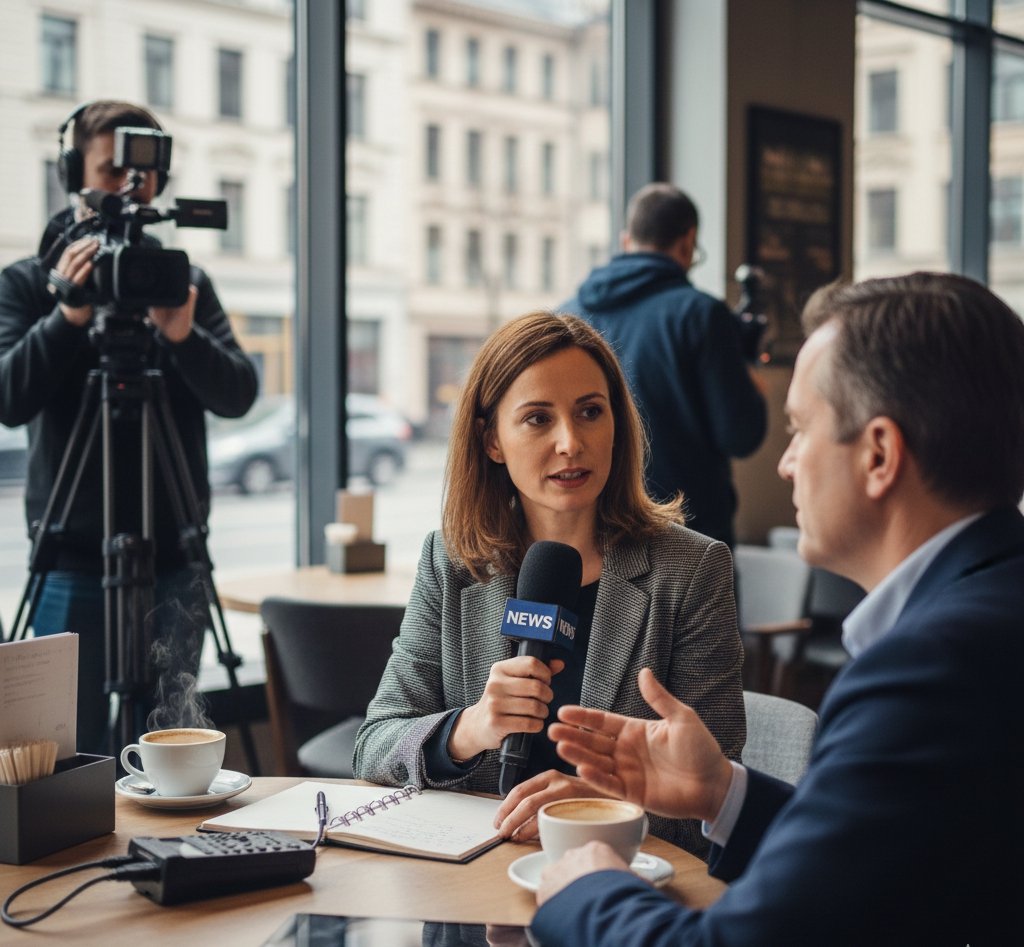
Learn the Art of Follow-Up Question
Great interviews are followed up by average ones. They demonstrate that the journalist is a listener and provoke in-depth thinking.
Examples:
- So what made you come to that conclusion?
- Would you mind a particular example?
- You talked of fear, then what were you afraid of?
It is usually found out during a follow-up to be the quote that makes the headline.
Do not use Leading, Loaded or Biased questions
Neutrality is essential. The leading questions affect the interviewee and may lead to inaccuracy.
Leading question:
- Do you not believe that the police were excessively forceful?
Neutral version:
- How can you characterize the response of the police?
5. Listening: The Art of Making Conversations into Stories
Listening is the engine of interviewing that is not visible. It is not that there are no great reporters who pose good questions and fail to listen deeply enough to detect opportunities to make meaningful follow-ups. As a reporter, note that good listening is a good interview technique.
Be Fully Present
Always keep your next question in mind during the interview communication. Reporters who are present fully present notice:
- Changes in tone
- Emotional shifts
- Hesitations
Being there fosters intimacy.
Monitor Non-Verbal Communication
Body language gives hints:
- A fidgety nervous person might be a sign of discomfort.
- A pause can be taken to show confusion or stress.
- An abrupt change in position can indicate increased interest or defensiveness.
These hints are used to point out the direction of the conversation to follow next.
Use Silence Strategically
A big weapon of journalism is silence. It is due to the silence of a reporter that the interviewees will feel the urge to continue speaking, they may end up saying things they had not intended to say.
6. Make Decent, Accurate Notes
Note-taking assists in tracking important moments, timestamps and follow-up ideas even in the case of recording interviews. Good notes are also used as a backup in case a reporter experience a recording failure.
Getting Quotable Responses
The narrative of a news story is made up of quotable responses. Good quotes are emotional, explanatory, or state a strong point of view in a very effective manner of words.
Encourage Storytelling
When people switch their mode of summarizing events to narrating them, they come up with better quotes.
- Rather than, did the accident scare you?
- Ask: What was the best moment of that night that you cannot forget?
Narration evokes the use of expressive words, descriptive words and catchy phrases.
Request Clarification and Details
General statements will hardly leave good quotes. Push gently for specifics. Ask questions like:
- What was it that occurred when you were saying you did not feel safe?
Extensive responses tend to be more quotable
7. Never Break In on an Emotional situation
Interruptions are interruptive to the flow of thought particularly when an interviewee is telling a personal story. Give the individual time to complete, the quotation that you require would mostly be at the tail.
Also, when the interviewees are respected they open up. Professional empathy does not affect objectivity and promotes honesty. Infact, it serves as a good interview technique.
Interview Techniques in Dealing with Resistant, Defensive Interviewees
Not all sources want to talk. There are those who are afraid, others are wary, and others were told not to talk. Such is the skill of a good journalist to understand how to cope with each situation.
1. Start With Less Sensitive Questions
Softball questions assist the interviewees to calm down and feel relaxed about the interview. They will be at ease and thus more willing to discuss hard issues.
2. State the Intention of the Interview
When individuals comprehend the role of their voice in the story, they will be more cooperative. It is always good to explain what you are about.
3. Admit Issues Without Giving Up Your position
When one appears to be on the defensive, then note his or her concern. Empathy defuses tension.
4. Respect Boundaries
When an individual does not want to reply to a question, pushing him/her too much may be the end of the interview. Repeat nicely, however, without coercion.
5. Provide Confidentiality Only When Necessary
Anonymity is no laughing matter. One should never give it offhand. When appropriate:
- Indicate how the information will be utilized.
- Explain the boundaries of confidentiality.
- Adhere to newsroom policy and law.
The power of the sources of information can be very potent, yet it should be handled carefully.
Ethical Considerations In Interviewing
Ethics guard the rights of both the interviewee and the journalist. There is no method that is worth losing integrity.
1. One Should Not Misrepresent
There are varying laws on audio and video recording. Transparency is a trust-building exercise even in the case of one-party consent, which is legal.
2. Do not Manipulate Information
Never:
- Twist words
- Make out-of-context statements.
- Suppress major facts
- Influence responds to suit a narrative.
It is not for convenience that you have to be accurate.
3. Secure the Vulnerable People
Even greater attention is needed in the course of interviewing:
- Minors
- Trauma victims
- Grieving families
- Marginalized persons
- Those who are at risk of retaliation.
It requires sensitivity and compassion.
Professionalism in Field Interviews
There is professionalism that can be seen in behavior, punctuality, communication, tone, and even looks when it comes to interview techniques.
1. Arrive Prepared and Early
Coming early will provide you with time to:
- Test your equipment
- Review your outline
- Observe the environment
- Calm your nerves
2. Wear Right Clothes According to the Environment
The grieving family should not seem to be approached by a flaunting reporter. A journalist who has entered a government office ought to appear formal. Respect is expressed through appearance.
3. Remain Composed in Stressful Situation
Interviewees can cry, become angry or confront your questions. Maintain composure.
4. Check Everything after the Interview
Accuracy is not negotiable. Triangle facts, spelling and dates and any assertions.
Final Thoughts on Interview Techniques
Preparation, inquisitiveness, empathy, and strong moral standards are all aspects of interviewing that are combined. The best journalists are the ones who can listen critically, pose meaningful questions and provide an environment in which people feel comfortable enough to speak out. Regardless of the level of cooperation with the source or resistance, the duty of the reporter still has to stay the same, find correct information, reflect different voices, and demonstrate the utmost level of professionalism.
The ability to use interview techniques makes discussion shift from a normal dialogue to powerful storytelling device that helps a reporter understand the population more and enhance the level of news coverage.