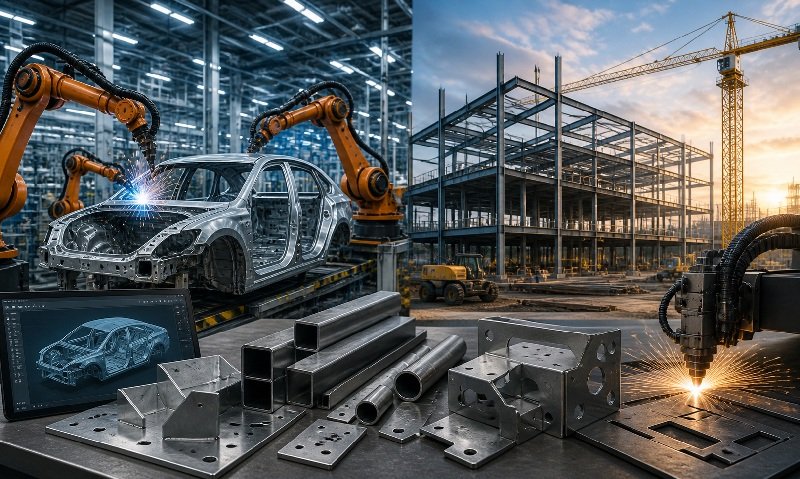
Metal fabrication has always been an essential part of industrial development, but today its role is more important than ever. As technology evolves and industries push for stronger, lighter, safer, and more sustainable solutions, modern metal fabrication has become a driving force behind innovation. Two industries benefiting the most from these advancements are the automotive sector and the construction sector.
From electric vehicles to high-performance buildings, modern fabrication techniques help engineers and manufacturers create products that were once impossible. This blog explains how metal fabrication is transforming both industries, the technologies involved, and why these advancements matter for future development.
Understanding Modern Metal Fabrication
Modern metal fabrication involves cutting, bending, forming, and assembling metal materials to create durable structures and precision components. Unlike traditional methods that relied heavily on manual labour, today’s fabrication is powered by:
- CNC machines
- Laser cutting
- Advanced welding
- Automation and robotics
- CAD and simulation software
These tools improve accuracy, reduce waste, increase speed, and allow the creation of complex shapes with high structural integrity.
How Metal Fabrication Drives Innovation in the Automotive Industry
The automotive industry is constantly evolving. Whether it’s electric mobility, improved safety, or lightweight design, modern metal fabrication plays a central role in turning ideas into real, manufacturable components.
Lighter and More Efficient Vehicles
Weight reduction is one of the biggest goals in modern automotive design. Lighter vehicles are more fuel-efficient and perform better, especially electric vehicles that depend on battery efficiency.
Fabrication supports this through:
- High-strength steel and aluminum
- Precision laser-cut components
- Forming techniques that maintain strength with less material
- Complex geometries that reduce weight
This results in vehicles that are light yet secure.
Stronger and Safer Car Bodies
Safety standards demand precision-built structures that protect passengers. Fabrication ensures car bodies are built with consistency and structural strength.
Examples include:
- Reinforced frames
- Crumple zones formed with precise bends
- Welded assemblies for structural rigidity
- Laser-cut panels that fit seamlessly
Accurate fabrication ensures every component performs its safety function.
Electric Vehicle (EV) Components
The shift toward electric vehicles has introduced new demands, such as battery housings, cooling plates, and lightweight support structures.
Fabrication enables:
- Precision cooling channels
- Lightweight battery trays
- Protective casings
- Custom brackets and internal supports
These components help ensure EV performance and safety.
Customisation and Rapid Prototyping
Manufacturers often need custom parts or prototypes. Modern fabrication allows quicker and more affordable development cycles.
Benefits include:
- Fast prototype creation
- Easy CAD modifications
- Cost-effective small batches
This helps speed up innovation and testing.
Improved Manufacturing Efficiency
Automation and precise tools enable the mass production of parts with consistent quality. CNC systems, robotic welding, and high-speed cutters reduce labor and improve efficiency.This leads to faster production, less waste, and reduced overall costs.
Industrial projects often require a scale that goes beyond simple part creation. Large companies need partners that can handle high-volume stampings and complex assemblies without losing quality. These facilities use advanced systems to manage the workflow for heavy-duty metal parts. It is helpful to explore steel product manufacturers that have the space and equipment for these large orders. Finding a reliable source for these components helps keep supply chains moving on schedule.
How Metal Fabrication Drives Innovation in the Construction Industry
From skyscrapers to infrastructure, metal fabrication is reshaping how buildings and structures are designed, assembled, and maintained.
Stronger and Safer Building Structures
Steel and fabricated metal components form the foundation of modern construction. They provide strength, durability, and stability.
Benefits include:
- High load-bearing capacity
- Precision-fit parts
- Quick on-site installation
- Long-term durability
These improvements result in safer and more reliable structures.
Prefabrication and Modular Construction
Modular construction is one of the fastest-growing innovations. Fabrication allows entire building sections to be prepared off-site and installed quickly.
Common prefabricated components:
- Wall frames
- Roof structures
- Staircases
- Mechanical housings
Factory-built sections reduce construction time and improve accuracy.
Modern Architectural Designs
Architects frequently use metals to create visually appealing designs. Fabrication enables creative and complex shapes.
Examples include:
- Laser-cut exterior panels
- Custom metal facades
- Decorative cladding
- Unique structural features
These techniques allow designers to bring their artistic vision to life.
Energy-Efficient and Sustainable Construction
Sustainability is now a major focus in construction. Fabrication supports eco-friendly building through:
- Recyclable metals
- Reduced waste via precise cutting
- Long-lasting materials
- Improved building performance
Metal fabrication helps create greener structures with less environmental impact.
Improved Infrastructure Development
Infrastructure such as bridges, tunnels, railway systems, and transport hubs relies heavily on fabricated metal parts.
Fabrication provides:
- Large, strong components
- Corrosion-resistant parts
- Precision-fitted joints
- Durable structures
These improvements support safer and more long-lasting infrastructure.
Key Technologies Powering Modern Metal Fabrication
Several technologies are responsible for major advancements in fabrication across all industries:
Laser Cutting
High accuracy, fast speed, clean cuts, and reduced waste.
CNC Machining
Precision for complex and critical components.
Robotic Welding
Consistent weld quality and faster production.
CAD Modeling & Simulation
Prevents design errors and speeds up development.
Automation in Forming & Bending
Ensures consistent shapes and high-volume production.
These technologies make fabrication more efficient, reliable, and effective.
Why Modern Metal Fabrication Matters for the Future
Both the automotive and construction industries are moving toward smarter, greener, and more efficient solutions. Fabrication supports this evolution by offering:
- Lightweight materials
- Stronger structures
- Faster production
- Greater design freedom
- Better sustainability
- High precision and reliability
Modern metal fabrication bridges the gap between innovative ideas and real-world performance.
Conclusion
Modern metal fabrication is more than just shaping metal; it is a driving force behind advancements in transportation, infrastructure, and architecture. In the automotive world, it supports safer vehicles, electric mobility, and efficient manufacturing. In construction, it enables stronger buildings, modular construction, creative designs, and sustainable development.
As technology continues to evolve, metal fabrication will remain a vital part of engineering progress, helping industries build smarter, safer, and more efficient systems for the future.