The hybrid cloud model is one of the infrastructure strategies that are important to most organizations in the current fast changing technological environment. It enables businesses to strike the right balance between agility and scalability of the public cloud and the security and control offered by on-premises systems. Nevertheless, to effectively handle hybrid cloud environments, it is not only the change of technology, but also the new set of skills within the IT community. In this paper, we are going to discuss the necessary technical and soft skills that IT professionals should develop in order to succeed in the field of hybrid cloud management.
The Knowledge of Hybrid Cloud: A Precursor to Success
It is essential to grasp the meaning of hybrid cloud and its relevance before going into details of the skills needed. Hybrid cloud environment combines a private/public cloud environment, in which organizations can store sensitive information in their own infrastructure and benefit by having a platform of scale, innovation and cost-efficiency provided by the public cloud services.
In order to achieve the most efficiency through the hybrid cloud, organizations must provide their IT teams with a wide range of skills that cut across technical and interpersonal levels.

Hyperspecialized Skills in Hybrid Cloud Success
The environment of hybrid clouds is complicated and demands IT specialists to have various skills of technologies. Some of the technical competencies that can corely enable the management of such environments are listed below.
2.1 Cloud Orchestration and Automation
Cloud orchestration is the automatic definition of configuration, management and coordination of complex cloud services. To be successful in hybrid cloud, IT departments need to master tools of cloud orchestration so that operations can run smoothly both on the private and the public cloud systems.
One of the orchestration elements is automation that minimizes human error, enhances speed and uniformity between environments. IT specialists ought to be well versed with technologies such as Kubernetes, Docker, Terraform and other technologies that aid in the management of the cloud workload.
Why it matters: Automation reduces manual activities, improves scalability, and optimizes the use of resources, which makes hybrid cloud environments more efficient and resilient.

2.2 Cybersecurity Awareness
Security is a major issue in any cloud setup, but the hybrid setup adds more complexities. Deploying security around sensitive data, securing communication between the instances of clouds, and controlling access to various platforms are all the matters of expertise.
IT professionals should understand the best practices of cloud security, including encryption, identity and access management (IAM), threat detection and vulnerability management. In addition, it is important to learn about regulatory needs (e.g., GDPR, HIPAA) and to be able to comply with them on all cloud systems.
Importance: The hybrid cloud model cuts across the private and public setting and it is therefore more susceptible to breaches unless handled properly. IT teams need to be on the frontline to prevent any emerging threats in order to ensure the protection of data and trust.

2.3 Vendor Management
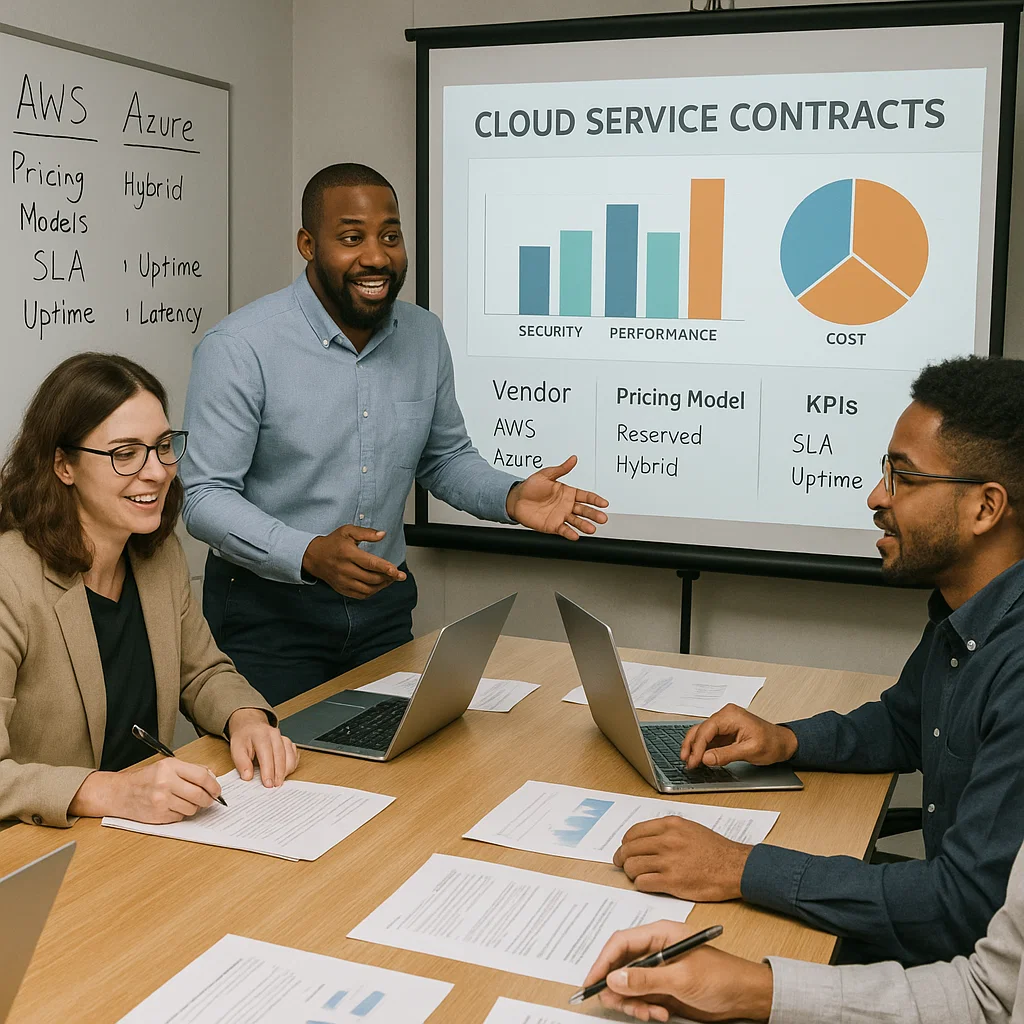
Through a hybrid cloud setup, an organization tends to deal with several cloud providers. Good management of vendors is to ensure that these are working relationships that are cost-efficient and are geared towards organizational overall strategy. IT practitioners have to assess, choose, and control third-party vendors who can deliver the cloud services and infrastructure of the needs of their organizations.
The most important skills are being able to negotiate contracts, handle SLAs (service level agreements), provide interoperability between various platforms and performance monitoring in order to achieve organizational objectives.
Why it matters: Vendor management can help minimize the risks of vendor lock-in, enhance cost-efficiency, and make sure external services support internal business requirements.
Hybrid Cloud Success Soft Skills
Studying technical expertise is very important but soft skills are very important in successful management of hybrid cloud environment. These abilities promote cooperation, interaction, and flexibility, so that the IT departments could operate effectively and adjust to the challenges.
3.1 Adaptability and Flexibility
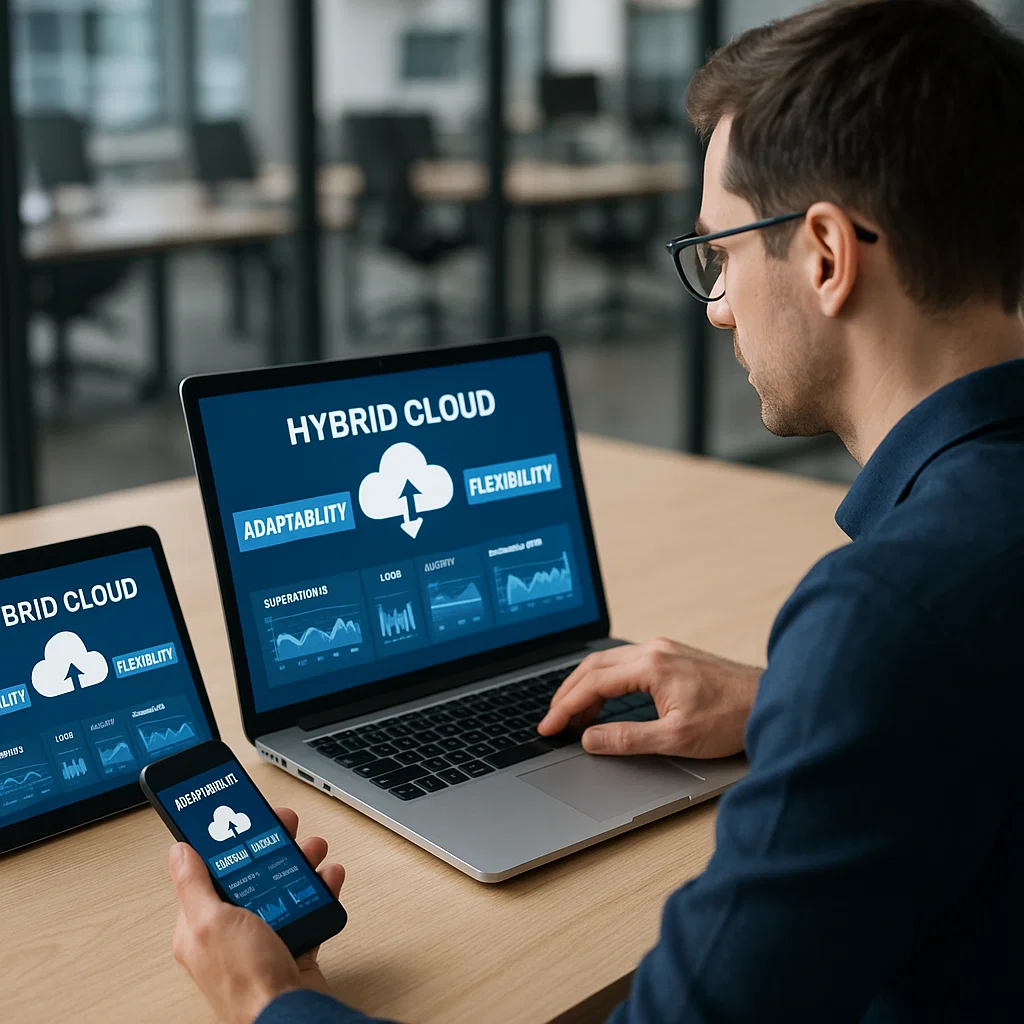
Hybrid clouds are dynamic by nature and the IT teams must be quick to change their technology, processes, and issues to meet the new demands. The professionals should be adaptable to change and able to switch the tactics as the cloud technologies develop.
Adaptability also implies remaining receptive towards new tools, approaches and paradigms as the hybrid cloud ecosystem evolves. IT professionals must be active learners and upgrade their skills on a continuous basis to remain at par with the new cloud innovations.
Why it matters: The rate of change within the industry of cloud computing is such that teams must be capable of making minor adjustments to their strategies and workflows upon realization of new capabilities to maximize on the opportunity presented and minimize the degree of disruption.
3.2 Collaboration and Teamwork
The administration of hybrid cloud infrastructure usually entails the involvement of cross-department. IT professionals would need to collaborate with other teams, including developers, business analysts, security experts, and operations staff, to make sure that cloud solutions would not be unproductive to the organization.
In order to promote this cooperation, communication skills play a critical role. IT professionals should be able to communicate with non-technical stakeholders in simple terms and make their work suit the business purposes, and communicate well with the external vendors.
Why it matters: A hybrid cloud management effort ought to involve collaboration among various functions. Effective communication and collaboration skills will be useful in ensuring that every team member is on track in terms of goals and schedules.

3.3 Communication Skills
Since hybrid cloud implies complex and abstract systems, communication is important. The IT professionals should be in a position to communicate the technical concepts to the business leaders in a clear and understandable manner, make informed recommendations that are based on facts and make sure that everyone is conversant with the cloud strategy and the ways it resonates with the organizational goals.
Additionally, the regular communication in the team is also important to ensure that everyone is updated on the latest information in the team, problems, and changes in the cloud environment.
Why it is significant: Effective communication will reduce the risks, clarify expectations, and stay informed about the team, which will make the hybrid cloud systems run smoothly.

Hybrid Cloud Management: Cross-Disciplinary Skills
Hybrid cloud management needs a combination of a number of cross-disciplinary skills that extend beyond the conventional IT positions.
4.1 Cloud Cost Management
Hybrid environment distribution of resources in a public and a private cloud is vital in cloud cost management. IT professionals need to know how to keep track of cloud expenditure, resource optimization and avoid overrun costs. One has to be familiar with cloud pricing models and cost management tools, including AWS Cost Explorer, Azure Cost Management, and Google Cloud Billing.
Why it matters: Proper cost management will help to make sure that the organization receives the optimal benefit of its investments in the hybrid cloud without incurring unnecessary costs.
4.2 Project Management
As hybrid cloud settings are big and complicated, the project management skills will be required to deliver cloud initiatives on time, on a budget and provide the intended results. This involves lifecycle planning, coordination, and risk management of cloud projects.
Why it matters: Proper project management transforms cloud initiatives into business objectives, and their implementation is both efficient and does not result in delays and failures in cloud initiatives because of mismanagement.
Investing in Upskilling to Become Hybrid Cloud Success
Organizations that intend to take advantage of the opportunities offered by hybrid cloud need to focus on up-skilling their IT teams. One should also have a commitment to the process of continuous learning in order to remain competitive in the rapidly changing cloud environment.
5.1.1 Training Programs and Certifications
IT professionals can be trained and certified in formal programs and certifications through training programs like AWS Certified Solutions Architect, Microsoft Certified: Azure Solutions Architect Expert, or Google Professional Cloud Architect to build the required skills to be able to handle the hybrid cloud environments effectively.
5.2 Nurturing Development of a Learning Culture
Development of a learning culture at the IT department is essential in keeping up with the trend. The skills of the team can be improved by encouraging people to participate in webinars, conferences, and networking events and supporting their access to such resources as cloud learning platforms.
Why it matters: A team with good equipment has chances of a successful management and optimization of hybrid cloud infrastructures to guarantee organizational resilience and agility.
Conclusion
Hybrid cloud environments pose their own problems and enormous opportunities to organizations. Organizations can make sure their cloud environments are optimized in terms of performance, security, and cost-effectiveness by empowering IT teams with appropriate technical and soft skills. Cloud orchestration and automation, cybersecurity awareness, and collaboration are among the aspects that determine the success of hybrid cloud initiatives based on the abilities of the IT workforce.
Upskilling should be viewed as an investment in technology, but more importantly it is an investment in human capital that will make the organization successful in the age of the hybrid cloud.