One of the most common stimulants consumed in the world is caffeine. It can be found naturally in coffee, tea, chocolate, and even certain drugs and helps provide people with a mental and physical boost. Simultaneously, iron is a necessary mineral, which influences the transportation of oxygen, the generation of energy, and general health conditions. Both are essential in their own right, but there is an increasingly popular debate on whether caffeine may be disrupting iron absorption, and when caffeine is potentially dangerous versus when it is not.
This article discusses the recommended caffeine limits on a daily basis as suggested by health experts, how this number applies into daily coffee and tea servings and how you can practically have your favorite beverages without putting in jeopardy your nutritional health.
Learning about the Daily Caffeine Limits
Caffeine has varying effects on various people based on their age, weight, genes, and tolerance. With that said, the health authorities do offer general guidance, to assist the consumer to make the right decisions.
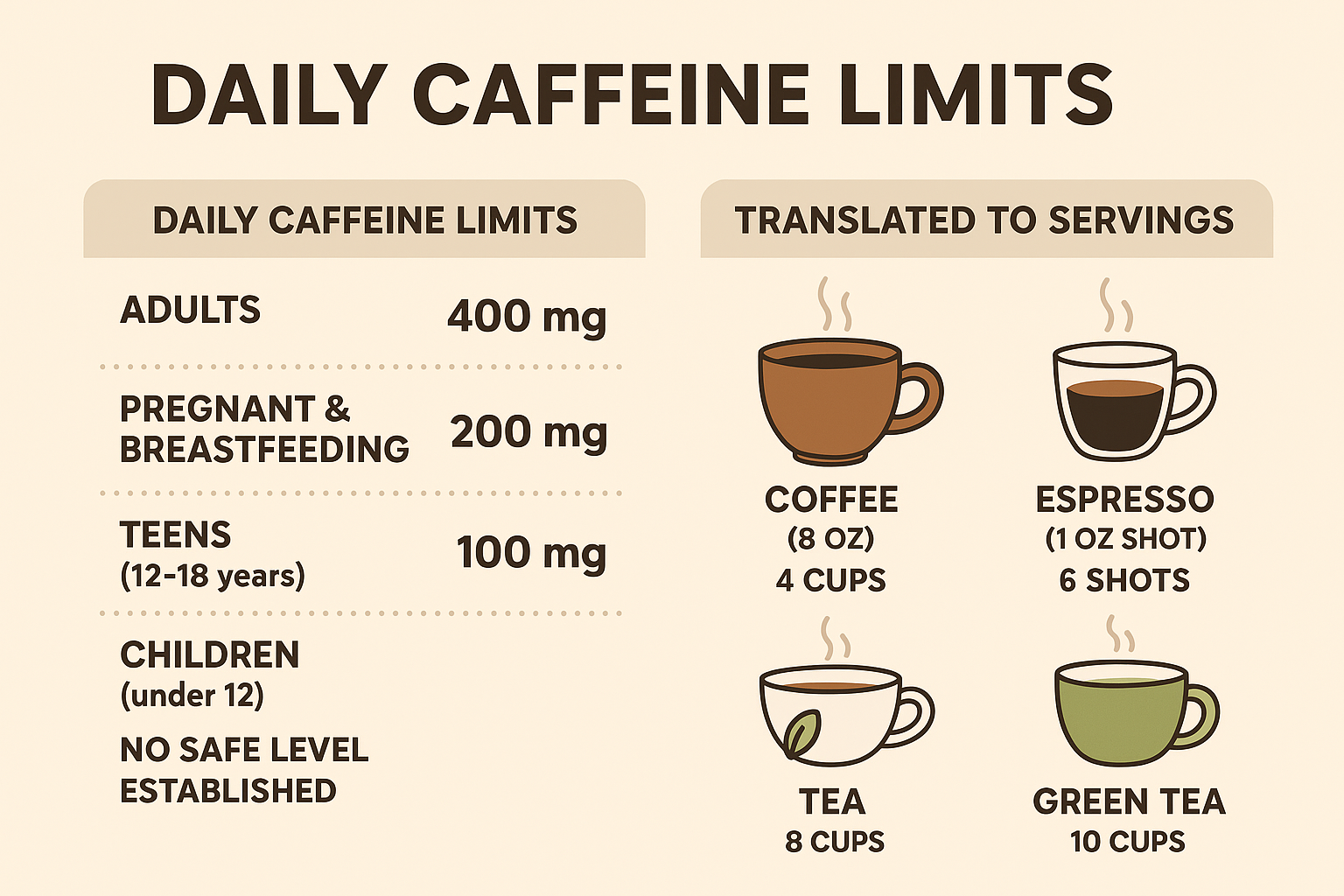
The U.S Food and Drug administration (FDA) recommends that caffeine up to 400 milligrams a day is safe to most healthy adults. This is approximately 4 or 5 ounces of coffee. In addition to this level, there are other risks like restlessness, heartbeat, digestive and sleep disturbances that escalate to a high level.
As stated in the resource about the daily caffeine limits, of the FDA, even more than the recommended intake can lead to aggravation of anxiety, increase in blood pressure, and dependency with time.
Special Populations where the Lower Limits are reduced
- Pregnant women or those who are breastfeeding: According to most guidelines, pregnant women and those who are breastfeeding should take caffeine in moderation of about 200 milligrams a day because too much caffeine may interfere with the fetal development.
- Children and adolescents: The American Academy of Pediatrics does not recommend caffeine at all in younger children, with teens being recommended to remain under 100 milligrams per day.
- Patients with medical conditions: Patients with heart disease, sleeping disorders or gastrointestinal sensitivity may require more restrictive levels. It is recommended that a doctor be consulted.
To break down Milligrams in Everyday Servings
Hearing 400 milligrams a day is one thing–but what the heck does that translate to, in terms of cups of coffee or tea? Below are common averages:
- Brewed coffee (8 oz): 95-120 mg
- Espresso (1 oz shot): 63 mg
- Black tea (8 oz): 40-70 mg
- Green tea (8 oz): 30-50 mg
- Energy drinks (8 oz): 70-100 mg
- Cola soft drinks (12 oz): 30-40 mg
- Dark chocolate (1 oz): 20-30 mg
From this, we can see that:
- Four regular sized cups of brewed coffee would hit the highest safe point.
- Eight cups of black tea, or ten cups of green tea would be close to the boundary too.
- Having sodas, energy drinks or chocolate can make people exceed the limit without even thinking about it.
Moderation involves the monitoring of the overall consumption not only of coffee or tea.
The Iron Factor: Caffeine Effects the Iron
Iron deficiency is the best known nutritional issue in the world. Given the fact that iron is essential in the production of red blood cells and prevention of anemia, anything that lowers its absorption is worth attention.
The tannins and polyphenols in coffee and tea are the primary suspects here, and caffeine does not directly cause the issue, just because caffeine attaches to non-heme iron (the type present in plant-based foods), and therefore it becomes less easily absorbed by the body. Research indicates that intake of coffee or tea during the time of meals will decrease the iron uptake by one by as much as 40-60%.
But time is everything:
- With food: Increased absorption interference.
- An hour post meal: Significantly reduced effect.
- After meals: Two hours have minimum effects.
This does not imply that you will need to forgo your favorite drinks. Rather, you can make them spaced rationally around a meal.
Striking the Right Balance between Iron and Caffeine
Time Your Drinks Wisely
In case of concerns on the amount of iron, consider not taking coffee or tea with iron-rich foods. Instead, you can have them in-between the meals or at least an hour after meals.
Pair Iron with Vitamin C
Vitamin C promotes the absorption of non-hege iron. To neutralize some of the caffeine blocking effect in your diet, add citrus fruit, tomatoes or bell peppers to your meals.
Monitor Overall Intake
Be alert to caffeine in any form, not just coffee and tea. Hidden caffeine may even be found in energy drinks, soft drinks, supplements, and even pain relievers.
Know Your Own Body
Other individuals are rapid caffeine metabolizers, and they are not much affected, whereas some are highly sensitive. In case of fatigue, anemia, sleep problems, it is possible to change the intake.
Harmony Pleasure with Diet
Note: caffeine is not in itself bad. Coffee and tea contain antioxidants, brain stimulants, and pleasure. It is not abolition but moderation.
Real life Applications of Moderation
The following is how a healthy caffeine diet could be in everyday life:
- Morning: 1 8-oz cup of coffee (100 mg). Eat whole grains and fruit as the main meal at the beginning of the day then drink the coffee later.
- Noon: 1 cup black tea (50 mg), taken in the middle of the afternoon in between meals.
- Evening: Herbal infusions or decaffeinated tea to prevent disturbed sleep.
This is a total of 150 milligrams, which is far below safe levels and will not have any serious impact on iron absorption in due time.
The person who likes stronger coffee would be able to have two bigger cups that would amount to 250-300 mg and still be below the 400 mg limit, although not to drink with iron-rich food.
How to Stop being Overcaffeinated
Occasionally, it is not a big danger to go above safe levels, however, there are risks of regular overconsumption:
- Eating Problems: Stomach or reflux may result with too much acidity and stimulation.
- Anxiety and Insomnia: Caffeine is a nervous system stimulant, which may increase stress and sleep.
- Nutrient Issues: Considering the fact that most caffeinated beverages are often combined with food, it is possible that such a habit exacerbates already existing iron deficiency, particularly in women and children.
- Dependency: When used regularly in high amounts, it may cause tolerance, withdrawal headaches, irritability, and fatigue with immediate discontinuation of use.
Some Suggestions on How to Reduce it
In case you find out that you are taking too much caffeine, you can take it in stages instead of quitting at once:
- Substitute a cup of coffee with green tea – still with lower caffeine, yet has energy.
- Use half-caf or decaf mixes to lower the consumption and still have a taste.
- Offer caffeine-free substitutes like rooibos tea, chicory coffee or herbal infusions.
- Keep yourself hydrated by drinking water – sometimes you feel tired due to lack of fluid not caffeine.
Final Thoughts
Both caffeine and iron are very vital in everyday health; it is only a matter of balance. With the right timing of your beverages, consideration of daily limits on caffeine and combining iron with foods that enhance its absorption, you can enjoy your favorite drinks without jeopardizing nutrition.
The safest amount of caffeine that most healthy adults can consume is 400 milligrams a day, about four cups of coffee or eight cups of tea. In those of higher sensitivity, pregnancy, or certain types of health conditions, lower limits are recommended.
The point here is easy to figure out: you do not have to quit coffee and tea. You can enjoy the comfort and attention it will bring you by paying attention to how you choose it and ensure that you replenish your iron stores and health in general.