Introduction
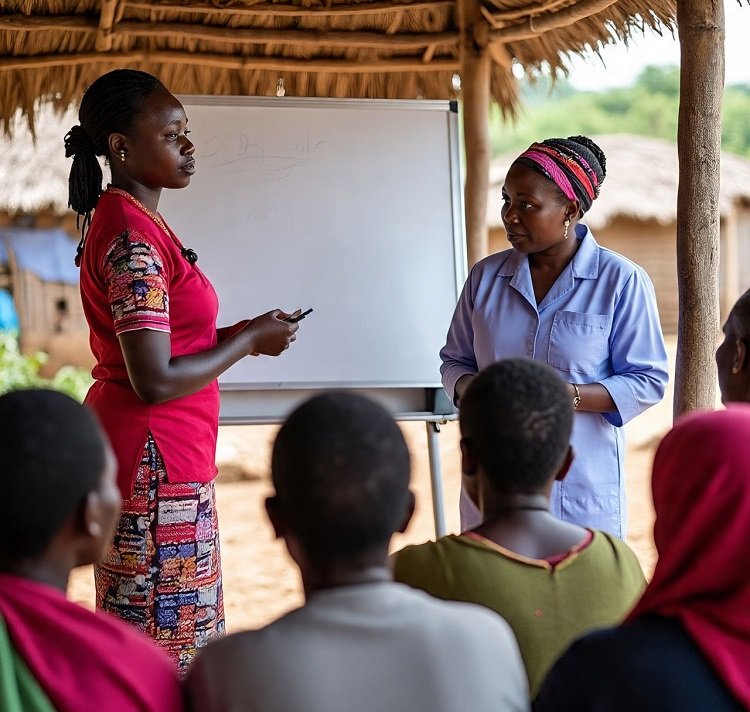
Traditional Birth Attendants (TBAs) around the world continue to be the back-bone of maternal care in underrepresented and rural areas. These midwives are staunch cultural believers of tradition as they have been by the side of many births through the ages as they are well trusted by the community. However, despite this centric positions TBAs are some of the professionals who have been marginalized by the formal health system based on issues related to their safety, training, and protocol compliance.
With countries working to achieve international goals of maternal health, it has been unproductive to reject the use of TBAs completely. Rather, a growing body of thought feels that the inclusion of TBAs into national health strategies is a feasible, culturally acceptable, avenue of enhancing maternal and newborn outcomes. Household-level community action and pilot projects have shown that TBAs could change status, becoming productive members of the contemporary health system with proper policies and support.
In this article, the relations between community practice and public health policy are discussed, with the focus on how to use grass-root innovations to inform national initiatives aimed at developing collaborative, sustainable, and culturally respectful maternal health systems.
The Historical Context of TBAs and Policy Exclusion
The Shift Toward Skilled Birth Attendance
The international health policy towards the end of the 20th century started to focus on skilled birth attendance as the gold standard in its reduction of maternal and neonatal death. The guidelines prepared by international organizations such as the World Health Organization (WHO), with some particular focus on facility-based births assisted by trained personnel remained to be midwives, nurses, or obstetrician.
Although this plan would have worked in the urban centers, one cannot ignore the logistical difference between the rural communities where the facilities are a long way off and professional staff is difficult to come by. As a reaction, several governments introduced policies targeting to discourage the involvement of TBAs, in some cases, simply prohibiting the performance of TBAs at the deliveries.
Unintended Consequences of Policy Exclusion
The exclusion of TBAs, however, has not always been beneficial to the maternal health outcomes. The cultural norms, convenient location and affordable costs made women use the TBAs. This has had the consequence:
- The uncontrolled practices that lack control
- Smaller rate of referral of complicated cases
- Mysterious domestic delivery, which even further distances women to professional care
The policy exclusion has had the tendency of creating gaps between communities and health systems and undermining trust and hampering the achievement of reduction of maternal deaths.
Evidence from Grassroots and Community Led Initiatives
Bangladesh: A Collaborative Approach
One of the most convincing illustrations of including TBAs in the national endeavors is provided in Bangladesh. Instead of prohibiting TBAs, the government initiated many training sessions that:
- Educate techniques for safer delivery
- Stress on the signs of danger awareness
- Promote referrals in a timely manner to the facilities
In Bangladesh TBAs turned into powerful community teachers working to educate on antenatal care and institutional deliveries. Research indicates that maternal mortality declines tremendously in areas where the trained TBAs are utilized.
Nigeria: The Lagos State 1Model
Nigeria, especially Lagos State tried to prohibit TBAs at first. Nevertheless, there were still high rates of maternal mortality. The Lagos government realized that it was reaching the end of the tunnel as far as exclusion was concerned and focused on the following changes instead:
- Formally register TBAs
- Give well structured training
- Put supervision connections with health facilities
TBAs are also currently regarded as collaborators, since they enhance the number of deliveries done at facilities and early detection of obstetric crises.
Nepal: Linking TBAs and Community Health Workers
Nepal has managed to mesh these practices with its contemporary systems with integrating TBAs into community health worker networks. TBAs:
- Engage in health care community lectures
- Act as referral agents of high risk pregnancies
- Empower postnatal care and antenatal
The model has ensured that maternal mortality is reduced at the same time taking the culture practices into consideration.
Key Lessons for National Health Strategies
- Recognize TBAs as Valuable Community Resources
The cultural importance and the practical presence of TBAs have to be taken into consideration in policies. As opposed to eliminating their role, the governments ought to:
- Active register and map TBAs
- Familiarize them with the development of maternal health strategies
- Receive awards of their achievements on an official basis
Formalization creates a degree of accountability, begins to build professional pride as well as closer interactions with the health authorities.
- Investment in Structured Training and Supervision
It is ineffective to train people without prolonged supervision. The strategies of the countries are to:
- Construct universal training programs, which would be targeted at safe delivery practices.
- Offer periodical top up training
- Put supervisors of health facilities to observe TBA practices
- Provide TBAs with clean delivery kits, as well as, referral protocol during emergencies
Such actions increase the competencies of TBAs and minimize unsafe activities.
- Strengthen Referral Systems
TBAs are not able to handle complicated obstetric complications even when they are the most trained. Policies should:
- Put into place definite referral channels
- Offer emergency transport assistance Provide emergency transport assistance
- Promote the attendance of TBAs with women in the facilities
In Ethiopia, infant survival has been gaining immense improvement as a result of TBAs armed with mobile phones so as to facilitate urgent referrals.
- Address Cultural Barriers and Community Perceptions
It is necessary to make policies culturally sensitive. Banning TBAs will relegate them and turn them into underground owing to alienation. Instead:
- Participate community leaders in developing interventions
- Train people on the benefits of safe deliveries
- Encourage the health workers who are employed to work in the formal health sector and TBAs to trust each other
The success of policy depends upon acceptance in community.
- Include TBAs in Data Collection and Monitoring
TBAs may serve as important sources of reporting maternal and newborn health indicators. The country health planning must:
- Learn TBAs in basic data recording
- Include their reportages into national health information systems
- Data should be used to find gaps, and serve better
The right level of data at the community level assists policymakers to allocate resources.
The Economic Case for Integrating TBAs
Cost Effectiveness in Resource Limited Settings
Training and incorporation of TBAs are more economical than using massive number of qualified personnel to work in the isolated communities. Although TBAs should not be used as a substitute of skilled birth attendants, they still could deliver normal births, as well as unburden health facilities.
Governments benefit from:
- Reduced rates of TBAs training
- Lessened costs on mother complications
- Building trust in the community to use more healthcare
Leveraging TBAs for Broader Health Goals
TBAs may play a role outside the field of maternal health. They usually execute the role of:
- Crusaders of immunization programs
- Teachers with regard to family planning
- Marketers of nutrition and health
Enlisting TBAs into larger health programs maximizes investments in the training.
Policy Recommendations: Building a Hybrid Health Model
At the grassroots level, governments ought to take into account the following suggestions founded on facts:
Formal Registration and Certification
- Make national registries of TBAs
- Training card issues and certificate issue after training course completion
This makes them legitimate and enhances the sense of accountability.
Tiered Training Programs
- Provide simple instructive safe deliveries training
- Advanced train TBAs in the high-volume areas
Tailor-made programs guarantee TBAs with relevant skills but without putting them in a strained situation.
Partnership Agreements
- Put memorandums of understanding between health facilities and TBAs
- Institutionalize job description, referral procedures and management systems
Open agreements help to embark on collaborative efforts and shared responsibilities.
Incentive Structures
- Provide referrals incentives to health facilities
- Give medical kits, supplies, free of charge
- Dignify TBAs with awards in honour of exceptional achievement
The incentives encourage the TBAs to undertake safe practices and work in partnership with health systems.
Technology Integration
- Provide mobile gadgets to help in referrals and reporting by the TBAs
- Make apps containing the checklists of safe delivery practices
- Introduce SMS reminders to attend antenatal care Visit
Technology ensures that there are no boundaries between the traditional and the modern system.
Challenges and Future Considerations
Resistance from Health Professionals
In certain situations, as in some communities, skilled health workers can consider TBAs to be their rivals but not their associates. Policies need to deal with professional dynamics by means of:
- Cooperative training workshops
- Sharing responsibilities
- Neutral respect initiatives
Sustaining Funding
TBA programs in many places are dependent on donors. Governments are requested to facilitate TBA initiatives within the national budgets, so as to make it sustainable.
Measuring Impact
Evidence-driven policy needs very strong monitoring evaluation systems. Governments should:
- Monitor maternal services in regions, where TBAs have been incorporated
- Examine the fees beneficial information
- Publication of results to aid in strategy in the future
Conclusion
Traditional Birth Attendants cannot be avoided in the rural health scenes. Their omission fails to recognize cultural realities and logistics that still determine maternal care in most parts of the world. Community-initiated projects have demonstrated that the inclusion of TBAs into official structures has measurable results towards an improved maternal and child health.
The policy maker challenge is transitioning the grass roots accomplishments to scale able, sustainable national policies. Inclusion and culturally sensitive national health strategies can be achieved by embracing TBAs as partners and not marginalizing them.
The community breaks down some barriers, and the governments interested in learning the most out of the innovation can develop a hybridized model that saves our lives, creates trust, and health systems that can serve people of different generations.