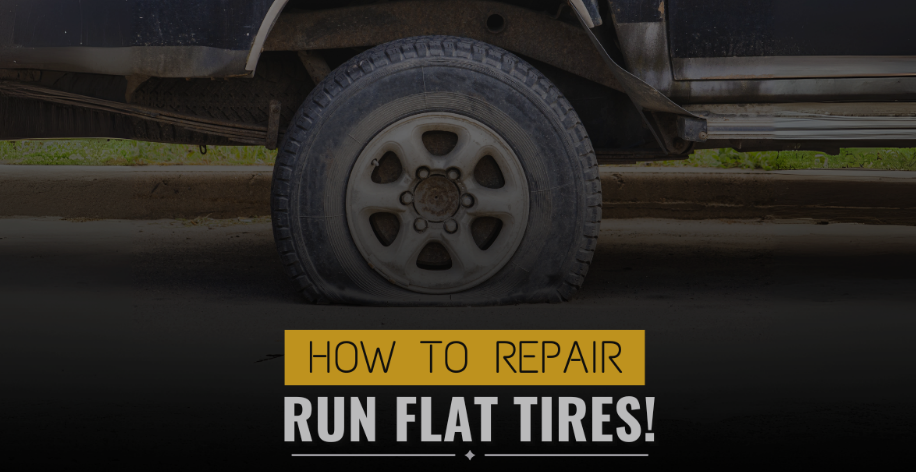
Driving with a run-flat tire is comforting, as they don’t frequently sustain significant damage due to their high-quality construction. However, even these tires may face some typical punctures from time to time.
During those awful situations, you might ask, ‘How to repair run flat tires?’ Most of the time, repairing a run-flat tire isn’t advisable, but in some cases, it may be possible. For example, if a nail troubles the tire, or if it is a minor damage, you can attempt to fix it.
So, as the question remains “how,” we are going to share some ways you can fix your run-flat tires without ruining them.
Can You Repair Run-Flat Tires?
This answer depends on the situation of the damage to your run-flat tires. If the puncture is in the shoulder or the sidewall, you can’t fix the damage. Additionally, if you have already repaired it multiple times, it’s unlikely that it can undergo another repair.
Besides, you might already know that some run-flat tires are irreparable. So, if your tire has a notice like “Do Not Repair” on the sidewalls, you can’t repair it.
If the damage seems too bad to handle on your own, you should contact a specialist to deal with the damage.
How to Repair Run Flat Tires?
If your run-flat tires don’t have a “Do not repair” sign on the sidewalls, you can certainly repair them. Now, you can go through two repair processes. You can either plug or patch, depending on the type of damage. Here are the steps on how you can proceed with both:
The Procedure for Plugging Run-Flat Tires
Plugging is a convenient solution for a quick repair option for your run-flat tire damage. The plug is made of an adhesive material. You need to insert it from the outside through the puncture.
Thus, it acts as a barrier, preventing air loss due to damage. You can buy an at-home plugging repair kit for a DIY repair, or you can visit a nearby 24/7 Mobile Tire Repair shop.
- Step 1: First, remove the nail or object that caused the puncture and ream the hole.
- Step 2: Now, insert the plug using an insertion tool.
- Step 3: At this point, you need to trim the plug flush with the tire surface. Also, you can apply vulcanizing cement if your tire requires it.
Remember: Plugging is not a permanent fix. So, if plugging doesn’t help, try patching or replacing the tire.
The Patching Process
Patching the tire requires more effort than plugging. In this case, you need to dismount the tire and apply the patch from the inside. However, it is a more sturdy and safer solution than plugging, so many people prefer this one more. You can purchase patch kits to repair your tire on your own; alternatively, you can also visit a tire repair shop to have the repair done for you.
- Step 1: First, dismount the tire and inspect it. Look for any signs of internal damage.
- Step 2: Clean and buff the area where the puncture hole is visible.
- Step 3: Apply the patch in the area, and use a roller to secure the adhesion so it sticks firmly.
- Step 4: Now, you need to remount the tire and balance it to ensure even wear.
Can You Seal A Run Flat Tire?
Well, not really. Most run-flat tires are not designed for use with sealants. Their design differs from that of regular tires. They want to keep the tire safe for some time after a puncture so that you can reach a repair shop calmly without panicking.
Adding sealant might even make things worse than they already are by ruining the tire. So, sealing a run flat? That’s generally not the case.
Now here’s why. Run-flat tires have thick sidewalls that help them hold shape even without air. Some even come with foam inside, which helps with holding shape and makes the drive quieter.
But that same foam can block the sealant from doing its job correctly, making the whole process useless instead of helping.
Additionally, tire pressure monitors can malfunction when sealant is used. These sensors are sensitive and protective, getting jammed up or sealed with gunk will mean they could give wrong readings, whether too tight or too loose gum has been applied to the exterior.
What Run-Flat Tires Can Be Repaired by the Manufacturer?
Repair policies vary across brands, with some allowing repairs and others not. Some brands allow one attempt at repair, while others exclude repairs altogether. Here is a summary of how leading brands approach fixing run-flat tires.
- BFGoodrich: BFGoodrich provides strict guidelines regarding the fixing of their tires. They only allow a single repair attempt on their run-flat tires, and maintaining proper standards during the repair is vital, as attempting a second repair can further damage the barrier.
- Bridgestone: Bridgestone also has more flexible guidelines, allowing repairs under very strict conditions, such as maintaining a minimum pressure of 15 PSI at the time of damage.
- Continental: Run-flat tires made by Continental come with the broad suggestion that they should never be attempted to be repaired, as this could risk damaging warranty agreements. As “repairs” result in negation of warranties, any damages require comprehensive replacement instead.
- Dunlop: Warranties offered on Dunlop’s run flats follow similar logic, allowing for attempts at repairs subject to pre-repair inspections and grade evaluations, which subsequently dictate outcomes such as replacement if deemed necessary post evaluation.
- Firestone: Repairs are only allowed if the Firestone run-flat tire was punctured while retaining at least 15 PSI of air.
- Goodyear: Goodyear allows one repair to be made on either side of the run-flat tires; however, this means that both sides cannot be repaired more than once, as paid replacements will be required after additional damage occurs.
- Hankook: The same goes for Hankook. They also allow repairs on their run-flat tires, but an inspection needs to be performed beforehand, just like all other brands.
- Kumho: Kumho gives its approval for the repairs to be executed now and will approve them, provided there is no major or considerable damage to the tire’s structural integrity.
- Pirelli: Run-flat tires cannot be repaired according to Pirelli. Even minor punctures are covered under a full replacement policy. This is done for the sake of performance and safety.
- Yokohama: Run-flat tires are not suggested to be repaired by Yokohama. Any attempt at repair will compromise the tire’s safety or performance.
Can I Replace Run Flats With Regular Tires?
Run-flat tires primarily don’t support repairs. So, if you are thinking of replacing it with your regular tires, you can. However, here’s the catch: you need to replace all four tires at once.
Although you can mix run flats and regular tires, it is not recommended. Even if you want to mix them, it can only work as a temporary fix.
As run flats are much stiffer than regular tires, mixing them with regular tires will reduce your vehicle’s stability and handling, negatively impacting the overall driving quality.
Bottom Line
So, now you know how to repair run-flat tires and under which circumstances. If your tire shows a non-repairable sign, please do not attempt to fix it. However, for complex patching or plugging, don’t forget to visit a tire repair shop for professional work.