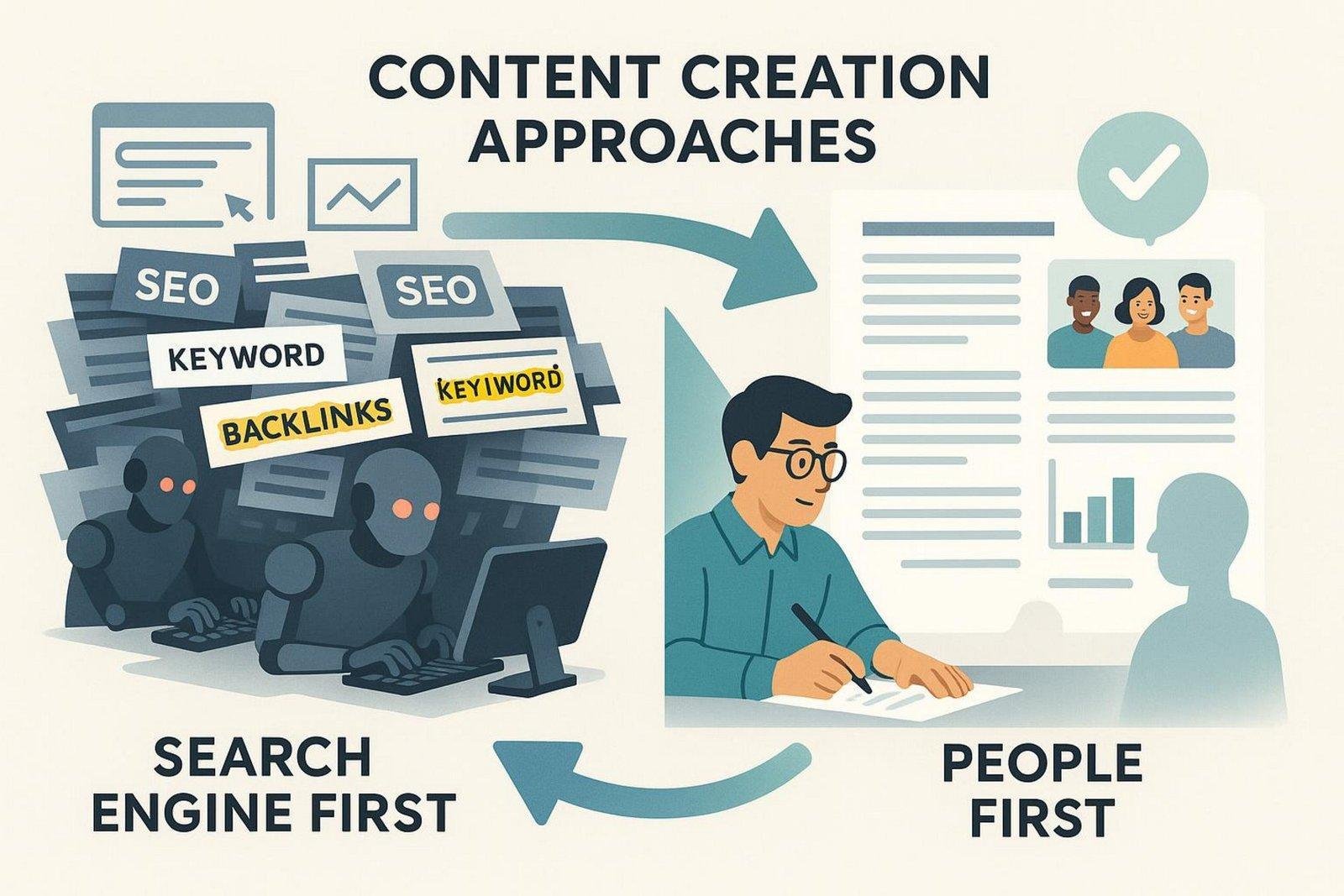
What does Google’s Helpful Content Update mean for your website? Simply put, it changes how your site ranks in search results by putting more value on helpful, original content made for people first-not just for search engines.
If your website has a lot of content that Google considers unhelpful, it’s less likely to appear in searches, even if you have some good pages. On the other hand, websites offering useful and honest content are expected to do better.
This update means it’s more important than ever to focus on your audience and give them a good experience. Google now rewards websites that show deep knowledge and answer people’s questions well, instead of sites filled with content just to chase trends or meet a certain word count.
No matter if you’re running a local website or managing international SEO services, understanding and responding to this change is important to keep- and possibly raise-your site’s visibility.
What Is Google’s Helpful Content Update?
The Helpful Content Update is a major change to how Google ranks pages so searchers are more likely to find original, helpful content written for people, not just for search rankings. It first launched in August 2022, then saw major tweaks in September 2023.
The update brought in a new ranking signal that looks across your whole site, aiming to find and promote content that gives visitors what they need. Content that doesn’t meet this goal is less likely to show up high in search results.
The biggest idea here is simple: make your content for people, not just to get clicks. Google is working to better match searchers with useful, trustworthy info. This means Google is trying to avoid promoting pages filled with keywords but lacking real usefulness or expertise.
The goal is to improve the quality of results and fight low-value or “filler” content.
Why Did Google Launch the Helpful Content Update?
Google made the Helpful Content Update to help people find information that’s really helpful. Over time, searches were getting crowded with material written mainly to rank well, often lacking strong knowledge or value for real users. People were struggling to find the answers they wanted and sometimes had to do multiple searches to get useful info.
Google’s update answers this problem by lowering the visibility of these less useful pages. It’s a push to encourage people to create quality content for real readers and to clean up the search results so users can quickly find dependable answers.
How Does the Helpful Content Update Work?
This update added a new ranking factor that looks at your whole site, not just single pages. Google uses machine learning to scan a website and figure out if most of its content is helpful or not. This isn’t a manual punishment, but an automatic system that changes how all your pages are ranked.
If the system thinks your website has a lot of unhelpful content, then all of your pages-even the helpful ones-might not do as well. The impact is stronger for sites with more unhelpful material. As Google keeps checking websites, if you clean up and publish more helpful content, your site’s rankings can get better again, but getting back to normal might take a few months.
What Does Google Consider Helpful Content?
Helpful content, in Google’s eyes, is made with the reader in mind. Think about who your users are and what they want to learn from your pages. Helpful content shows that the writer knows their stuff, has direct experience, or can explain things properly.
The goal is to allow readers to find enough information to solve their problem. Good content answers a person’s question directly, helps them understand the topic, and gives them confidence. It shouldn’t just repeat what others say or be written to meet a certain length. The real aim: give actual value to your visitors.
What Types of Content Are Most Affected?
The Helpful Content Update mainly lowers the traffic for pages designed for the search engine instead of real people. Certain types of content are especially at risk of dropping in visibility. Knowing these can help you spot weaknesses on your own site.
It’s not just about having a few weak pages-if your site as a whole often publishes unhelpful things, that pattern can hurt all your rankings, even your best articles.
Low-Quality Content
Pages with little information, poorly written material, or “thin” content are all likely to be affected. This includes things like pages with only a few lines just to target a keyword, auto-generated content not checked by a person, or articles that repeat common knowledge without anything new. Google’s systems look for material that doesn’t actually help the reader much.
Content Made for Search Engines, Not People
This is a main target for the update. Pages only made to show up for certain keywords-rather than really helping someone-will struggle. Signs of this approach include writing on every topic to see what sticks, common use of auto-writing tools, copying summaries from elsewhere without adding anything new, covering trends just for clicks, and forcing content to hit a certain length.
No Real Expertise or First-Hand Experience
If your content is written by someone who clearly doesn’t have a background in the topic or lacks direct experience, Google might see it as unhelpful. Trying to get into a topic just for the search traffic, without real knowledge, probably won’t work. Google wants pages written by people with true understanding and practical insights.
Duplicate and Old Content
Repeated material-whether copied from other sites or duplicated on different sections of your own site-tends to do poorly. Old content that hasn’t been updated also loses value. Just changing the publish date, without making real updates, won’t win you any points with Google’s updated system.
How Does the Helpful Content Update Change Website Rankings?
The clearest effect of this update is on how high your site appears in Google results. Sites labeled as having lots of weak or unhelpful content may see their search traffic drop. This signal affects the whole website, not just certain pages, which means even good articles can lose visibility if most of the site is weak.
This can be disappointing if you’ve put a lot of effort into publishing-but Google’s aim is to create a better experience for everyone searching. The update is made to reward websites that truly focus on helping people and sharing trustworthy answers.
People-First Content vs. Search Engine-First Content
The biggest difference is whether your page is focused on the audience or just on getting traffic from search engines. People-first pages aim to solve the reader’s problem and may use SEO, but as a way to help, not as the goal. These sites would still be useful to someone even if they landed directly, not from a search engine.
Pages made only to show up in searches, stuffed with keywords, or written without any real depth, are now much more likely to lose visibility as a result of this update.
Why Some Sites Lose Visibility
Your site might lose ranking spots if Google’s technology finds that too much of your content is unhelpful. You don’t need every single page to be perfect, but if a lot of material falls short, the overall site will drop. This reduces the chances even quality pages will appear high up. Doing a full review and removing or fixing weak pages often helps address the problem.
Signs Your Website Was Impacted
Wondering if your site was hit by the Helpful Content Update? Check these key signals. Look at your traffic data and any drops in your search rankings, especially after the update rolls out.
Regular changes happen in Google rankings, but a sharp traffic decline around this time is a strong sign your site may have been affected.
- Check Site Traffic: Look at your overall Google Search traffic, using a tool like Google Analytics. A sudden drop in organic visits around the Helpful Content Update date is a bad sign.
- Watch Keyword Rankings: Use a keyword tracking tool. If many pages that used to rank well fall down in search results, your site might have been caught by the update.
- Review Google Search Console: While Google won’t warn you directly, you can look for big changes in impressions, clicks, or average positions in Search Console. Watch for any new messages or major trends that start after the update.
How to Fix Content After the Helpful Content Update
To do well after this update, you need to focus on meeting your audience’s needs and removing weak content. Updating your approach involves more than small fixes-it may mean overhauling old pages or getting rid of things that aren’t actually helpful.
- Audit Your Content
- Review every page to spot content that might not help users.
- Remove, merge, or fix pages that repeat, are out of date, or are just there for search traffic.
- Meet Search Intent
- For each page, ask: Does this answer the searcher’s real question?
- Make sure each article gives the full answer a user would want.
- Improve Quality and Add Depth
- Go further than a basic outline-add real examples, explain details, and use images or videos if needed.
- Show First-Hand Experience
- Share your own experience, opinions, or original insights to show you understand the topic.
- Update and Remove Old Content
- Mark outdated material for updating or deleting. Don’t just change the date-update the facts and improve the writing.
- Work on User Engagement
- Structure pages for easy reading. Break up long blocks of text, use headings, and add visuals if possible.
- Aim for content that keeps people on your site, showing Google your material is worth reading.
Does AI-Written Content Survive the Update?
AI-generated pages have become common lately, raising questions after this update. Google’s advice has changed: while it once said content should be “written by people,” now it just says it must be “original and helpful.” This means using AI isn’t automatically bad-but it only works if the end result really helps users.
The Role of Human Review
Even if you use AI to draft content, it’s still important for a person to review, correct, and add their own knowledge. AI can start a piece, but a person must make sure it’s accurate, clear, and useful-otherwise, it may still be labeled as unhelpful.
| AI Content Action | Will It Pass Google’s Update? |
| AI content without review | Unlikely |
| AI draft with full human editing and expertise added | More likely |
| AI content plus unique insights and examples | Most likely |
Tips for Making AI Content Helpful
- Let AI generate drafts, but always improve the writing yourself.
- Add facts, stories, and answers based on your actual knowledge or experience.
- Check that all info is up to date and accurate.
- Ask if your content solves the user’s real question.
Building a Long-Term Content Plan After the Update
This update shows Google’s long-term plan to support high-quality, user-centered pages. Shortcuts and tricks don’t last. The best way ahead is to look after your audience, build trust, and update content often so your site stays useful and dependable.
- Put Readers First: Focus more on what your actual audience wants, not on chasing search engine tricks. Do research, talk to your users, and write the kind of pages they need.
- Stay Within Your Focus Area: Make sure your articles are related to your website’s main topic. Building trust in one area works better than trying to rank for every possible subject.
- Refresh and Expand Old Pages: Keep checking back on your published content. Update figures, details, and explanations; add new examples, links, or images. Don’t be afraid to grow successful articles into a series or new formats.
Helpful Content Update FAQ
Dealing with Google’s update can bring up questions. Here are answers to common ones:
How do I know if my site was hit?
This update is automatic-no warning arrives in Search Console. Watch for a clear drop in your organic traffic and rankings that lines up with the rollout. Use Google Analytics and Search Console to track big changes.
How often should I update my content?
It depends on your topic. News or reviews need updating more often than “evergreen” guides. Run regular checks on your key pages and update whenever core details change or you can add new value. Make sure you’re improving the real content, not just tweaking dates.
If I remove unhelpful articles, will my ranking return?
Yes, cleaning up poor content can improve your site’s ranking. Since the update looks at the whole site, removing or fixing bad pages helps shift your site’s profile in Google’s system. Just keep in mind, recovery may take a few months as Google’s algorithm re-checks your site.
Google’s Helpful Content Update is pushing website owners to make real, user-focused content. While it may be tough at first, these changes should help websites that give people solid information. Stay focused on quality, answer real questions, and your site will be in a much better position as search continues to change.