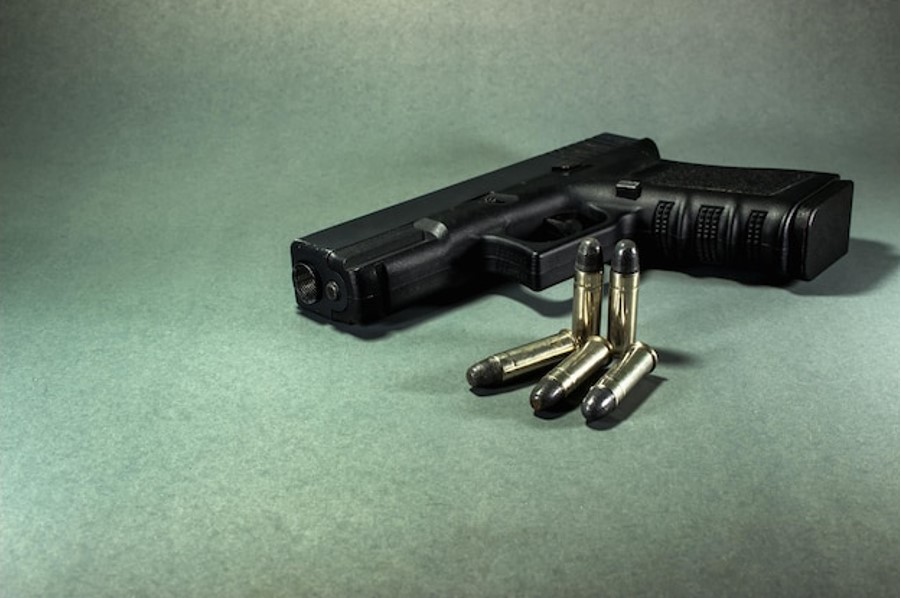
Compensators are muzzle devices and their job include screwing into the end of a barrel. Commonly, they are created from an alloy or treated steel and they tend to be tolerant to heat. Most compensators are designed in a way so that they match the shape and size of the slide. Hence, they have either rounded corners or are squarish. The sides and top of the screw-up cube tend to be vented and the angles and number of vents differ with different models. If you choose a polymer-frame and small pistol that is in 9 millimetres, you will find it to be having a remarkable felt recoil.
The wrists, arms, and hands of shooters take up a bullet’s physical push-back and it is propelled forward by nearly 48,000 pounds/square inch of pressure. The weight that compensators adds besides the vents works collaboratively for redirecting the gas when it leaves the muzzle. Commonly, the rise of muzzle also known as muzzle flip happens due to the recoil when the wrists of the shooter bend inescapably with the impulse of the recoil. The vents of the compensators lessen that motion when the gases escape from the sides and top but gets hindered at the bottom. This lessens the energy which is shifted to the shooters.
Features Of the Canik TP9 SF Elite Compensator
The new inclusion to the line of compensators is the new Canik TP9 SF elite compensators. When you decide to shop Canik TP9 SF Elite compensator now rely on the trustworthy online stores like 45 Blast. The SF Elite compensators have a closed upper part that remains open for accommodating the threaded barrel. This compensator looks as beautiful as other compensators that you find in the market. Commonly, this compensator is found in some colors like two tone, black, FDE, tungsten, and red.
What Makes Compensators Different From Suppressors?
Compensators and suppressors are two well-known mounts, and both look cool though they serve various purposes.
- An Overview of Suppressors
A suppressor is an attachment that you can attach to your gun and its job is lessening the loud noises of a gun. Suppressors are sound moderators and do their job by adjusting the rate and pressure at which propellant gases leave the muzzle. On the other hand, a compensator is also known as a muzzle brake and it is a muzzle attachment that redirects the flow of propellant gas for lessening recoil.
- The Benefits Of A Compensator
When the matter zeroes on concealment then the benefits of pistol compensators outweigh their drawbacks. Commonly, when people add a compensator to their handgun they can make their controlling shots smoother. Additionally, the compensators also augment their accuracy at the time of rapid-fire sequences
The Way of Working of a Compensator and a Suppressor
Both compensators and suppressors do their job by adjusting the method in which propellant gas leaves the muzzle. When people pull the trigger on their guns, then they end up initiating an explosion. The force that this explosion causes compels the bullet to get out from the barrel at a high force and speed. Nonetheless, the residual gas from the explosion too gets expelled at a high pressure.



Pretty nice post. I just stumbled upon your blog and wanted to say that I have really enjoyed surfing around your blog posts. After all I’ll be subscribing to your rss feed and I hope you write again very soon!
Great line up. We will be linking to this great article on our site. Keep up the good writing.
I like the efforts you have put in this, thank you for all the great posts.
Greetings from Los angeles! I’m bored to tears at work so I decided to browse your website on my iphone during lunch break. I really like the knowledge you present here and can’t wait to take a look when I get home. I’m surprised at how fast your blog loaded on my cell phone .. I’m not even using WIFI, just 3G .. Anyways, fantastic site!
Hello very cool site!! Man .. Beautiful .. Wonderful .. I will bookmark your site and take the feeds additionallyKI am happy to seek out numerous helpful information here within the post, we need develop extra techniques in this regard, thank you for sharing. . . . . .