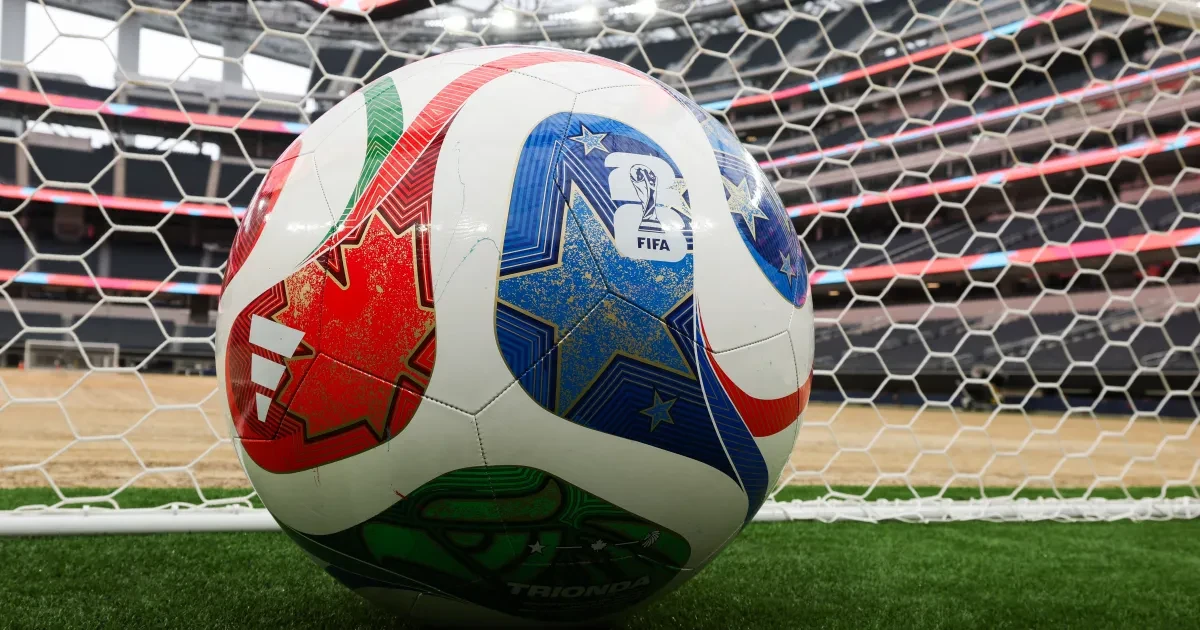
The biggest football party on Earth is about to get even bigger. For the first time in history, the FIFA World Cup will welcome 48 teams instead of the familiar 32. That means more nations, more drama, and a completely redesigned group stage that even seasoned fans need to learn.
This 2026 FIFA Group Stage Summary breaks down every rule, every twist, and every detail so readers walk away feeling like insiders before a single ball is kicked.
Why 2026 Is Different From Every World Cup Before It
The biggest change coming in 2026 is simple: more teams. The tournament is expanding from 32 teams to 48 teams, making it the largest 2026世界盃 ever held. This is not just a minor tweak. It changes almost everything, from the number of groups to how teams qualify for the knockout stage.
Instead of 8 groups with 4 teams each, there will now be 12 groups with 4 teams each. The total number of matches goes from 64 to 104 games, giving fans much more football to enjoy across the entire tournament.
For the first time in history, the World Cup will also be jointly hosted by three countries: the United States, Canada, and Mexico. Matches will be played across 16 cities, spanning different climates, altitudes, and time zones.
The New Group Stage Format Explained
Understanding the group stage is the key to following the tournament properly. This 2026 FIFA Group Stage Summary outlines the core structure in a way that is easy to follow.
Each of the 12 groups contains 4 teams. Every team plays against the other three teams in their group once. This round-robin format means each team plays exactly 3 group stage matches, regardless of how many teams are in the tournament overall. This rule was kept in place to protect players from overload.
The points system stays familiar:
- Win = 3 points
- Draw = 1 point
- Loss = 0 points
After all three rounds are completed, the standings in each group determine who moves forward.
Who Advances From the Group Stage?
This is where the 2026 format becomes truly exciting. In past tournaments, only the top 2 teams from each group moved on. In 2026, the rules are different.
The top 2 teams from each of the 12 groups advance automatically to the knockout stage. That accounts for 24 teams.
But then comes the new twist: the 8 best third-place teams from across all 12 groups also qualify. This brings the total number of teams advancing to the knockout phase to 32, which then leads into a brand new Round of 32.
This means that even finishing third in a group is not automatically the end of the road. A team that finishes third but performs well across their three matches could still make it through. This rule adds an extra layer of tension to every single group match.
Tiebreaker Rules: What Happens When Teams Are Level on Points?
When multiple teams in the same group finish with the same number of points, officials need a way to separate them. This is one of the most important parts of any 2026 FIFA Group Stage Summary, and it is something every fan should know.
The ranking criteria are applied in this order:
- Goal difference across all group matches
- Total goals scored in all group matches
- Head-to-head points between the tied teams
- Head-to-head goal difference between the tied teams
- Fair play points based on yellow and red cards received
- Drawing of lots if everything else is still equal
This system means that every goal matters. A team that wins 3-0 instead of 1-0 could end up ranked higher by the end of the group stage. Coaches and players will need to think carefully about attacking play even when a match is already decided.
How the Best Third-Place Teams Are Selected
For the 8 third-place spots, there are 12 teams competing for those positions. FIFA will rank all 12 third-placed teams using the same criteria: points first, then goal difference, then goals scored, and then fair play points.
The top 8 from that group of 12 will advance to the Round of 32. This selection process means every third-place team in every group will be watching other results carefully to see if they make the cut.
As part of a complete 2026 FIFA Group Stage Summary, this rule is critical to understand because it changes how teams approach the final group match. A team already eliminated from finishing first or second might still push hard for goals to secure a better ranking among third-placed finishers.
The Teams: A Global Snapshot
The 48 participating nations represent the broadest global picture of football ever seen at a World Cup. Here is a quick look at how teams are distributed by region:
- Europe (UEFA): 16 teams, including England, France, Germany, Spain, and Portugal
- Africa (CAF): 10 teams, including Morocco, Algeria, Egypt, and Senegal
- Asia (AFC): 9 teams, including Japan, South Korea, Iran, and Australia
- South America (CONMEBOL): 6 teams, including Argentina and Brazil
- CONCACAF: 6 teams, including the three host nations plus Panama, Haiti, and Curaçao
- Oceania (OFC): 1 team, New Zealand, earning a direct qualification slot for the first time
This distribution shows how football has grown globally. Nations that never competed in a World Cup before now have the chance to represent their regions on the world stage.
Key Group Stage Matches to Watch
While every match carries weight, some fixtures stand out based on history, rivalry, and talent.
- Mexico vs. South Africa (Group A), The opening match, expected to be held at the iconic Azteca Stadium in Mexico City on June 12.
- England vs. Croatia (Group L), A rematch with deep recent history between two European heavyweights.
- Argentina vs. Algeria (Group J), A high-profile clash between the reigning World Cup champions and one of Africa’s strongest sides.
- Brazil vs. Morocco (Group C), A battle between South American royalty and one of Africa’s rising forces.
All final group stage matches will be played simultaneously to ensure fairness and prevent teams from making tactical decisions based on live results from other games.
Tactical Challenges Teams Will Face
The geographical spread of the 2026 tournament creates unique challenges that go beyond tactics on the pitch. Teams playing in Mexico City will deal with high altitude and thinner air, which affects stamina and breathing. Teams traveling to Miami will face coastal heat and humidity. Some squads could face long travel distances between matches, affecting recovery time.
This is why squad depth will matter more in 2026 than in any previous World Cup. Teams with strong rotational players and smart fitness management will have a significant edge over those relying on just 11 or 12 key players.
The best third-place rule also forces teams to stay aggressive throughout the group stage. Even a comfortable lead in a group might not be enough if the goal difference falls short compared to third-place teams in other groups.
Why the 2026 Format Matters for Football Fans
The 2026 FIFA Group Stage Summary is not just a technical breakdown. It reflects how football is evolving as a global sport. More teams mean more countries represented, more cultures celebrated, and more fans engaged around the world.
For casual viewers, the new format offers more matches and more storylines. For serious fans, it introduces new strategic layers that make watching every game even more rewarding. Every goal, every card, and every result carries meaning across the entire 12-group structure.
Final Thoughts
The 2026 FIFA World Cup promises to be a landmark event. With 48 teams, 12 groups, 104 matches, and the new best third-place qualification system, there has never been a World Cup quite like it.
Understanding the 2026 FIFA Group Stage Summary is the foundation for enjoying every moment of the tournament. Knowing how teams advance, how tiebreakers work, and how the best third-place teams are selected gives fans the full picture.
For detailed coverage, breakdowns, and updates on the 2026 World Cup, visit FIFATopNews for reliable and well-organized football content.
Article Source: 瘋世足