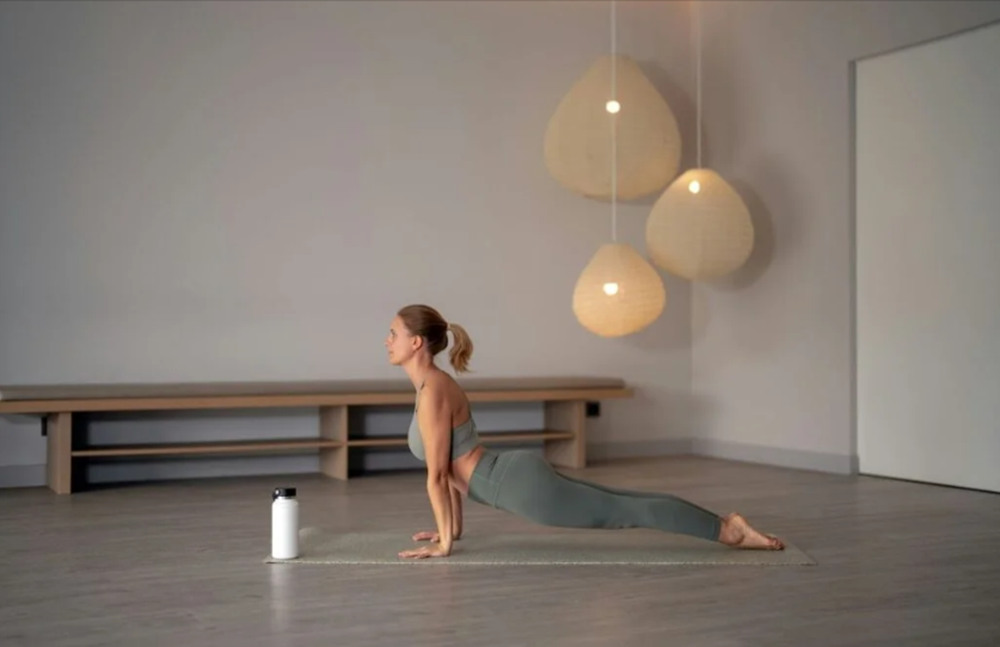
Source: Photo by Anna Rosar on Unsplash
Breath merges with movement as well as ethics in physical activity. Hence, yoga is a lifestyle and not just an exercise. The practice of yoga incorporates ethics, asanas, breath control, focus, and meditation. By moving inward and resting fully in the body, the mind, and the spirit, we turn awareness outward, cultivating an awareness of and habits that promote well lasting well-being.
All Branch Yoga has multiple levels and moves one from the most simple, foundational ones. By incorporating the basic poses with consistent practice into your daily yoga routine, improvement will be evidenced in every posture. The ultimate practice must be undertaken not as a matter of haste, but patience and progressively deliberate effort. This practice will create a system to be harnessed to achieve the peak ability.
Holistic Benefits of Yoga
Slow, deep breathing lowers stress levels, lowers heart rate, and begins to train the nervous system to cope with stress. Mind yoga breathing is a practice that quite literally breathes the mind in and sleeps the mind. Through breath and relaxation among yoga practitioners, there is a realization that one needs to adopt habits that promote well-being as well as healthier behaviors.
Diet, daily schedule, and mindfulness
Mental enthusiasm and happiness are key components of actualizing true health. The Art of Living describes this as a tripod, the body, mind, and spirit. Any imbalance in one part destabilizes the whole. Positive prāṇa is directed through yoga which purifies the mind and speech, and shows the life guidance of the yoga.
The body is influenced by the guides, routines, and food, which influence sleep and clarity as well as balanced food. Taking time on the activities of the day’s meals, eating foods that are satisfying, and eating foods that bring about balance the body’s energies enhances clarity and calm. Recognizing subtle signals like fatigue and modifying behaviors help prevent chronic problems. Daily activities, serving as gentle yoga, transform posture, breathing, and chronic yoga into a lifestyle as opposed to an activity that is done only for fitness.
The history of yoga is quite fascinating, but so is the history of wellness.
The Vedic age is where yoga history starts, stemming from rituals and hymns. Much later, Hatha Yoga introduced postures and breath control as means of preparing meditators, and Patañjali had done the great work of codifying yoga’s teachings in the Yoga Sutras. The expansion of yoga practices in the modern world, starting from the 19th and 20th century, is somewhere a foreign element as yoga elements got adapted to audiences as power yoga, therapeutic practices and even online classes. It is today, in the modern world, that students are able to choose from Hatha, flowing Vinyasa, Yin, and other restorative yoga styles. Yoga is also used in wellbeing retreats alongside other elements such as sound nutrition, sound healing, and even nutrition.
Establishment and Continuation of a Home Yoga Practice
While starting a home practice may use gentle progress, a practitioner should move smoothly and use the breath to easefully shift between poses to avoid injury. Flexibility improves over time, so take time to relish small changes. Remain mindful in every pose and use breath awareness to soothe an agitated mind.
Have a specific place where there is a mat and would also like a candle or incense, because this may help motivate you to practice. Change comes through discipline, and you may want practice to be done everyday, preferably in the morning and on an empty stomach.
Allow a minimum of two and a half hours after eating and drink some water about thirty minutes before practice. The ability to construct a home routine improves the ability to listen to your own body, and to be able to ask a teacher when needed.
The Process: Acceptance of a Challenge and Subsequent Improvement
Each path taken in life is accompanied with practice and as much as a person would like to be the best in a path taken, not much will be achieved to the best of their ability in a single attempt. There are times when the pose seems impossible to do. There will be feelings of low self esteem in times like these. What you have to realize is that there is a price to be paid and in this case, it is time in order to be mature enough to step onto that pathway. The evolution you encounter is through various mechanisms and routes.
The desire to achieve advanced poses like a full split (Spagat) is often strong in the beginning, but it is a reflection of the spirit’s ambition. Achieving such advanced poses takes time, a solid foundation, and physical readiness.
Conclusion
The lifestyle of yoga perpetuates movement with breath, diet, and the exercise of mindfulness as a spectrum of wellness. Regular practice has been correlated with improvements in flexibility, balance, cardiovascular markers, and reduced stress. Teachings of the past still declare that health ought to be accompanied by the enthusiasm and happiness of the mind. It has been a long time since the underlying philosophies of yoga have embraced compassion, unity, and self- awareness.
Frequently Asked Questions About Yoga
How to create a yoga routine?
Select some basic postures and practice them daily. Movement must be synchronized with breath. With practice and increasing flexibility, your sequence will naturally expand. Cultivate awareness of breathing and relax.
How to start a yoga routine at home?
Pick a suitable area; spend some time breathing, and practice easy poses with focus. After a meal, wait at least 2 hours. Expand sessions slowly and seek a teacher when guidance is necessary.
Yoga routine for beginner
Start with mountain posture, cat and cow stretches, downward-facing dog, and the child’s pose, adding a couple of minutes of focused breathing. Avoid the urge to force the body into positions to enhance progress.
Yoga routine for lower back pain
To ease lower back pain, try cat-cow, knee to chest, and gentle spinal twists. Move gently, with the core engaged and spine lengthened. Combine stretches, relaxation, breathing, and stress relief; stop if you feel pain.
Yoga routine to increase flexibility
To improve flexibility, take time to practice each pose at a time. Incorporate sun salutations and standing bends, deep lunges and forward folds. Maintain each pose for multiple breaths and ease gently; progress may take a while.
Flexible yoga poses for beginner
Begin with mountain pose, cat cow, downward dog, seated forward bends and supine twists. Move softly, coordinating the breath. Retain poses for a few breaths and relax them to allow the muscles time to ease.