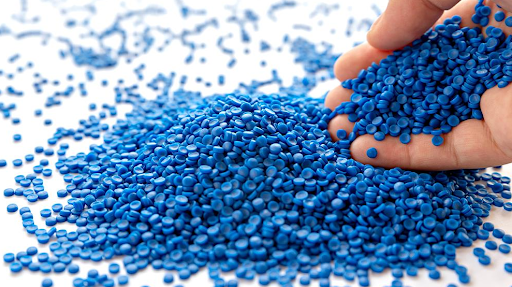
Most people have heard of PVC material. Fewer actually understand why it keeps turning up — in construction specs, in hospitals, in the conduit running behind your walls. Industries have genuinely tried to move past it. Composites were trialled. Bioplastics were pushed. And yet, project after project, the same material ends up in the final build. That is not habit. It is the result of a combination of properties that, taken together, nothing else has cleanly replicated at scale — not yet, anyway.
The Chlorine Advantage Nobody Talks About
Roughly half of PVC’s molecular weight is chlorine. That single fact explains more about the material’s commercial staying power than most product guides ever bother to mention. Chlorine is why PVC resists ignition without needing flame retardants bolted on after manufacture. It is also what gives the material its resistance to a wide range of solvents and oxidising agents — something standard polyethylene simply cannot match. In Queensland’s mining operations and the chemical processing plants of Western Australia, that resistance is not a footnote in a data sheet. It is the difference between a pipeline that holds and one that does not.
Why It Outlasts Timber in Australian Conditions
Timber has its appeal, but in coastal Australian environments the maintenance story gets old fast. Salt air, sustained UV, and high humidity do not just weather timber gradually — they create a cycle of swelling, sealing, repainting, and replacing that adds up. PVC material does not absorb moisture. It cannot warp. Fungal growth has nothing to grip. Building managers in the Top End and along the Queensland coast have shifted to PVC profiles for external applications not out of aesthetic preference but because the maintenance ledger over a decade makes the case plainly. There is no painting schedule. No retreating. Cleaning is genuinely the extent of what the material asks for.
The Medical Sector’s Quiet Dependence
Walk through any hospital ward and a surprising amount of what you see is PVC. Blood bags, IV lines, oxygen masks, dialysis tubing — flexible PVC formulations are woven into single-use medical devices in ways most patients never register. The reasons are specific rather than incidental. PVC is chemically inert against blood. It survives sterilisation by gamma radiation and ethylene oxide without breaking down. It stays transparent under clinical lighting, which matters because nurses need to see what is flowing through a line at a glance. Alternatives have been tested seriously and repeatedly, but replicating that particular combination of properties at the volume modern healthcare demands has proven hard. The sector’s dependence on PVC is not a failure of imagination — it reflects a material that solved a difficult brief.
Where Recycling Actually Stands
Recycling claims around PVC tend to run hotter than the reality warrants — in both directions. Rigid PVC, the kind used in pipes and window profiles, processes relatively cleanly through mechanical recycling. Some Australian pipe manufacturers have moved to incorporating recycled content into new production, which is a genuine development worth acknowledging. Flexible PVC is a different story. The plasticisers complicate separation and reprocessing, and the recycling infrastructure for it remains patchy. The honest summary is that rigid PVC has a working recycling pathway that is expanding, while flexible PVC is still catching up. Sweeping claims in either direction do not reflect where the industry actually is right now.
The Installation Edge Contractors Know
Lab performance matters, but so does what happens on site. PVC pipe can be cut with a standard handsaw. Joints are made with solvent cement in minutes, no heat equipment needed, no certified welder standing by. Electrical conduit snaps together without tools. On a large residential development, those small time savings stack up quickly across a build. It is one reason PVC remains the default in Australian plumbing and electrical rough-in work, even when alternatives exist. Ease of installation is rarely the headline specification, but it is consistently the one that shapes what actually gets used.
Conclusion
The reason PVC material persists across so many industries is straightforward when examined honestly. Durability, chemical resistance, flame performance, installation simplicity, and formulation flexibility rarely travel together in a single material. PVC manages it, and at a scale that alternatives have consistently struggled to match. The sectors that have pushed hardest to find a replacement have, more often than not, come back to PVC after running the full comparison. Knowing where it performs well — and where its thermal limits make it the wrong call — is what separates informed specification from guesswork.