The immersive event industry in 2026 is at an inflection point. In a world saturated with digital content, audiences no longer want to passively attend events. They want to step into a story, shape its outcome, and leave feeling like they were part of something that could not happen anywhere else. The demand for experiences that engage all senses, that create genuine emotional stakes, and that feel irreplaceable, is driving event producers to think differently about location, narrative, and design.
Few countries in the world offer the raw material for this kind of event creation the way Mexico does. Ancient ruins rising from jungle floors. Crystal-clear cenotes that have held sacred significance for thousands of years. A Mexico City that layers Aztec, colonial, and contemporary culture in a single block. Pacific coastlines and Caribbean waters that set a stage no production budget can fabricate. The country’s diversity of landscape, culture, and atmosphere gives immersive event creators something that cannot be built in a studio: a world that is already extraordinary, waiting for a story to be told inside it.
what makes an event truly immersive in 2026
The definition of immersive has evolved significantly. What began as a descriptor for theatrical, Punchdrunk-style experiences, where audiences walk through a narrative space rather than sit in front of a stage, has expanded to encompass any event format that positions the attendee as an active participant in a designed world rather than a passive observer of a performance.
In 2026, the leading trend reports define immersive events as environments built around multi-sensory engagement, where soundscapes, scent, tactile design, visual storytelling, spatial flow, and participant interaction combine to create an emotional experience that feels unlike anything in daily life. The key principle, articulated by design firms and experiential marketing leaders alike, is that audiences do not just want something to look impressive. They want it to feel like a world.
Mexico’s natural and cultural environments deliver this at a level that purpose-built venues rarely match. A cenote is already a world. A colonial hacienda is already a world. The jungle surrounding Tulum at midnight, with bioluminescent water and the sound of the canopy overhead, is already a world. The event creator’s job is not to build the environment from scratch but to activate and amplify what is already there.
Mexico’s immersive event landscape: what is already happening
The immersive event culture in Mexico is not nascent. It is mature, ambitious, and globally recognized. Day Zero Tulum, founded by Damian Lazarus, has been running for over a decade as one of the world’s most referenced immersive music and cultural experiences. Set in the jungle outside Tulum, the festival blends cutting-edge underground music with spiritual performances honoring Mayan heritage, hidden cenotes for swimming, Cirque-style performers suspended from trees, and a production design that transforms the jungle itself into the primary stage element. It has become a pilgrimage for international audiences who specifically seek the kind of experience that location-integrated immersive design makes possible.
MUTEK Mexico City has similarly positioned itself as a destination for immersive audiovisual experiences, combining digital art, experimental music, and spatial installation design in Mexico City venues for over twenty years. The Van Gogh Immersive Experience toured to Mexico City with 360-degree digital projections in a landmark space, drawing audiences who had never engaged with that kind of art presentation format before. Cercle, the French immersive concert series that produces performances in extraordinary natural and architectural settings worldwide, included Mexico City in its global tour.
Bahidora, held at Parque Natural Las Estacas in Morelos, is another well-regarded example: an immersive music and arts festival where the natural rivers, landscape, and surrounding ecology of the venue are as central to the experience as the artists performing. These events are not simply using Mexico as a backdrop. They are using Mexico as a co-creator of the experience itself.
the raw materials Mexico offers event creators
cenotes and underground water systems
Mexico’s Yucatan Peninsula contains the largest known underground river system in the world, surfacing in thousands of cenotes, natural sinkholes of crystalline water formed by the collapse of limestone bedrock over millennia. These spaces are visually unlike anything that can be constructed. The combination of sunlight filtering through the opening above, the stillness of the water, the geological formations overhead, and the acoustic quality of the enclosed space creates a sensory environment that is inherently immersive. Cenote-based events, from intimate ceremonies to DJ sets with production systems built into the cave walls, have become some of the most photographed and most discussed immersive experiences in the world.
the Tulum jungle and Mayan heritage landscape
The jungle surrounding Tulum offers event producers a setting defined by ancient ecological complexity. The presence of Mayan ruins, the density of the canopy, the proximity to the Caribbean, and the region’s specific spiritual and cultural associations create a context that gives immersive events a depth of meaning that industrial venue spaces cannot provide. The combination of natural beauty and cultural history creates a narrative substrate that event designers can work with rather than against.
Mexico City: culture layered over culture
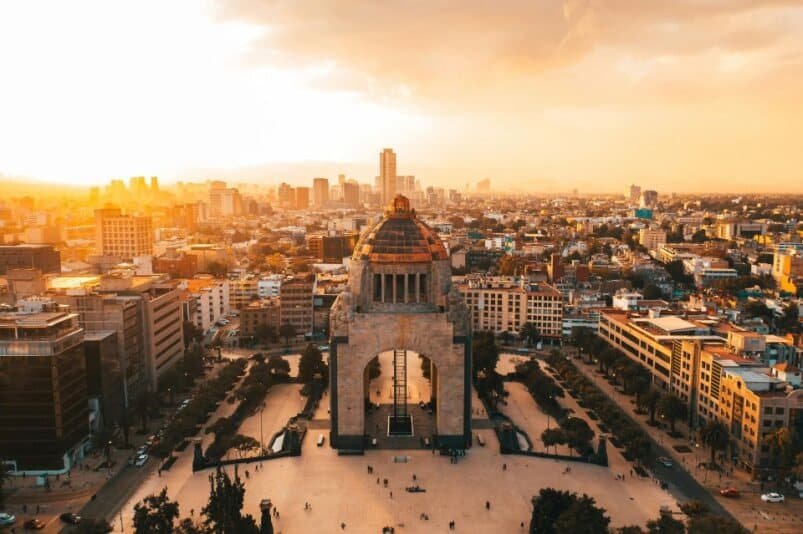
Mexico City is one of the most architecturally and culturally complex cities on Earth. Pre-Hispanic ruins sit beneath colonial churches that stand beside contemporary art institutions. The city has over 5,000 traditional festivals and cultural events annually. Its event venues, from the Palacio de Bellas Artes to converted haciendas in Coyoacan to industrial spaces in Roma Norte, offer immersive event producers a range of atmospheric contexts that few cities can match. The cultural density of Mexico City means that events held there carry an associative richness, a sense of place and history, that blank-slate convention centers cannot deliver.
Pacific and Caribbean coastlines
From the Riviera Maya on the Caribbean side to Los Cabos and Puerto Vallarta on the Pacific, Mexico’s coastlines offer event producers dramatic natural settings that combine water, sky, and landscape in ways that are immediately cinematic. Sunset ceremonies in Tulum, multi-day destination festival experiences in Cancun’s Moon Palace resort, and beachfront immersive activations in San Jose del Cabo all leverage the coastline as a primary design element. The accessibility of these locations for international attendees, combined with the quality of resort infrastructure, makes them particularly effective for destination immersive events.
why Mexico works for international brands and event producers
Beyond the aesthetic and cultural richness of the setting, Mexico offers practical advantages for international event production that matter significantly when organizing a large-scale immersive experience. Direct flight access from North America, Europe, and Latin America is extensive. Resort infrastructure in key markets like Cancun, Tulum, and Los Cabos provides accommodation, logistics support, and event service networks at a scale that allows large guest counts to be managed without building everything from scratch. The relative cost of production in Mexico compared to comparable productions in Western Europe or the United States allows event budgets to stretch further, enabling more ambitious scenic design, more elaborate staging, and higher production values for equivalent spend.
Mexico also offers something more difficult to quantify but equally important: permission. The cultural relationship with celebration, spectacle, symbolism, and ritual in Mexican culture creates an atmosphere in which ambitious, unconventional event formats are welcomed rather than treated as novelties. An immersive event that asks participants to engage with Mayan spiritual traditions, to be physically present in ancient water systems, or to experience a multi-sensory performance in the ruins of a colonial building lands differently in a culture that has its own deep tradition of immersive, multisensory cultural experience.
FAQ: immersive event creation in Mexico
what makes Mexico a good destination for immersive events?
Mexico offers a combination of extraordinary natural settings (cenotes, jungle, coastlines), deep cultural and historical layers (Mayan, colonial, contemporary), a mature event production ecosystem, and competitive production costs compared to equivalent markets in Europe or North America. These elements combine to give event creators raw material for immersive design that cannot be replicated in purpose-built venues.
what are the best locations in Mexico for immersive events?
Tulum and the Yucatan Peninsula are the most internationally recognized for cenote-based and jungle immersive experiences. Mexico City offers the richest urban cultural context. Los Cabos, Cancun, and Riviera Maya provide destination event infrastructure with coastline settings. Morelos and surrounding states offer natural park environments for festival formats.
what is an immersive event?
An immersive event is one where attendees are positioned as active participants in a designed world rather than passive observers of a performance. It engages multiple senses through a combination of environmental design, soundscapes, narrative, interactive elements, and spatial experience. The goal is to create a feeling of being fully inside an experience rather than watching it from outside.
what events are examples of successful immersive experiences in Mexico?
Day Zero Tulum, Bahidora, MUTEK Mexico City, and the Van Gogh Immersive Experience in Mexico City are among the most cited examples. The Cercle immersive concert series has also performed in Mexico City. The Riviera Maya hosts several destination immersive music festivals annually, including Day Zero, Chrysalis, and Ember Shores.
can cenotes be used as event venues in Mexico?
Yes, with appropriate permits and environmental compliance. Cenotes have been used for intimate ceremonies, small-scale DJ performances, and experiential activations. Any use of a cenote as an event venue requires respect for strict environmental guidelines, coordination with local communities and authorities, and responsible production practices that do not damage the fragile ecological system of the underground water network.