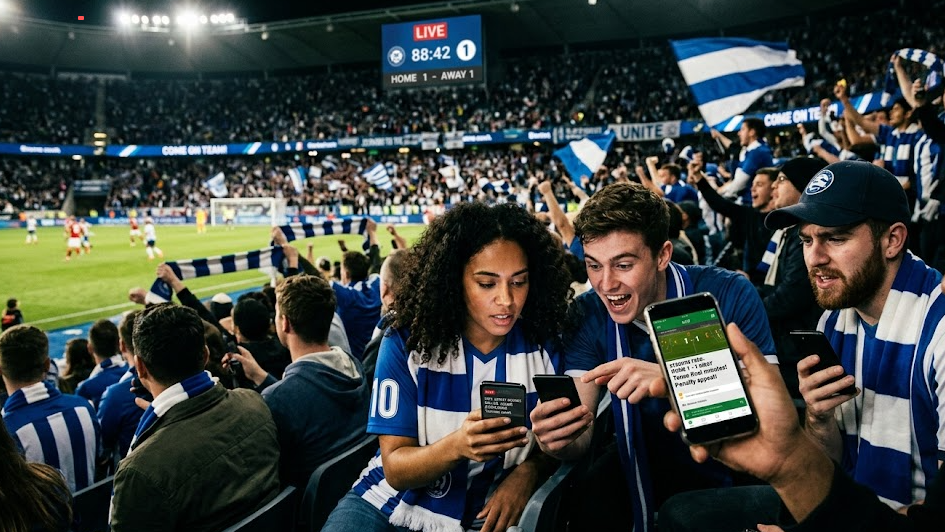
These days, most content can wait. People save articles for later, catch up on videos when they have time, and watch highlights once everything is already over. Sports does not really work like that. The result matters, sure, but that is not the only thing that keeps people coming back. A lot of the pull sits in the few minutes before the result becomes final. The score is still there on the screen, but one side starts looking a little shaky, the pace changes, the crowd sounds different, and you get that feeling that something is about to happen. That is the part fans do not want to miss.
People do not always watch sports in one straight line anymore either. A lot of them check in for a moment, step away, then come back once the game starts getting tense. They look at the score, peek at the lineups, go do something else, then drift back when the match begins to feel alive. That does not mean they care less. If anything, it means they know which part matters most. They are not trying to sit through every second just for the sake of it. They want to stay close enough to catch the turn when it comes.
That is why 실시간 스포츠중계 does not feel out of place in a conversation like this. It matches what fans are actually looking for. They are not only after the final score once everything has already been cleaned up and packaged into highlights. They want the stretch before that. A dangerous free kick. Runners in scoring position. A late power play. A close game that suddenly starts tilting one way. Those moments land differently when you catch them live. Later is still later.
That is also why sports still holds a kind of value that delayed content cannot fully copy. A movie can wait. A show can wait. Even most online entertainment can be pushed to another time without losing much. Live sport is different because the uncertainty is part of the experience. Once the moment is gone, part of the feeling goes with it. Watching a goal after it happened is not the same as feeling the tension right before it arrives. Fans know that without needing it explained to them.
Another thing people notice, even if they do not always say it out loud, is that sport is often about momentum before it is about outcome. The score may not have changed yet, but the game already feels different. One team drops deeper. A pitcher starts missing spots. The tempo shifts. A defense begins to look uncomfortable. Those little signs are part of the reason fans stay near the match instead of only checking back later for the result.
And once that habit settles in, it stays. One quick check turns into another. One close finish leads to a late-night follow-up the next day. Before long, live sport becomes part of the weekly rhythm without anybody making a big deal out of it. That is probably why it remains so strong even now, when attention is scattered everywhere. Fans are not only looking for information. They are looking for timing, pressure, and that feeling that the next minute might matter more than the last one.
In the end, that is what keeps bringing people back. Not just the result, but the chance to be there before the result is decided. Live sports still gives people that feeling, and that is why it remains hard to replace.