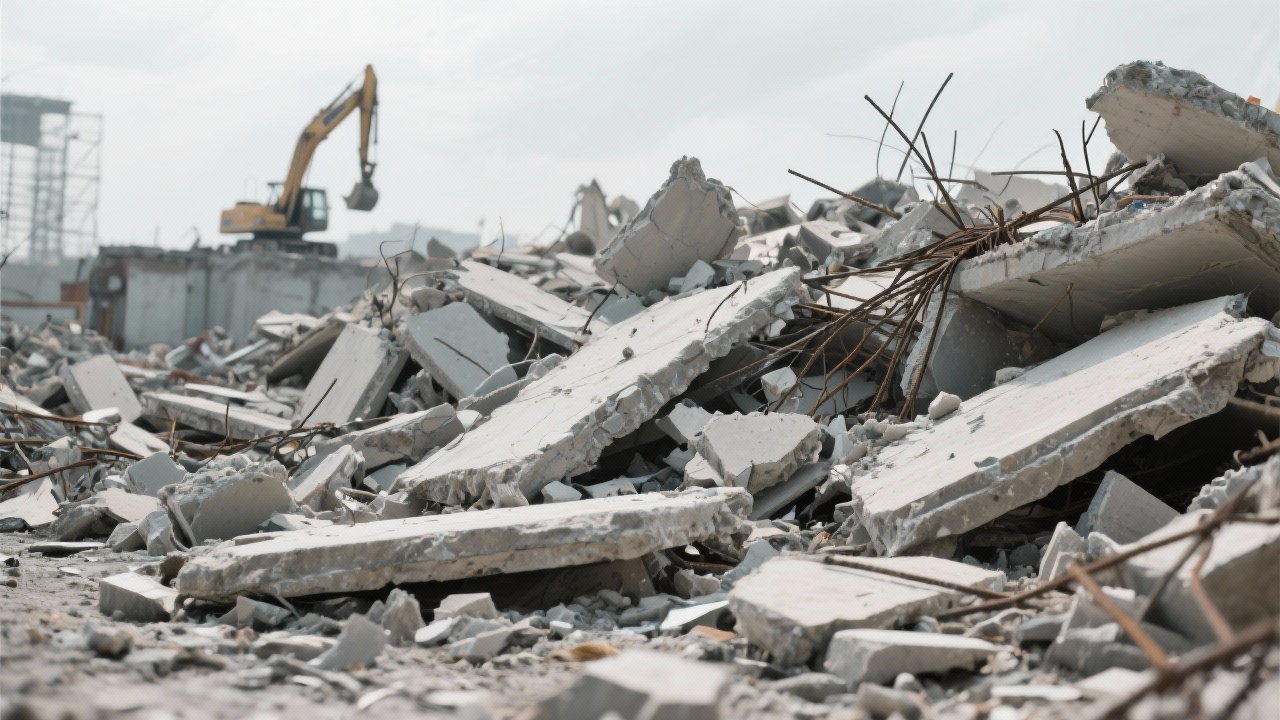
Every day, small construction companies across the country are hemorrhaging profits without even realizing it. The culprit isn’t poor project management or inefficient labor—it’s the concrete waste sitting in dumpsters and hauled away to landfills. While most contractors focus on winning bids and completing projects on time, they overlook how concrete waste disposal costs silently erode their bottom line. The solution often lies in equipment like a rock crusher that can transform waste into profit, yet many small operators remain unaware of the financial drain happening right under their noses.
The True Cost of Concrete Waste: More Than Just Dump Fees
When small construction company owners calculate project costs, they typically account for landfill tipping fees as a line item expense. However, this represents only a fraction of the true financial impact of concrete waste disposal costs.
Landfill Tipping Fees Are Rising Faster Than You Think
Landfill tipping fees have increased by an average of 3-5% annually over the past decade, significantly outpacing inflation. In many urban markets, disposing of concrete waste now costs between $50 and $150 per ton. For a small demolition project generating just 50 tons of concrete debris, that’s $2,500 to $7,500 in pure disposal costs—money that disappears with no return on investment. These fees continue climbing as landfill capacity decreases and environmental regulations tighten.
Transportation Costs That Eat Away at Profit Margins
Beyond tipping fees, the logistics of concrete waste management drain resources in ways most contractors fail to quantify. Hauling concrete debris requires multiple truck loads, fuel costs, driver time, and equipment wear. A typical small contractor might spend $500-$1,500 per project just moving waste from the job site to the landfill. When you factor in the opportunity cost of trucks and drivers tied up in waste hauling instead of productive work, the real expense multiplies. For companies operating on 8-12% profit margins, these costs can consume half of the expected profit on smaller projects.
Lost Revenue from Sellable Aggregate Materials
Here’s where the profit killer becomes truly insidious: concrete waste isn’t actually waste at all. Crushed concrete serves as high-quality aggregate for road base, new concrete mix, drainage applications, and landscaping projects. The material contractors pay to throw away could instead generate $5-$15 per ton in revenue. A small construction company disposing of 500 tons of concrete annually is literally throwing away $2,500 to $7,500 in potential income while simultaneously paying disposal costs. This double financial hit—paying to discard something valuable—represents a fundamental business inefficiency.
How Concrete Waste Impacts Small Construction Company Profits
The financial damage extends far beyond direct disposal expenses. Concrete waste creates cascading effects throughout small construction operations.
The Hidden Labor Hours Spent on Waste Management
Breaking down concrete, loading it into dumpsters, coordinating hauling schedules, and managing disposal logistics consumes valuable labor hours. Small crews often dedicate 5-10% of project time to waste handling—time that generates zero revenue. For a three-person crew working a two-week project, this represents 12-24 billable hours lost to non-productive activities. At typical labor rates, that’s $600-$1,500 in lost productivity per project.
Equipment Downtime and Project Delays
Concrete waste creates practical challenges that delay project timelines. Waiting for dumpster delivery or pickup, navigating job sites cluttered with waste piles, and coordinating disposal schedules all contribute to inefficiency. These delays compound when working on tight urban job sites where space is limited. Project delays don’t just frustrate clients—they prevent crews from moving to the next paying job, directly impacting monthly revenue targets.
Regulatory Fines and Compliance Costs Nobody Talks About
Environmental regulations surrounding construction waste disposal have intensified dramatically. Improper concrete disposal can trigger fines ranging from $1,000 to $25,000 depending on jurisdiction. Many small contractors lack dedicated compliance staff, making violations more likely through simple ignorance. Even without fines, the administrative burden of waste tracking, manifests, and reporting consumes time that small business owners could spend on business development.
Why Small Construction Companies Are Hit Hardest by Concrete Waste
While large construction firms can absorb waste disposal costs through scale and efficiency, small operations feel the impact disproportionately.
Limited Bargaining Power with Waste Haulers
Large contractors negotiate volume discounts with waste management companies, reducing per-ton costs significantly. Small construction companies typically pay retail rates with no leverage for negotiation. A large firm might pay $40 per ton while a small operator pays $80 for identical service. This pricing disparity compounds over dozens of projects annually, creating a competitive disadvantage that’s difficult to overcome.
Smaller Margins Mean Less Room for Error
Small construction companies operate on notoriously thin profit margins, often 5-10% compared to 12-15% for larger firms. When concrete waste disposal costs consume 2-4% of project revenue, it represents 20-40% of the total profit. A single miscalculation on waste volume can turn a profitable project into a break-even proposition. Large firms can absorb these variances across dozens of concurrent projects; small operators have no such buffer.
Lack of Dedicated Waste Management Resources
Major construction companies employ environmental coordinators and logistics specialists who optimize waste management strategies. Small construction company owners wear every hat—estimator, project manager, safety officer, and waste coordinator. Without dedicated expertise, they miss opportunities to reduce costs through better planning, material reuse, or strategic partnerships. This knowledge gap perpetuates inefficient practices year after year.
Concrete Waste Management: From Cost Center to Profit Center
The paradigm shift happens when small contractors recognize concrete waste as a resource rather than a liability. This mindset change unlocks concrete recycling equipment solutions that transform economics.
The Economics of Onsite Concrete Crushing
Onsite concrete crushing represents the most direct path to profit recovery. Mobile concrete recycling equipment allows contractors to process waste material directly at the job site, eliminating hauling and disposal costs entirely. The crushed material becomes immediately available for reuse in the current project or stockpiled for future jobs. Companies investing in compact crushing equipment typically achieve payback periods of 12-24 months through eliminated disposal costs and aggregate sales.
Turning Waste Concrete into Reusable Aggregate
Modern concrete recycling equipment produces aggregate that meets Department of Transportation specifications for road base and other applications. Small contractors can use this material for site preparation, trench backfill, driveway base, and countless other purposes. Each ton of recycled aggregate used internally saves $20-$40 in purchased material costs while eliminating disposal fees. For contractors performing 20-30 projects annually, these savings accumulate to $10,000-$30,000 in annual cost avoidance.
Real-World ROI: What Small Contractors Are Saving
Small construction companies implementing onsite concrete crushing report dramatic financial improvements. A typical small contractor processing 300-500 tons annually saves $15,000-$40,000 in combined disposal costs and aggregate purchases. Companies that market surplus crushed concrete generate additional revenue streams, with some reporting $10,000-$25,000 in annual aggregate sales. These aren’t marginal improvements—they represent 10-25% increases in annual profit for many small operations.
Taking Action: Your Concrete Waste Profit Recovery Plan
Understanding the problem is just the beginning. Smart contractors implement systematic approaches to reclaim lost profits.
Calculate Your Current Concrete Waste Costs
Start by tracking actual concrete waste volumes and associated costs for three months. Include tipping fees, transportation, labor, equipment costs, and purchased aggregate. Most small contractors discover their true costs are 50-100% higher than estimated. This baseline data provides the business case for change and establishes metrics for measuring improvement.
Start Small: Pilot Programs That Work
Small construction companies don’t need to invest six figures in equipment immediately. Begin by partnering with mobile crushing services that process material onsite for a fee. Test the economic model on 2-3 projects before making equipment investments. Many contractors discover that even paying a crushing service delivers positive ROI compared to disposal costs, validating the approach before capital investment.
Building a Business Case for Concrete Recycling Investment
When ready to invest in concrete recycling equipment, focus on compact, mobile solutions designed for small operations. Modern equipment suitable for small contractors ranges from $50,000-$150,000 depending on capacity and features. With typical savings of $20,000-$40,000 annually, ROI timelines are compelling. Factor in equipment financing options, tax benefits, and potential revenue from aggregate sales to strengthen the business case.
Conclusion: Stop Losing Money on Concrete Waste
Concrete waste represents one of the most overlooked profit drains in small construction operations. Every ton hauled to the landfill represents double financial loss—disposal costs paid plus revenue foregone. Small construction company profits suffer disproportionately because thin margins leave no room for inefficiency.
The concrete waste management solution isn’t complex: stop treating valuable aggregate as trash. Whether through strategic partnerships, service providers, or equipment investment, converting concrete waste from cost center to profit center is achievable for operations of any size. In an industry where 2-3% margin improvements separate thriving companies from struggling ones, addressing concrete waste isn’t optional—it’s essential for competitive survival.
The question isn’t whether your company can afford to invest in better concrete waste management. It’s whether you can afford to keep throwing away $20,000-$50,000 in annual profits.