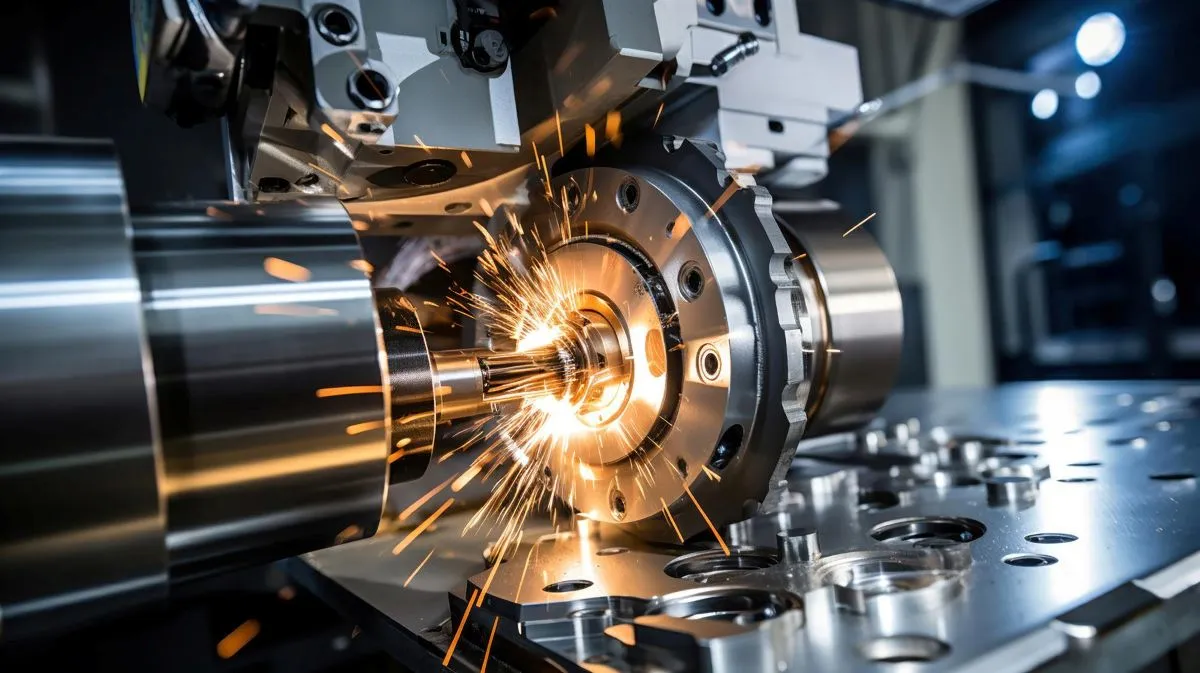
Manufacturing floors have their own rhythm these days. The constant whir of machinery blends with the occasional beep of computers. Operators watch screens more than they adjust handles. Metal shavings don’t pile up like they used to. This transformation crept in gradually, but CNC milling services changed everything about how things get made.
Precision That Opens New Doors
Medical device companies abandoned manual machining years ago. They had no choice really. Surgical tools and implants demand tolerances that seem impossible until you actually need them. A tiny deviation becomes catastrophic when you’re working on someone’s spine or heart. Aviation pushes these boundaries even further. Turbine blades need surface finishes smoother than most people realise. Engine efficiency depends on it. The machines don’t have bad days. They don’t get distracted halfway through a cut. That consistency matters enormously when lives depend on the parts you’re producing.
Difficult Materials Become Manageable
Anyone who’s tried cutting Inconel on a manual mill knows the frustration. The material work-hardens as you machine it. Tool bits disappear fast. Aerospace manufacturers dealt with this problem by letting computers handle it. CNC milling services adjust feed rates constantly based on what sensors detect. Titanium causes different headaches altogether. It’s sticky. It generates heat. Old-school machinists call it temperamental. Automated equipment processes it smoothly because coolant delivery and chip loads stay precisely controlled. No operator can match that consistency by feel alone.
Repeatability Solves Problems You Haven’t Considered
Most people think repeatability just means making identical parts. There’s more to it though. Consider what happens when a customer needs replacements months later. Traditional machining required keeping the original operator around. Sometimes you’d need to reverse-engineer the entire setup. With programmed milling, everything lives in a file. Load it up and you’re back in production. Defence contractors love this aspect. Military equipment needs spare parts decades after manufacturing. Nobody wants to figure out a setup from scratch when a submarine needs a replacement valve body.
Complex Shapes That Weren’t Possible Before
Hip replacements showcase something remarkable. Modern implants feature lattice structures that encourage bone growth. These aren’t simple holes or pockets. They’re three-dimensional matrices with varying density throughout the component. You can’t make these with conventional methods. Motorsport teams push boundaries differently. Engine blocks now contain cooling passages that follow optimal thermal paths. These channels twist and turn inside solid metal. Traditional drilling could only go in straight lines. That limitation forced compromises in design. Not anymore.
Speed Comes From Unexpected Places
Everyone obsesses over spindle speeds. That’s not where the real gains happen though. The magic emerges when secondary operations disappear. Parts that previously visited multiple machines now complete in one setup. Tool changers swap bits in seconds. The workpiece never leaves its fixture. Medical manufacturers appreciate this enormously. Every time you handle a component, contamination risks increase. Damage becomes possible. Single-setup machining eliminates those concerns. Quality checkpoints shrink. The path from raw material to finished product shortens dramatically.
Designers Stop Limiting Themselves
Engineers used to censor their own ideas. Undercuts meant trouble. Compound angles triggered difficult conversations. Thin walls made machinists groan. Those constraints shaped what got designed in the first place. Modern CNC milling services removed most of these barriers quietly. Racing drone frames demonstrate this freedom clearly. They feature varying wall thicknesses throughout a single component. Mounting points emerge at unusual angles. Stress-relieving radii appear in unexpected locations. Everything gets machined from solid blocks in one operation. Designers stopped asking “can we make this” and started asking “what performs best.”
Small Batches Make Economic Sense Now
Prototype shops used to hate small runs. Setup time killed profitability when you’re only making a handful of parts. Every job meant dismantling fixtures and resetting manual stops. Digital setups flipped this equation completely. Switching between projects means loading a different programme. What consumed hours now takes minutes. One-offs become economically viable. Rush orders don’t cause panic anymore. Shops can respond to urgent requests without losing money on the job.
Conclusion
Manufacturing capability has fundamentally shifted. CNC milling services drove much of this change. Projects that seemed impractical now happen routinely. Difficult materials get processed efficiently. Complex geometries emerge from solid stock. Consistency reaches levels manual methods could never achieve. Businesses serious about production treat computer-controlled milling as essential infrastructure rather than an optional upgrade. The competitive landscape demands these capabilities. Companies either adapt to these standards or watch opportunities go elsewhere. The technology isn’t revolutionary anymore. It’s simply how modern manufacturing operates.