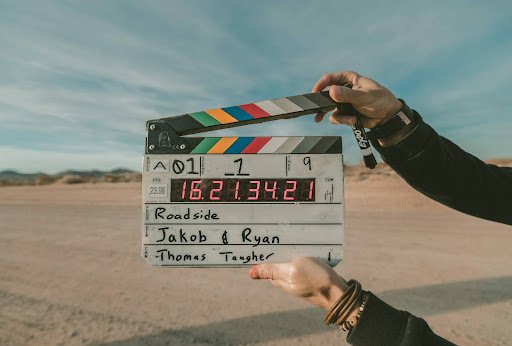
Going to the cinema is not the same as putting something on in the background at home. You leave the house, buy a ticket, sit in a dark room for two hours, and give a film your complete, undivided attention. That investment, of time, money, and focus, makes the film you choose far more consequential than any decision you make about what to stream on a Tuesday night. A bad choice at home costs you nothing but a few minutes before you switch to something else. A bad choice at the cinema costs you an evening.
And yet most people put remarkably little thought into cinema film selection. They go with whatever is playing at a convenient time, whatever their friends suggest, or whatever is being advertised most heavily that week. That approach works occasionally. It also produces a lot of disappointing evenings. In 2026, with one of the strongest cinema release slates in years, there has never been a better moment to be more deliberate about what you choose to watch on the big screen.
the cinema experience is irreplaceable, which is why the film choice matters more
There is something that happens in a cinema that simply does not happen at home. The scale of the image, the quality of the sound, the shared energy of an audience reacting together to what is on screen, the complete absence of notifications and distractions, all of these elements create a viewing experience that fundamentally changes how a film lands. A film that works at home can be genuinely overwhelming in a cinema. A film that struggles to hold your attention in a theater is going to be almost unbearable when watched on a couch with your phone on the armrest.
That means the standard for what deserves your cinema ticket is higher than the standard for what deserves your streaming queue. A film worth watching at home might be interesting, well-made, or just a comfortable way to pass the time. A film worth watching in a cinema should actively reward the experience: it should use scale, sound, or collective atmosphere in a way that cannot be replicated on a smaller screen. Christopher Nolan’s The Odyssey, Project Hail Mary with Ryan Gosling, and 28 Years Later: The Bone Temple are three films on the 2026 release calendar that are being made explicitly for that kind of communal, immersive experience. Choosing to see them in a cinema versus waiting for streaming is not just a practical decision. It is the difference between seeing the film as it was intended and seeing a compressed version of it.
the real cost of a bad cinema choice
A cinema ticket in 2026 costs anywhere from $15 to $30 depending on the format and location. Add transportation, parking, concessions, and babysitting if relevant, and a cinema outing for two people in a major city can easily cost $60 to $100. Against that backdrop, a film that disappoints is not just a minor annoyance. It is a tangible waste of an evening and a meaningful amount of money.
More than the money, though, is the time. A standard feature film runs between 90 minutes and two and a half hours. An IMAX spectacle or a filmmaker like Nolan routinely pushes past three hours. Add travel and the full ritual of the experience, and a cinema outing represents a serious block of your day. Spending that block on a film you did not enjoy, or that was simply the wrong film for your mood or your company, is a genuinely bad use of one of the finite resources you have.
the mood mismatch problem
One of the most common sources of cinema disappointment has nothing to do with the quality of the film. It has to do with the mismatch between the film’s emotional register and what you actually needed from the evening. A slow, contemplative drama that would be extraordinary on the right night can feel like punishment when you are exhausted and wanted something light. A horror film that delivers genuine dread can ruin an evening when you went in expecting thriller-adjacent tension and got something more extreme.
Choosing the right film for the cinema means being honest not just about what is critically acclaimed or what is being talked about, but about what kind of experience you want to have that specific evening. Are you going with a group of friends who need something entertaining and broadly accessible? Are you going with a partner for a date night that calls for something romantic or emotionally engaging? Are you going alone and want to challenge yourself with something demanding? The best film for Tuesday night with your best friends is probably not the same film as the best film for a quiet Sunday matinee by yourself.
the social dimension: how the wrong film affects the group
Cinema is often a social activity, and the film choice has a social consequence that extends beyond personal enjoyment. When one person in a group strongly advocates for a film that the others find boring, uncomfortable, or alienating, it affects the shared experience in a way that a solo streaming disappointment does not. Post-film conversations are part of what makes cinema worthwhile. They require at least some shared engagement with what was on screen. A film that half the group checked out of halfway through does not provide that.
This is especially true for mixed groups: couples with different film tastes, family outings where different ages need to be accounted for, or office social events where the film choice reflects on whoever made it. Taking a few minutes to genuinely consider what will work for everyone in your group, rather than just what you personally want to see, is one of the most underrated skills in social cinema-going.
some films only work in a cinema, and the window is short
The theatrical window, meaning the period between a film’s cinema release and its arrival on streaming, has shortened considerably in recent years. Many films are available to rent or stream within 30 to 45 days of leaving theaters. For a film that works fine on a smaller screen, that is a reasonable alternative. For a film built for the cinematic experience, waiting for streaming is not just a lesser version of seeing it in theaters. It is a fundamentally different experience.
Project Hail Mary, one of the most anticipated films of spring 2026, is the kind of sci-fi adventure that uses visual scale and sound design as primary storytelling tools. The same is true of The Odyssey, which Nolan has reportedly built around practical effects and environments that are designed to overwhelm the viewer in the way a 70mm or IMAX screen can deliver. Waiting to see those films on a television in three months is a legitimate choice, but it is not the same choice as seeing them in a theater. The window for making that first choice is genuinely limited, which makes the decision of whether to use it more important than it might initially seem.
how to actually choose better
The tools available for making better cinema choices in 2026 are better than they have ever been. Rotten Tomatoes aggregates critic and audience scores that give you a quick sense of whether a film is broadly well-regarded, though a high Tomatometer score does not mean the film is right for you, just that most critics found it worth their time. Metacritic provides a weighted average of professional critic scores that tends to be a more reliable indicator of critical quality for films that polarize casual audiences.
Beyond scores, trailers remain one of the most useful tools for gauging whether a film’s tone, pacing, and style match what you want. A two-minute trailer tells you a great deal about what an experience the film will be, independent of whether it is objectively good. Reading two or three full reviews from critics whose taste you have learned to trust over time is more valuable than checking a score. Critics who explain what an experience feels like are more useful than critics who simply evaluate whether a film is well-made.
The most reliable method, though, is knowing yourself. What kind of film has genuinely moved, surprised, or thrilled you in the past two years? What films did you regret seeing in the cinema because they were interesting but not cinematic? Building self-awareness about your own preferences is the foundation of consistently better cinema choices.