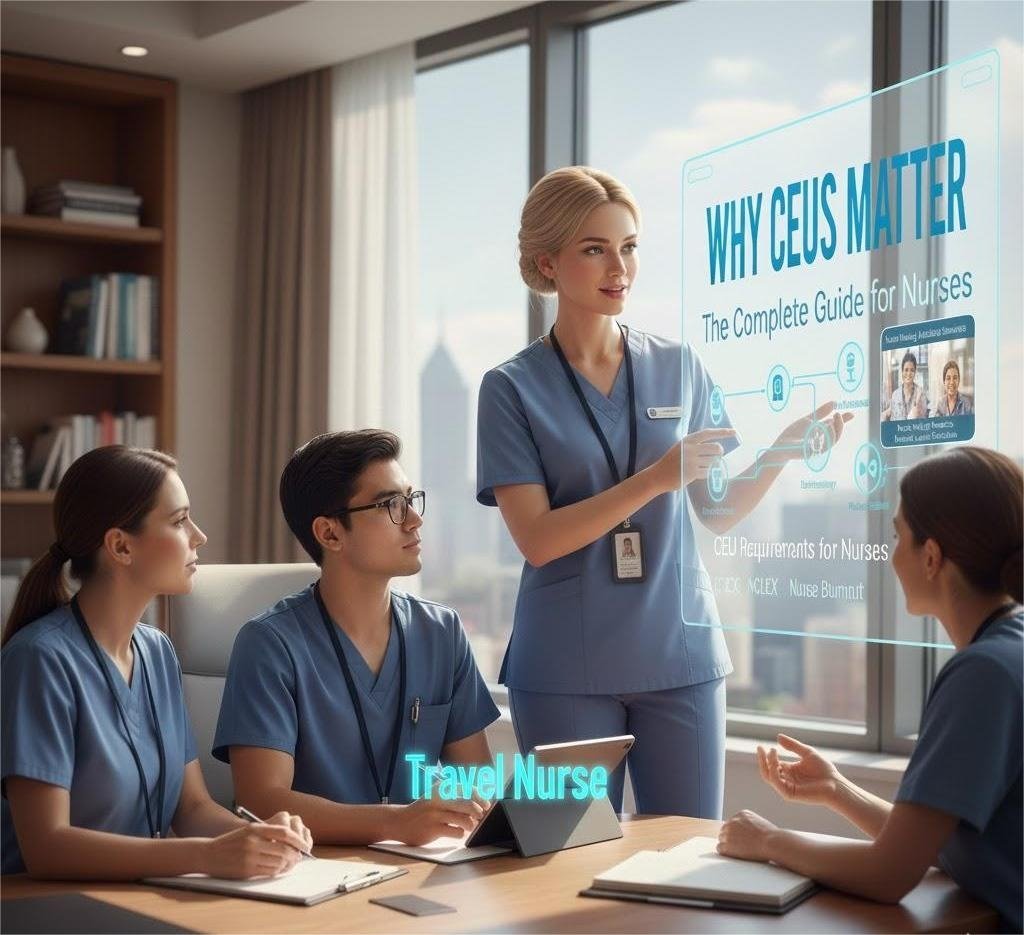
Continuing education has always played a central role in nursing, but its importance has never been greater than it is today. Healthcare evolves rapidly, new treatment protocols, emerging diseases, technological advancements, and changes in patient care expectations require nurses to stay updated. Continuing Education Units (CEUs) ensure that nurses maintain clinical competence, improve patient safety, and continue growing professionally throughout their career. Understanding the value of bold CEU Requirements for Nurses is essential for every registered nurse, regardless of specialty or role.
As healthcare regulations, technology systems, and treatment strategies continue to advance, CEUs serve as a structured method for lifelong learning. Whether a nurse works in acute care, community health, telemedicine, or as a bold Travel Nurse, continuing education ensures consistent professional growth. Strong knowledge also strengthens confidence, supporting better clinical decision-making and reducing medical errors.
The Importance of CEUs in Maintaining Safe and Updated Clinical Practice
CEUs play a crucial role in protecting patient safety. Healthcare systems increasingly rely on complex treatment pathways, advanced diagnostic technologies, and digital tools that require updated training. New medications, updated disease protocols, and revised best-practice guidelines are introduced constantly, and CEUs help nurses stay aligned with current standards.
Many states mandate CEUs as part of licensure renewal. This process ensures that nurses stay competent and maintain the ability to deliver safe, evidence-based care. For professionals with specialty roles, such as emergency, critical care, pediatric, mental health, or surgical nursing, continuing education is even more important.
CEUs also support nurses preparing for professional exams, such as the bold NCLEX or the advanced bold Next Gen NCLEX, by reinforcing foundational principles and strengthening clinical reasoning skills.
CEUs Strengthen Professional Confidence and Critical Thinking
Nursing is a career that requires strong clinical judgment, problem-solving abilities, and emotional intelligence. CEUs expose nurses to new concepts, modern approaches, and updated clinical scenarios. This exposure sharpens decision-making and encourages a stronger understanding of patient needs across varied situations.
In high-acuity environments, ongoing education helps nurses respond appropriately to rapidly changing patient conditions. For example, CEUs in cardiac care, trauma management, or pharmacology help nurses identify early warning signs and intervene promptly.
For nurses working with emerging technologies, CEUs in bold AI in Nursing / Nursing Education Technology provide an advantage. As more healthcare systems adopt AI-based charting, virtual simulation, and predictive analytics, nurses benefit from understanding how these tools influence patient monitoring, safety, and workload management.
How CEUs Protect Nurses Legally and Professionally
Continuing education is not only about competency, it is also a valuable layer of professional protection. Many legal investigations and board reviews evaluate whether the nurse demonstrated current knowledge of standards of care. Staying updated through CEUs proves that a nurse takes professional development seriously and maintains an active effort to remain competent.
During board hearings or workplace investigations, documentation of CEUs can support the nurse’s defense. Combined with protections like bold Nurse Malpractice Insurance or bold Nursing License Protection, continuing education helps build a strong foundation of safety and legal readiness.
In cases where a nurse faces allegations related to training gaps, CEU records demonstrate commitment to practice improvement. This can help reduce disciplinary action and strengthen credibility.
CEUs Support Safe Practice and Reduce Burnout
One of the lesser-recognized benefits of CEUs is their ability to support emotional and professional well-being. Many educational programs include content on stress management, communication skills, and coping strategies, topics that directly address the causes of bold Nurse Burnout.
By offering new tools and techniques, CEUs help nurses manage workplace demands more effectively. Learning updated care strategies often boosts confidence, which reduces anxiety during high-pressure situations. CEUs also encourage skill diversification, allowing nurses to shift units or specialties if burnout becomes overwhelming.
Some CEUs focus on resilience, mindfulness, leadership, and emotional intelligence, topics that empower nurses to navigate complex patient interactions and challenging workloads.
CEUs and Career Advancement Opportunities
Continuing education directly influences career growth. Nurses who consistently complete relevant CEUs often stand out for promotions, specialty training, and leadership roles. Employers value nurses who demonstrate commitment to professional development.
CEUs contribute to advancement in multiple ways:
• Strengthening resumes
• Supporting certification eligibility
• Improving clinical performance
• Enhancing leadership skills
• Preparing for advanced roles
• Meeting regulatory and accreditation requirements
For example, nurses preparing for charge nurse or educator roles often complete CEUs in leadership, communication, staff development, and patient-safety strategies.
CEUs also help travel and agency nurses maintain competitive qualifications. Recruiters prefer clinicians with updated training, especially when placing them in high-acuity settings.
Meeting State Licensure Requirements Through CEUs
Every state has its own criteria for RN license renewal. Many require a minimum number of CEUs within each renewal cycle. Maintaining compliance is essential to prevent penalties or lapses in licensure.
Failing to complete CEUs on time can jeopardize a nurse’s ability to practice legally. Some states even require CEUs that focus on:
• Pain management
• Domestic violence
• Pharmacology
• Ethics
• Implicit bias
• Infection control
It is critical for nurses to review their state’s requirements regularly. CEUs ensure that nurses working across multiple states, especially those who function as a bold Travel Nurse, stay compliant with varying standards.
For those who want a consolidated resource, the bold CEU Requirements for Nurses, provides useful direction for staying up to date.
How CEUs Support Specialty Nursing Roles
Specialty nursing roles require advanced, highly specific training. CEUs serve as a pathway for developing expertise in certain specialties, such as:
• Emergency and trauma
• ICU and CCU
• Neonatal and pediatric care
• Psychiatric nursing
• Oncology nursing
• Perioperative nursing
In such specialized roles, strong competency is essential. CEU programs help nurses stay updated on treatment protocols, emerging research, and innovative care models.
CEUs also help nurses transition into new specialties. For example, a med-surg nurse interested in critical care can take CEUs on cardiac rhythms, ventilator management, or hemodynamics to build foundational knowledge before moving into the ICU.
CEUs Improve Interprofessional Communication and Teamwork
Healthcare is increasingly collaborative. Nurses must coordinate with physicians, therapists, pharmacists, and social workers. CEUs improve interprofessional communication by teaching:
• Documentation clarity
• Team-based problem solving
• Delegation strategies
• Ethical collaboration
• Conflict resolution
These skills improve patient outcomes and enhance teamwork. Good communication also reduces incidents that could lead to investigations, legal action, or the need for bold Nurse Malpractice Insurance.
CEUs Prepare Nurses for Technology-Driven Healthcare
Technology continues to reshape medical practice. Telehealth, virtual simulation, electronic health records, and AI-powered monitoring systems are now standard in many facilities. Nurses require ongoing training to use these tools effectively.
CEUs focused on bold AI in Nursing / Nursing Education Technology help nurses understand how technology improves assessments, documentation accuracy, and patient care planning. These programs reduce errors and strengthen digital competence.
As AI continues to influence healthcare, nurses who stay educated will maintain competitive, future-ready skill sets.
Frequently Asked Questions
Are CEUs mandatory for every registered nurse?
Most states require CEUs for license renewal, but requirements vary. It is important to check state-specific guidelines regularly.
Can CEUs help reduce burnout?
Yes. CEUs that focus on emotional well-being, resilience, and communication can help reduce Nurse Burnout and improve coping skills.
Do CEUs help with NCLEX preparation?
Yes. CEUs reinforce clinical knowledge and critical-thinking principles that support success on the NCLEX and the Next Gen NCLEX.
Can CEUs protect nurses legally?
CEUs demonstrate ongoing competency and can provide support during board reviews or investigations, especially when combined with Nurse Malpractice Insurance.
Do travel nurses need CEUs?
Absolutely. CEUs ensure that a Travel Nurse remains compliant across multiple states and prepared for diverse clinical environments.