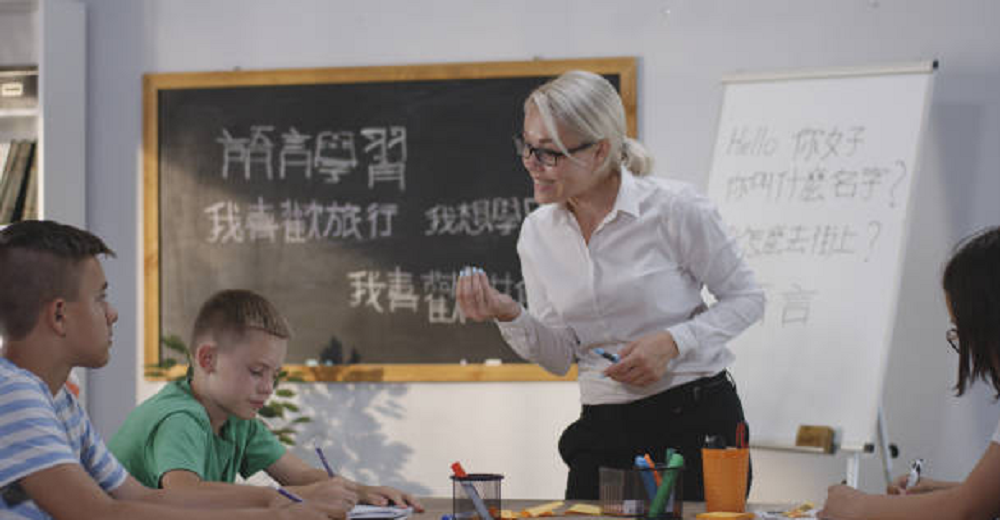
In the heart of Singapore’s ever-pulsing metropolis—where steel giants kiss the clouds and hawker stalls echo with culinary symphonies—a quieter revolution unfolds. One not heralded by neon lights or trending hashtags, but by the mellifluous rise of a language that has, for centuries, carried the wisdom of dynasties and the cadence of poetic ink. For many parents and educators, enrolling their children in a Chinese enrichment class in Singapore has become a meaningful step toward preserving this cultural heritage while preparing for a multilingual future.
To speak Chinese in Singapore is not merely a nod to heritage or a means of parental appeasement. It is, increasingly, a key—an elegant skeleton key—unlocking a trove of cultural, academic, and economic opportunity. But in a society where English dominates both playground banter and boardroom pitch, how does one nurture genuine fluency rather than perfunctory proficiency?
The answer, in a word: enrichment.
Beyond the Textbook: Breathing Life into Language
Chinese enrichment classes in Singapore are redefining what it means to “learn” a language. No longer confined to rote memorisation or monotonous drilling, modern programmes take a dynamic, child-centric approach—an alchemy of pedagogy, play, and purpose.
Here, storytelling is elevated to an art. Characters are not just learned; they are lived. Students embark on adventures with mythical beasts, debate Confucian values, or decipher ancient scrolls—sometimes all in a single lesson. Vocabulary is woven through games, drama, music, and even culinary experiences. Ever tried making tangyuan while narrating its significance in Mandarin? It’s an education that tastes as good as it teaches.
Language as Identity, Identity as Empowerment
For many Singaporean parents, the Chinese enrichment journey is deeply personal. In a nation where multiple ethnic threads are tightly interwoven, language becomes both mirror and bridge—reflecting identity while connecting generations.
Take the case of Mei Lin, a mother of two and a corporate strategist. She recalls how her son, previously reluctant to speak Mandarin at home, began using idioms (“成语”) to describe everyday occurrences after just a term at an enrichment centre. “It wasn’t just the language,” she mused. “It was pride. He finally saw Mandarin as something alive, relevant, his.”
Such transformation is not uncommon. These classes, often led by passionate educators with deep cultural fluency, go beyond imparting linguistic tools—they cultivate a sense of belonging. When children begin to think, dream, and play in Mandarin, the language transcends functionality. It becomes a home.
Academic Excellence, but Not at the Expense of Wonder
Let’s not mince words: the PSLE looms large in every parent’s psyche. And yes, Chinese enrichment centres do offer substantial support for exam preparation—comprehension techniques, oral fluency, composition finesse. But the best among them never let assessment overshadow aspiration.
Instead of drilling past-year papers into bleary-eyed pupils, top-tier programmes cultivate a love for the language that naturally spills into scholastic performance. It’s a curious paradox: those who fall in love with Mandarin through play and exploration often outperform those who approach it with exam-focused tunnel vision.
Teachers, too, are evolving. Gone are the days of the grim-faced disciplinarian wielding a red pen like a sword. Today’s instructors are mentors, facilitators, co-conspirators in linguistic escapades. They blend academic rigour with emotional intelligence, ensuring that students not only “get the marks” but also “get the message.”
A Landscape Rich with Choice
From boutique centres tucked away in Tiong Bahru shophouses to sprawling academies in gleaming Orchard towers, Singapore is replete with Chinese enrichment options. Each offers its own flavour, its own pedagogical philosophy.
Some adopt the Montessori method, integrating Mandarin organically into thematic exploration. Others lean on storytelling and visual arts, allowing language acquisition to emerge through self-expression. Tech-savvy centres might incorporate AI-powered tools, offering personalised vocabulary drills based on speech recognition and learner analytics. Increasingly, online tuition programmes are also stepping into the spotlight—bringing high-quality Mandarin instruction into homes with the flexibility and convenience that modern families crave. The spectrum is wide, and therein lies the beauty.
Parents can choose a path aligned with their child’s temperament—be it the budding thespian who thrives on stage or the quiet thinker who blossoms in reflective writing. The ultimate goal remains the same: fluency that flows not just from the lips, but from the heart.
Future-Proofing the Next Generation
In a world where China’s global influence continues its inexorable rise, the practical value of Mandarin cannot be overstated. From business negotiations and diplomatic discourse to cross-cultural collaboration and travel, the ability to navigate the Chinese-speaking world is a formidable asset.
Singapore, as a nexus of East and West, understands this innately. Our education system plants the seeds, but it is the enrichment landscape that provides the sunlight and nourishment for those seeds to grow, bloom, and flourish.
By enrolling children in well-designed Chinese enrichment programmes, parents are not merely addressing a curriculum requirement. They are future-proofing their children—endowing them with the linguistic agility to thrive in an interconnected, multicultural tomorrow.
Not Just Lessons, but Legacies
Language, at its core, is legacy. It is how stories survive, how wisdom is transmitted, how love is expressed across generations. When a child learns to read a Tang poem or interpret a Chinese proverb, they are not just absorbing knowledge—they are participating in a cultural continuum.
In that light, Chinese enrichment is more than a tuition class. It is a preservation act. A celebration. A quiet rebellion against linguistic erosion.
And in Singapore—this city of many tongues and one heartbeat—that matters more than ever.