Introduction
Medicine has never been other than finding, healing, and preclining sickness. Over centuries, doctors were able to use simple laboratory equipment and physical examination as the basis of patient care basing on observations as the guiding factor. Although these conventional methods are important, they do not necessarily provide a comprehensive explanation of why diseases do occur, why certain patients react to the treatment well and others do not and why seemingly similar conditions may behave dissimilarly.
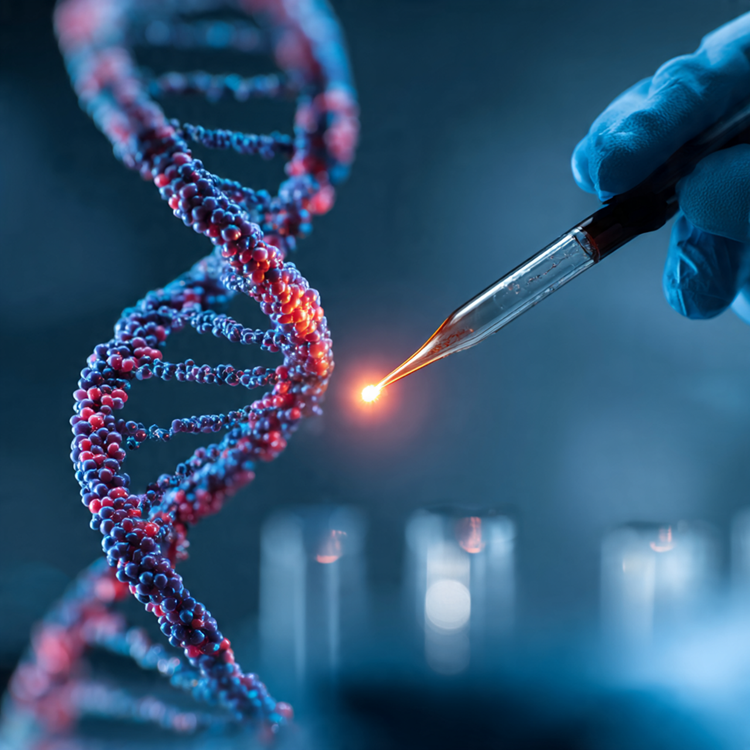
Molecular pathology answers these questions by taking them further, to the molecular pathogenesis of disease. It examines DNA, RNA and proteins to reveal the genetic and biochemical factors of the disease. Not only a field of laboratory science, molecular pathology has turned into a foundation of contemporary diagnostics, allowing to make a more accurate diagnosis, specialized treatment, and more successful patient results.
This article describes the foundations of molecular pathology, its development, the difference between molecular and traditional pathology, and its increasing role in health care.
What is Molecular Pathology?
Definition
The study of disease based on the molecular level is the study of molecular pathology. It studies the DNA, RNA, proteins among other molecules so as to comprehend how a change in these building blocks leads to disease.
In contrast to the conventional pathology which involves the analysis of tissues through a microscope, molecular pathology employs innovative technologies (polymerase chain reaction (PCR), next-generation sequencing (NGS), and fluorescence in situ hybridization (FISH) to reveal the unseen changes during the analysis.
Scope
Molecular Pathology encompasses:
- Determining genetic mutations in cancer and inherited diseases.
- Detection of infectious agents, e.g. viruses and bacteria.
- To classify diseases, measurement of the pattern of gene expression is required.
- Directing specific interventions by predictive biomarkers.
It is a discipline that links laboratory science and clinical medicine, and ensures that research in the genetics and molecular biology fields finds its way to practice in the field.
A Brief History of Molecular Pathology
Roots in Traditional Pathology
Endlessly, pathology has been the science of disease. In the earliest version, it concerned itself with gross anatomy, the study of organs and tissues with regard to abnormalities. The microscope increased this study to the cellular structures leading to the development of histopathology and cytopathology.
The Genetic Revolution
The uncovering of the double-helix structure of DNA in 1953 and the further development of genetics preconditioned the beginning of molecular pathology. Late 20 th century measures like PCR and DNA sequencing allowed the study of diseases at a genetic level.
Emergence as a Discipline
Molecular pathology as a separate subspecialty emerged in the 1990s and early 2000s. The Human Genome Project became a lasting project that enhanced its expansion when the project was completed, which allowed the large-scale detection of disease-causing genes and mutations. Molecular pathology has become an inseparable part of personalized medicine and is rapidly developing with the advances of genomics and proteomics today.
How Molecular Pathology Differs from Traditional Pathology
Traditional Pathology
- Emphasizes on the gross anatomy and microscopic study.
- Uses staining procedures to bring out the cell structures.
- Makes descriptive diagnoses using the tissue patterns.
Molecular Pathology
- specializes in the examination of DNA, RNA and protein.
- Employs all modern methods of molecular analysis to make precise findings.
- Provides mechanistic explanations of the origin and the development of diseases.
Whereas traditional pathology poses the question, What does this disease look like, molecular pathology poses the question, What caused this disease at the molecular level? They are combined to give a more wholesome view of illness.
Key Tools and Techniques
Polymerase Chain Reaction (PCR)
PCR is capable of amplifying minute strands of DNA allowing the detection of mutations, infectious agents and inherited diseases with high sensitivity.
Next Generation Sequencing (NGS)
NGS is able to read extensive areas of the genome fast and precisely. It is commonly applied in profiling of cancers, determining genetic disorders, and infectious disease studies.
Fluorescence In Situ Hybridization (FISH)
FISH involves the use of fluorescent probes to identify abnormalities in chromosomes, and it is usually used in oncology and prenatal diagnosis.
Immunohistochemistry (IHC)
IHC is an optical technique applied to identify a particular protein in the tissues with the help of antibodies. It assists in the categorization of tumors and the treatment decision.
Liquid Biopsies
Liquid biopsies test in the circulant DNA of blood samples, which offers the non-invasive classification of cancers and other diseases.
Molecular Pathology and Biomarkers
What Are Biomarkers?
Biomarkers can be identified as quantifiable biological features that give information on the existence of a disease, its progression or reaction to medication.
Types of Biomarkers
- Diagnostic: Are used to establish disease (e.g. BCR-ABL fusion gene in leukemia).
- Prognostic: Disease course predictor (e.g. TP53 mutations in cancer).
- Predictive: Biomarkers predictive of the response to treatment (e.g. HER2 status with breast cancer).
Biomarkers are necessary to have precision medicine, converting the complex molecular information into practical insights, which can be used by clinicians.
Clinical Applications
Cancer Care
The most important area that has been changed by molecular pathology is oncology. Tumor profiling can determine mutations which can inform targeted therapy, e.g. EGFR inhibitors in lung cancer or trastuzumab in breast cancer with HER2.
Infectious Diseases
PCR and sequencing are molecular tests that identify the pathogens such as HIV, viruses of hepatitis, and COVID-19 faster and more precisely than the traditional ones.
Rare Genetic Disorders
With molecular testing, inherited mutations causing rare diseases are revealed, and early interventions, counseling, and possible involvement in gene therapy trials can be done.
Cardiovascular Medicine
Genetic knowledge can be used to treat diseases like arrhythmias as well as determine the reaction of individuals to drugs such as anticoagulants.
Why Molecular Pathology Matters in Modern Healthcare
Precision in Diagnosis
It determines the disease processes that can not be seen with a microscope.
Tailored Treatments
It compares therapies with personal molecular profiles enhancing efficacy.
Reduced Side Effects
It reduces the unnecessary exposure to drugs by eliminating the inefficient treatments.
Early Detection and Monitoring
There are liquid biopsies and other tests conducted by means of molecules that make it possible to monitor disease development in real-time.
Preventive Medicine
Genetic diagnostics detects people who are at risk, which allows taking control of health in advance.
Ethical and Practical Considerations
Privacy and Security
Genetic information is very sensitive. Protecting the patient information against abuse is important.
Cost and Access
Molecular diagnostics may be costly, and this gives way to issues of healthcare inequity.
Interpretation Challenges
Not every genetic variant has a clinical meaning. It takes experience to differentiate between harmful and harmless variations.
Infrastructure Needs
Molecular testing requires well trained staff, specialized labs and incorporation into clinical practice.
The Future of Molecular Pathology
Artificial Intelligence (AI)
The large amount of genomic data can be analyzed by AI with the ability to identify patterns and help speed up and make more precise diagnoses.
Single Cell Sequencing
The technology analyses the diseases at the cellular level, providing more information about the tumor heterogeneity.
Routine Use of Liquid Biopsies
Oncology and other applications Non-invasive monitoring has a high probability of becoming the new standard.
Integration into Everyday Care
With the reduction in costs and the increase in accessibility, molecular testing will be the order of the day of the global healthcare systems.
Conclusion
Molecular pathology is changing the paradigm of knowledge and management of disease. It reveals the molecular pathways that cause disease, as well as offers the basis of personalized medicine, by studying DNA, RNA, proteins, and biomarkers.
In contrast to conventional pathology, which is based on observable characteristics, molecular pathology is a description of the cause why of disease and the direction to a better, more targeted, and proactive care, instead of merely reactive one.
The future of the healthcare sector will continue to rely more on molecular understanding as the problems of cost, accessibility, and ethics continue to persist. As the technological world continues to evolve and technological collaboration in the world gathers momentum, molecular pathology results in a more precise, personalized, and effective medicine than ever before.