A shed workshop is an increasingly popular solution for creating a flexible, cost-effective workspace for both personal and professional use. From DIY projects and woodworking to small-scale fabrication and home-based businesses, shed workshops offer a practical alternative to traditional workshops. This article explores what a shed workshop is, whether a shed can truly function as a workshop, its most common applications, how to choose the right shed size, and which shed fabrication methods provide the highest reliability and long-term performance.
1. What is Shed Workshop?
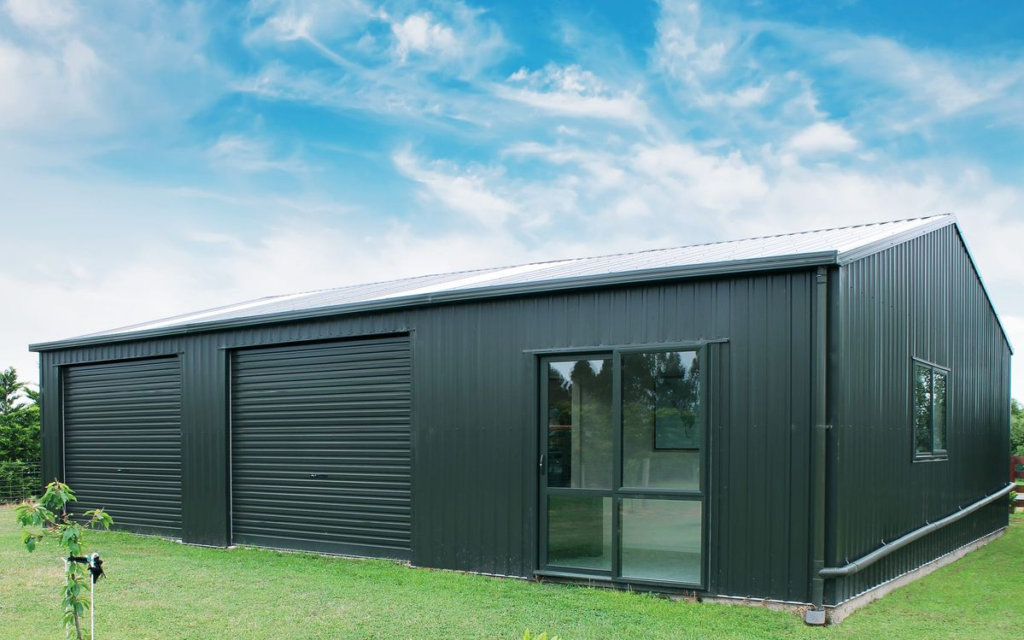
A shed workshop is a converted or purpose-built outbuilding used as a dedicated space for hobbies, DIY projects, crafts, or small-scale business activities. It transforms a standard storage shed into a functional workspace equipped with essential elements such as workbenches, organized storage, lighting, ventilation, and power supply. Thanks to its enclosed and independent nature, a shed workshop is ideal for handling noisy, dusty, or messy tasks like woodworking, painting, gardening preparation, or bike repair.
What is Shed Workshop?
In a modern construction context, a shed workshop is often built as a steel-structured facility with a simple yet structurally sound design. While the term “shed” suggests simplicity, these structures are supported by advanced engineering solutions. Compared to traditional brick-and-mortar workshops, steel shed workshops offer faster construction, lower costs, and greater flexibility in layout and future expansion, making them a practical and efficient workspace solution.
2. Can we use a Shed as a Workshop
As space efficiency and cost optimization become increasingly important in modern construction, many individuals and businesses are exploring flexible building solutions that can serve multiple purposes. One common question is whether a shed—traditionally associated with storage—can be adapted into a functional workspace. To answer this, it is essential to first understand the fundamental differences between a workshop and a shed, and then examine how a shed can be transformed to meet workshop requirements.
The Difference Between a Workshop and a Shed
The main difference between a shed and a workshop lies in their purpose, scale, and construction quality. A shed is primarily designed for basic storage, such as garden tools, lawn equipment, or seasonal items. It is usually smaller in size, features a simple structure, and is built with lighter materials. Most sheds have limited natural lighting, basic flooring, and typically lack insulation or an integrated power supply.
In contrast, a workshop is intended for active work, production, or technical tasks. It offers a larger floor area to accommodate machinery, workbenches, and free movement, and is constructed with a stronger structural framework and reinforced flooring. Workshops are commonly equipped with proper lighting, ventilation, insulation, and electrical systems to support continuous and demanding use, making them a dedicated space for creation rather than simple storage.
Can We Use a Shed as a Workshop?
A shed can be used as a workshop when it is properly upgraded and adapted to meet functional requirements. By installing electrical systems, improving lighting and ventilation, adding insulation, and reinforcing the floor, a standard shed can be effectively converted into a shed workshop. Modern steel sheds, in particular, provide strong structural integrity and flexible design options, allowing them to accommodate various workshop activities. With the right modifications, a shed can become a practical, cost-efficient alternative to a traditional workshop while still delivering durability and long-term usability.
3. Applications of Shed Workshop
Thanks to their flexible design and adaptable structure, shed workshops can serve a wide range of practical purposes across residential, commercial, and small-scale industrial settings. Below are eight of the most prominent applications of a shed workshop, selected based on functionality, popularity, and relevance to real working needs.
3.1. Woodworking and Carpentry Workshop
One of the most common applications of a shed workshop is as a woodworking or carpentry space. A dedicated shed workshop provides enough room to store woodworking tools, machinery, and raw materials while keeping dust and noise away from the main house or office. With reinforced flooring, proper ventilation, and organized storage systems, a shed workshop allows users to work efficiently without the need to travel to external facilities.
3.2. DIY and Hobbyist Workspace
For hobbyists, a shed workshop offers a private and customizable environment to focus on creative projects. Whether it involves metalworking, model building, crafting, or repairs, the space can be designed around specific interests. Shelving, cabinets, pegboards, and wall-mounted displays help keep tools and materials organized, turning the shed into more than just four walls—it becomes a personal creative hub.
3.3. Mechanical Repair and Maintenance Workshop
A shed workshop is well suited for light mechanical work such as bicycle repair, motorcycle maintenance, or small engine servicing. With adequate lighting, power supply, and durable flooring, the shed can safely house tools, spare parts, and equipment. This application helps free up garage space while providing a more controlled and purpose-built working environment.
3.4. Small Business or Home-Based Production
Many entrepreneurs use shed workshops as a base for small-scale production or home businesses. Activities such as fabrication, assembly, baking preparation, or custom manufacturing can be accommodated within a steel shed workshop. Compared to renting commercial space, this solution significantly reduces operating costs while offering independence and flexibility in layout and operation.
3.5. Art Studio and Creative Space
Artists often convert shed workshops into painting studios, sculpture spaces, or craft ateliers. Natural lighting from windows or skylights, combined with quiet outdoor surroundings, creates an ideal environment for creativity. A shed workshop also provides ample wall space for displaying artwork and storing supplies, keeping living spaces clutter-free.
3.6. Garden and Landscaping Workshop
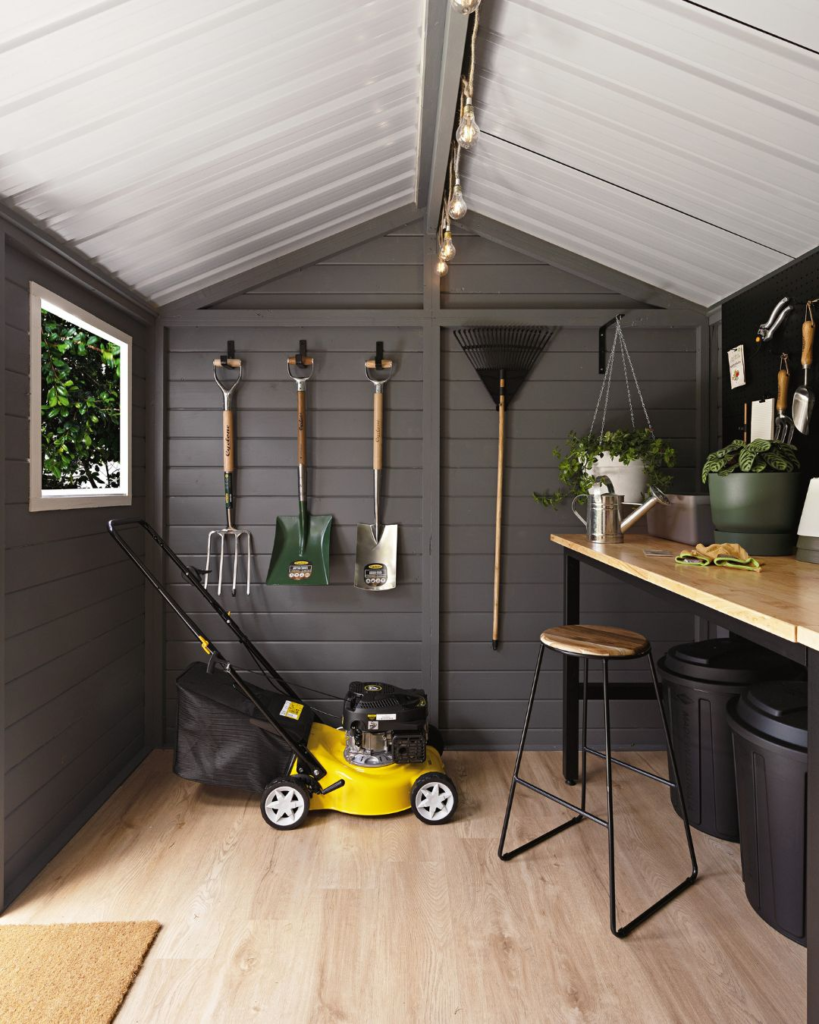
A shed workshop can function as a potting shed or garden preparation area, where tools, soil, plants, and equipment are stored and used efficiently. It offers protection from weather conditions and keeps gardening activities organized. This application is especially valuable for homeowners or small landscaping businesses that require regular access to tools and materials.
Garden and Landscaping Workshop
3.7. Equipment and Secure Tool Storage with Work Area
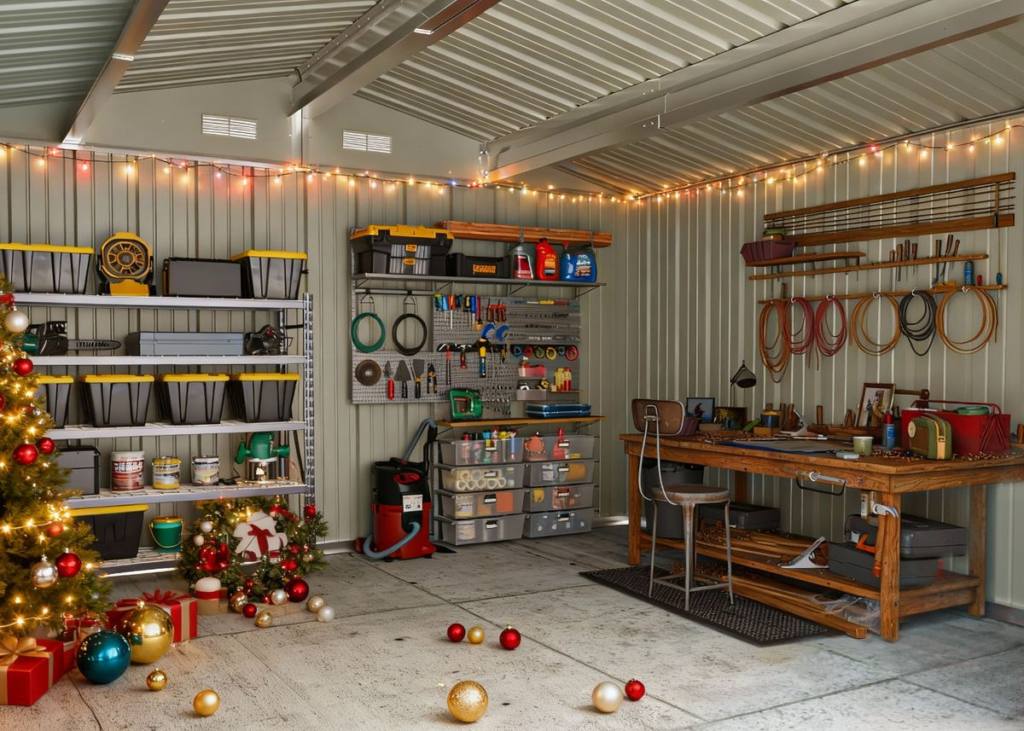
Beyond simple storage, a shed workshop allows tools and equipment to be maintained, repaired, and organized in one secure location. Metal or steel shed workshops offer enhanced durability, fire resistance, and security, making them suitable for storing valuable or hazardous items while still supporting active work tasks.
Equipment and Secure Tool Storage with Work Area
3.8. Multi-Purpose Garage-Style Workshop
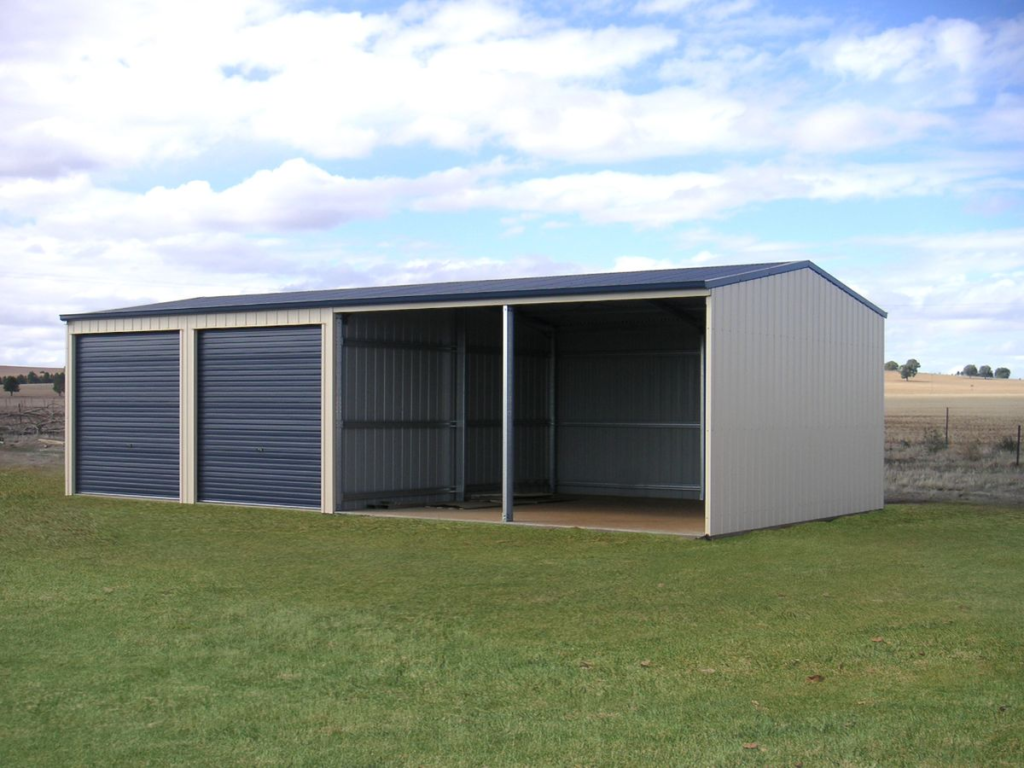
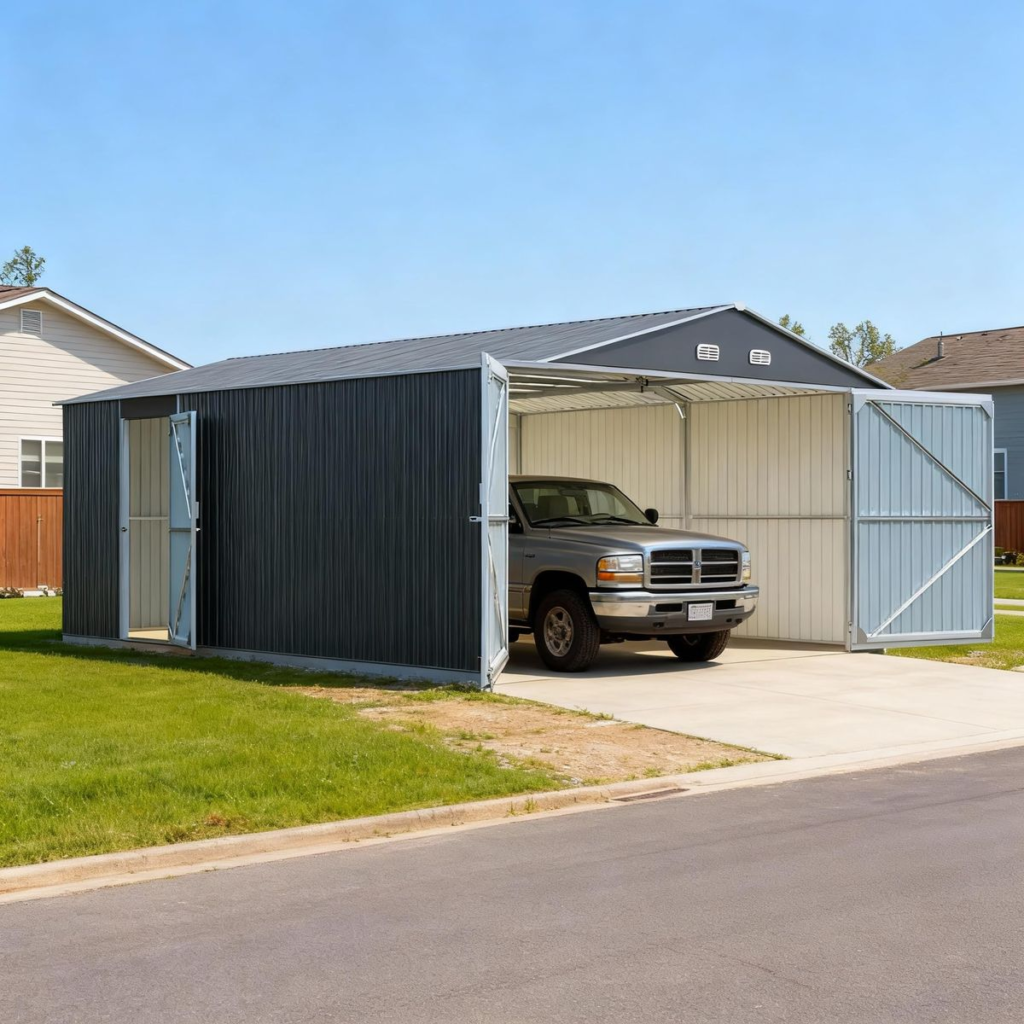
Some shed workshops are designed as garage-style spaces that combine storage and working functions. Vehicles or equipment can be parked on one side while tools, workbenches, and projects occupy the other. With wide doors, sufficient floor space, and heavy-duty construction, this type of shed workshop supports versatile use and future expansion.
Multi-Purpose Garage-Style Workshop
Overall, the wide range of applications of shed workshop highlights its adaptability and value. From personal hobbies to professional operations, a well-designed shed workshop can be tailored to meet diverse functional requirements while remaining cost-effective and efficient.
4. What Size Shed for a Workshop
Choosing the best shed size for a workshop requires a balance between available space and practical working needs. For light DIY tasks or hobbies, a 10×12 ft shed is often sufficient, providing enough room for a workbench, basic tools, and small storage areas. If you need more flexibility for movement, additional equipment, or multiple workstations, a 12×16 ft shed offers a more comfortable layout. For professional use or larger projects involving machinery, a 16×20 ft shed workshop delivers the space needed for efficiency and safety.
Several factors should guide your decision. The size of your yard must allow space around the shed for access and maintenance. The intended purpose of the workshop plays a major role, as storage-focused or hobby workshops require less space than fabrication or mechanical workspaces. You should also consider storage requirements, local building regulations, and the possibility of future expansion. Selecting the right shed size ensures your workshop remains functional, organized, and adaptable over time.
5. Which is the most reliable shed fabrication?
The most reliable shed fabrication depends largely on intended use, budget, and local climate rather than a single manufacturer. In general, steel fabrication (pre-engineered buildings) and high-quality, pressure-treated wood construction are considered the most durable and dependable options for shed workshops. Steel sheds offer excellent structural strength, resistance to pests, fire, and extreme weather, making them ideal for long-term and industrial or semi-industrial use. Meanwhile, premium wood sheds—especially those using engineered or pressure-treated lumber—provide strong performance with a more traditional appearance.
Reliability in shed fabrication is primarily determined by material quality and construction standards. High-gauge galvanized steel or engineered wood products such as treated lumber and advanced siding materials significantly extend service life. Equally important are modern construction techniques, including factory-built panels, truss roofing systems, and screw-fastened connections, all of which improve structural integrity. A reliable shed must also be designed to suit its environment, whether that means resisting humidity, heavy snow loads, high winds, or extreme heat. Finally, reputable manufacturers stand out through compliance with recognized building codes and long-term warranties, which reflect confidence in their fabrication quality and durability.
A shed workshop is more than just a simple outbuilding—it is a versatile, efficient, and adaptable workspace solution suitable for a wide range of applications. By understanding the differences between a shed and a traditional workshop, it becomes clear that with the right upgrades and design considerations, a shed can successfully function as a fully equipped workshop. From woodworking and mechanical repair to creative studios and small business operations, the applications of shed workshops continue to expand.
Choosing the right shed size for a workshop plays a critical role in usability, safety, and future flexibility, while reliable shed fabrication—particularly steel or high-quality engineered wood—ensures durability and long-term value. When properly planned and constructed, a shed workshop offers an optimal balance of functionality, cost efficiency, and adaptability, making it a smart investment for modern working needs.
With more than 30 years of experience in pre-engineered buildings and structural steel construction, Pebsteel has successfully delivered over 6,000 projects across more than 50 countries worldwide. Supported by modern workflows and a highly experienced team of engineers and specialists, Pebsteel is well positioned to deliver large-scale, high-performance steel structures that meet international standards.
For professional consultation, please contact Pebsteel via email marketing@pebsteel.com.vn or phone +84 908 883 531 to receive expert guidance for your project!
*** This article is presented from a neutral perspective and is intended solely to provide informative and practical insights for readers. At present, Pebsteel does not undertake small-scale steel shed workshop projects.