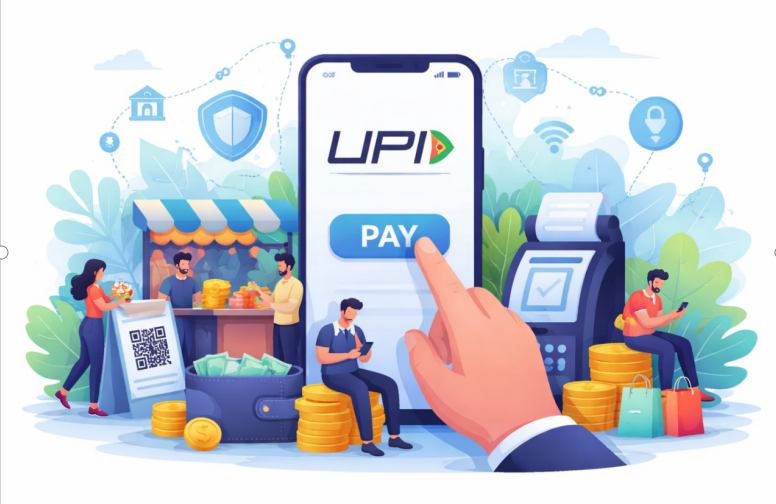
Introduction: The Rise of UPI Payments in India
India has experienced one of the fastest digital payment revolutions in the world, and at the heart of this transformation lies UPI payments in India. From paying for groceries and utility bills to transferring money instantly between bank accounts, UPI has reshaped how individuals and businesses handle money. It has eliminated the need for cash, reduced dependency on cards, and made digital transactions accessible to people across cities, towns, and villages.
UPI, or Unified Payments Interface, introduced a simple yet powerful system that allows users to send and receive money in real time using just a mobile phone. Unlike traditional banking methods that required lengthy account details, UPI simplified transactions to a virtual payment address or QR code. As a result, digital payments became faster, safer, and more inclusive.
Today, UPI is not just a payment tool. It is a foundational layer of India’s digital economy, supporting commerce, financial inclusion, and innovation at scale.
What Is UPI and How It Works
UPI is a real-time payment system that enables instant money transfers between bank accounts through mobile applications. It is built on top of the Immediate Payment Service (IMPS) infrastructure and operates 24/7, including weekends and holidays.
The system is managed by the National Payments Corporation of India, which ensures interoperability among banks and payment apps. UPI connects multiple banks into a single platform, allowing seamless transfers without switching between banking portals.
A typical UPI transaction involves:
- A sender initiating payment using a UPI app
- Authentication through a secure UPI PIN
- Instant transfer of funds to the recipient’s bank account
This entire process usually takes only a few seconds, making UPI one of the fastest payment systems in the world.
Why UPI Payments in India Are So Popular
The widespread adoption of UPI payments in India is driven by a combination of simplicity, speed, and trust. Unlike earlier digital payment methods, UPI does not require users to remember long account numbers or IFSC codes for everyday transactions.
Key reasons for UPI’s popularity include:
- Instant transactions with real-time settlement
- No transaction charges for most user payments
- Easy integration with mobile banking apps
- Availability across multiple banks and platforms
- Strong security backed by banking-grade encryption
Because of these advantages, UPI has become the preferred payment method for millions of users across India.
UPI Payments and Financial Inclusion
One of the most significant contributions of UPI payments in India is financial inclusion. Before UPI, digital payments were largely limited to urban users with access to cards and internet banking. UPI changed this by enabling anyone with a basic smartphone and bank account to participate in the digital economy.
Small vendors, street sellers, and local service providers can now accept digital payments using a simple QR code. This has reduced cash handling risks and helped businesses maintain transaction records, improving transparency and access to credit.
UPI has also supported government initiatives aimed at promoting digital literacy and reducing cash dependency across the country.
Security Framework Behind UPI Payments
Security is a core strength of UPI payments in India. Each transaction is protected by multiple layers of authentication and encryption, ensuring that user data and funds remain safe.
Key security features include:
- Two-factor authentication with device binding and UPI PIN
- End-to-end encryption of transaction data
- Real-time transaction alerts and confirmations
- Bank-level monitoring and fraud detection systems
The overall framework operates under guidelines issued by the Reserve Bank of India, ensuring regulatory oversight and consumer protection.
These measures have helped build trust among users and encouraged widespread adoption of UPI across different demographics.
UPI for Everyday Transactions
UPI payments in India have become deeply integrated into daily life. People now rely on UPI for a wide range of routine activities, including:
- Paying utility bills such as electricity, water, and gas
- Recharging mobile phones and internet services
- Shopping online and offline
- Splitting bills with friends and family
- Paying school fees and subscriptions
Because UPI works around the clock, users no longer need to plan payments around banking hours. This flexibility has made digital transactions more convenient than ever.
UPI in Retail and Small Businesses
Retailers and small businesses have benefited enormously from the adoption of UPI payments in India. With minimal setup costs and instant settlement, UPI offers an efficient alternative to cash and card payments.
Benefits for merchants include:
- Faster checkout and reduced waiting times
- Lower transaction costs compared to card networks
- Digital transaction records for accounting
- Improved customer experience through quick payments
These advantages have encouraged businesses of all sizes to adopt UPI as a primary payment method.
Impact of UPI on the Indian Economy
UPI has played a major role in accelerating India’s transition toward a cashless economy. By enabling billions of transactions each month, UPI has improved money circulation efficiency and reduced the cost of cash management.
From macroeconomic stability to grassroots-level commerce, UPI payments in India contribute to:
- Increased transparency in financial transactions
- Reduction in black money circulation
- Boost in digital entrepreneurship and startups
- Growth of fintech innovation
The scale and reliability of UPI have positioned India as a global leader in digital payment infrastructure.
UPI and the Growth of Fintech Innovation
UPI has acted as a catalyst for fintech growth in India. Developers and companies have built innovative services on top of UPI, ranging from expense management tools to subscription-based payment systems.
Features such as auto-pay, collect requests, and recurring payments have expanded the use cases of UPI beyond simple money transfers. These innovations continue to improve user experience and encourage further adoption.
Challenges and Limitations of UPI Payments
Despite its success, UPI payments in India face certain challenges. Network outages, user errors, and fraud attempts can sometimes disrupt transactions. Additionally, users unfamiliar with digital systems may face a learning curve.
However, continuous system upgrades, awareness campaigns, and improved customer support are helping address these issues over time.
Future of UPI Payments in India
The future of UPI payments in India looks strong and sustainable. With ongoing enhancements, international expansion, and deeper integration into financial services, UPI is expected to remain a cornerstone of India’s digital economy.
Upcoming developments may include:
- Wider global acceptance for cross-border payments
- Advanced analytics and AI-driven fraud prevention
- Deeper integration with credit and investment products
As technology evolves, UPI will continue to adapt and expand its capabilities.
Conclusion: Why UPI Is the Backbone of Cashless India
UPI payments in India represent more than just a payment method. They symbolize a shift toward efficiency, inclusion, and digital empowerment. By combining speed, security, and simplicity, UPI has transformed how money moves across the country.
From individuals making everyday payments to businesses scaling operations, UPI supports a wide range of financial activities. Its impact on convenience, transparency, and economic growth makes it one of the most successful digital payment systems globally.
As India moves forward on its digital journey, UPI will remain a trusted, reliable, and essential platform for fast, secure, and cashless transactions.