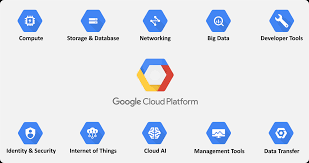
Google Cloud Platform (GCP) is a powerhouse of innovation. It is the platform that birthed Kubernetes, democratized global-scale data analytics with BigQuery, and leads the world in AI and machine learning. For modern businesses, GCP represents a clear path to building faster, smarter, and more scalable applications. But this power comes with a trade-off: immense operational complexity. For most internal IT teams, the “do-it-yourself” (DIY) approach to managing GCP is not just inefficient; it’s a direct barrier to unlocking that innovation. This is where GCP Managed Services move from a simple IT delegation to a core business strategy.
The reality of a self-managed cloud is a daily struggle. Teams are drowned in a sea of alerts from the Google Cloud Operations Suite (formerly Stackdriver), they are haunted by the “bill shock” of a complex, variable bill, and they are kept awake at night by the fear of a single security misconfiguration in a complex IAM policy. A partnership for Managed GCP services is the definitive solution to this chaos. It’s a strategic move to offload the complex, 24/7/365 “plumbing” of the cloud to a team of elite, certified specialists.
This partnership is about fundamentally reframing your IT team’s purpose. Instead of being reactive “firefighters” who spend 80% of their time “keeping the lights on,” they are liberated to become proactive “innovators” who focus on building your next great product. A dedicated partner like Opsio Cloud doesn’t just manage your environment; they create a high-performance platform for your business, built on pillars of financial, operational, and security efficiency. This guide will explore how a managed services model is the key to unlocking this true, holistic efficiency.
What Are GCP Managed Services? Defining the Model
At its core, a “GCP Managed Service” is a continuous, proactive partnership where a third-party provider takes on the full responsibility for the 24/7/365 management, optimization, and security of your Google Cloud environment.
This is not a reactive “helpdesk.” A true managed service provider (MSP) is a proactive extension of your team, responsible for:
- 24/7/365 Proactive Monitoring (NOC): A Network Operations Center that monitors your infrastructure, applications, and network 24/7, using AIOps to predict and resolve issues before they cause downtime.
- 24/7/365 Security (SOC): A Security Operations Center that provides real-time threat detection, incident response, and vulnerability management.
- Cost Management & FinOps: A continuous discipline of optimizing your cloud spend, eliminating waste, and maximizing discounts.
- Backup, Disaster Recovery & Resilience: Designing, managing, and testing robust backup and DR plans to ensure business continuity.
- Automated Patching & Maintenance: Handling the essential (but time-consuming) work of patching operating systems and infrastructure to maintain security and stability.
- Expert Architectural Guidance: Providing on-demand access to certified Google Cloud architects who help you design, build, and refactor applications correctly.
The efficiency of this model comes from leveraging specialization, automation, and economy of scale—three things an internal team can rarely achieve on its own.
Unlocking Financial Efficiency: From Bill Shock to FinOps
The first and most immediate form of efficiency an MSP delivers is financial. “Cloud waste” is a silent killer of IT budgets, with industry analysts estimating that 30-35% of all cloud spend is wasted.
A GCP Managed Services provider implements a continuous FinOps (Cloud Financial Operations) discipline to combat this.
- Proactive Right-Sizing: An MSP doesn’t wait for the end-of-month bill. They use monitoring tools to continuously analyze the utilization of your resources, like Google Compute Engine (GCE) instances. They will identify a “n1-standard-16” VM that is only using 10% of its CPU and proactively “right-size” it to a smaller, cheaper instance, instantly saving you money.
- Waste Elimination: They are “zombie asset” hunters. Their automated scripts scan for orphaned resources that you are still paying for, such as unattached Persistent Disks, unused static IP addresses, or idle Load Balancers.
- Mastery of Discounting: Google’s discount model, particularly Committed Use Discounts (CUDs) and the newer flexible CUDs, is powerful but complex. An MSP has the expertise and tooling to analyze your usage patterns and apply the optimal “portfolio” of CUDs, locking in discounts of 50-70% on your predictable workloads—a task that is a full-time job in itself.
- Governance & Showback: They use Google’s built-in governance tools (like labels, quotas, and budgets) to enforce financial rules and provide clear “showback” reports, so you can see exactly which department or project is driving costs.
Unlocking Operational Efficiency: The Proactive, Automated NOC
The biggest drain on an internal team’s efficiency is “reactive firefighting.” An endless stream of low-priority alerts, manual patching, and troubleshooting mysterious performance issues burns out your best people.
A managed service provider’s 24/7 NOC replaces this chaos with calm, proactive stability.
- AIOps-Driven Monitoring: A modern MSP doesn’t just wait for an alert that says “server down.” They use AIOps platforms that analyze trends to predict failures before they happen. You get a notification that says, “We detected a memory leak on this server and remediated it during your maintenance window. No downtime occurred.”
- Automation-First Remediation: The MSP’s engineers are not manually restarting services. They build a library of automated “runbooks.” When a common, low-risk issue occurs (like a full disk), an automated workflow is triggered to resolve it in seconds. This is the very definition of operational efficiency.
- SLA-Backed Reliability: A managed service is not a “best effort” promise. It’s a contractual Service Level Agreement (SLA) that guarantees uptime and response times. The provider is financially incentivized to maintain your stability, aligning their goals directly with yours.
Unlocking Security Efficiency: A 24/7 SOC for Your Side of the Model
The Google Cloud “Shared Responsibility Model” is a common source of confusion. Google secures the cloud, but you are 100% responsible for securing in the cloud. This includes your data, your applications, your network configurations, and your IAM policies. A single misconfigured Cloud Storage bucket or an overly-permissive IAM role can be catastrophic.
A Managed GCP solution provides a 24/7/365 Security Operations Center (SOC) to manage your side of the model.
- 24/7 Threat Hunting: The SOC team ingests logs from your entire environment into a central SIEM (like Google Cloud Security Command Center Premium or a third-party tool). They actively hunt for indicators of compromise, investigate anomalies, and respond to threats in real-time.
- IAM & Governance Mastery: An MSP enforces the “principle of least privilege.” They audit and manage your complex IAM policies, use Google Cloud’s Organization Policy Service to enforce security rules (e.g., “no public IPs on GCE instances”), and create a secure, governed environment.
- Vulnerability & Compliance Management: The MSP implements automated vulnerability scanning and manages the remediation of discovered issues. For businesses with compliance needs (HIPAA, PCI, GDPR), they build and maintain the technical controls and provide the auditable reports needed to pass your audits.
Unlocking Innovation Efficiency: Access to Elite, On-Demand Talent
This is the ultimate, and most valuable, form of efficiency. The “skills gap” is the biggest barrier to innovation. You can’t leverage the power of BigQuery or GKE (Google Kubernetes Engine) if you can’t hire an expert.
A partnership with Opsio Cloud democratizes this elite talent.
- On-Demand Expertise: You gain access to an entire team of certified architects, data engineers, and Kubernetes specialists for a fraction of the cost of hiring a single one.
- Architectural Best Practices: When your team has a new idea, they don’t have to spend three months on a “learning curve.” They can bring it to the MSP’s architects, who have built a similar solution ten times before. They get the right architecture, built securely and cost-effectively, the first time.
- DevOps Acceleration: An MSP can help you build and manage a secure CI/CD pipeline, streamlining your “code-to-cloud” process and allowing your developers to ship features faster and more safely.
Conclusion: Stop Managing, Start Innovating
The “efficiency” unlocked by GCP Managed Services is not just about saving a few dollars or patching servers. It’s a holistic transformation. It is the financial efficiency of a predictable, optimized budget. It is the operational efficiency of a silent, automated, and resilient infrastructure. It is the security efficiency of a 24/7/365 expert defense.
Most importantly, it is the human efficiency of liberating your most valuable, creative, and expensive employees from the low-value toil of infrastructure management. In the modern economy, you cannot afford to have your innovators acting as janitors.
To truly unlock the promise of Google Cloud, you must stop managing its complexity and start leveraging its power. A managed services partnership with an expert like opsiocloud is the key to making that strategic shift