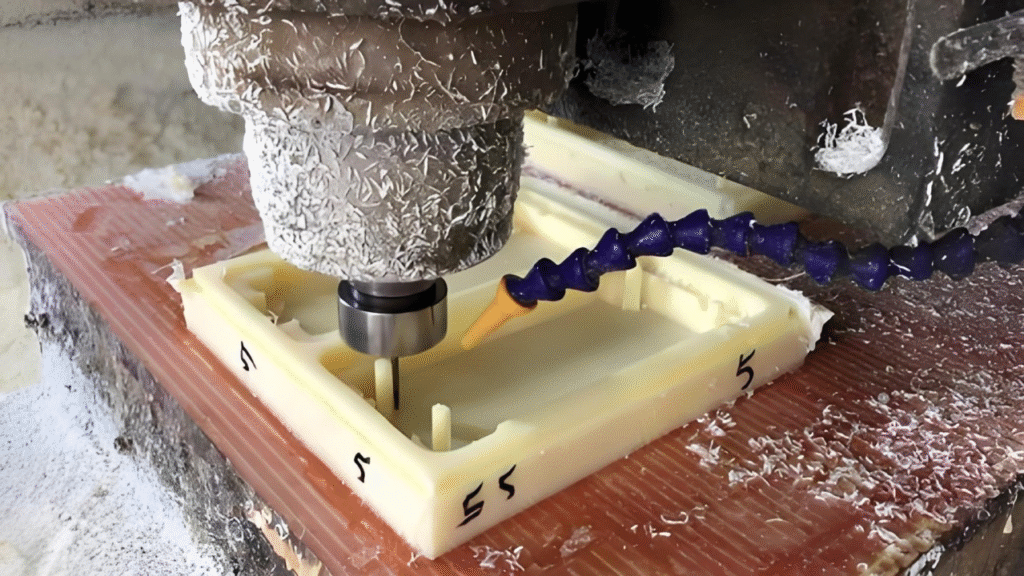
In today’s fast-paced manufacturing environment, innovation is critical. As industries increasingly shift toward using high-performance polymers in place of metals, cnc plastic machining has emerged as a key technology. It offers unmatched precision, fast production speeds, and the flexibility to work with a wide variety of plastics—all essential for companies aiming to stay competitive.
This article explores the core aspects of cnc plastic machining, including its benefits, commonly used materials, applications, challenges, and how it’s transforming modern manufacturing.
What Is CNC plastic machining?
CNC plastic machining is a subtractive manufacturing process that uses computer-controlled machinery to cut, drill, mill, and shape plastic workpieces into final components. The term “CNC” stands for Computer Numerical Control, where automated instructions direct the machine’s movements to follow the specifications of a 3D model created in CAD software.
Unlike molding or casting, this method involves carving parts out of solid plastic blocks, allowing for exceptional detail, tight tolerances, and consistency—even for complex geometries.
Why CNC plastic machining Matters
As industries demand lighter, more durable, and cost-effective components, plastics offer an appealing solution. However, producing high-quality plastic parts requires a precise approach, and that’s where cnc plastic machining shines.
Key Benefits:
- No Mold Dependency: Unlike injection molding, cnc plastic machining doesn’t require expensive molds, making it ideal for small-batch production or prototyping.
- Unmatched Accuracy: This process delivers tight tolerances—often within ±0.001 inch—ensuring parts meet exact design specifications.
- Reduced Lead Time: Machining plastic components can be significantly faster than waiting for tooling or molds to be fabricated.
- Material Versatility: It supports a broad range of thermoplastics and thermosets, giving engineers design freedom for various applications.
Most Used Plastics in CNC Machining
Choosing the right material is essential for functional and cost-effective components. Here are the most commonly used plastics in cnc plastic machining:
- Delrin (Acetal) – Excellent strength, stiffness, and dimensional stability. Ideal for mechanical parts and bushings.
- Nylon – Lightweight and abrasion-resistant. Used in gears, sliders, and industrial parts.
- PEEK – High-performance plastic for medical, aerospace, and automotive applications.
- Polycarbonate – Tough, transparent, and impact-resistant. Great for covers, guards, and lenses.
- PTFE (Teflon) – Chemical-resistant and low friction. Ideal for seals and gaskets.
- ABS – Easy to machine and cost-effective. Used in consumer products and housings.
- UHMW – Ultra-high molecular weight polyethylene is abrasion-resistant and ideal for wear strips and conveyor components.
Each material behaves differently under cutting forces, requiring customized speeds, feeds, and tooling for optimal results.
Common Machining Processes for Plastics
Just like with metals, several types of CNC operations are used when machining plastic:
• CNC Milling
Removes material with rotating cutters across multiple axes. Suitable for flat surfaces, pockets, grooves, and intricate shapes.
• CNC Turning
Ideal for cylindrical parts like bushings or spacers. The plastic rotates while a stationary tool removes material.
• Drilling and Tapping
Used to create precision holes and threads. Special attention is needed to avoid cracks or melting in softer plastics.
• Routing and Engraving
Used in signage and display applications, these techniques allow shallow, decorative, or branding features on sheet plastics.
Each of these processes in cnc plastic machining is enhanced by careful programming, proper fixturing, and experienced handling.
Applications of CNC plastic machining in Modern Industries
Because of its precision, flexibility, and compatibility with a wide variety of materials, CNC plastic machining is used across a diverse range of sectors:
• Medical Devices
Surgical guides, instrument handles, diagnostic equipment, and prosthetic components benefit from biocompatible, sterilizable plastic parts.
• Aerospace and Defense
Aircraft interiors, cockpit instrument panels, brackets, and housings are machined from lightweight plastic to reduce fuel costs while meeting FAA standards.
• Automotive Engineering
Used for prototypes, dashboards, fluid connectors, and electrical components, cnc plastic machining supports faster product development and testing.
• Electronics and Telecommunications
Precision-machined plastic parts like enclosures, spacers, insulators, and circuit board components improve performance and safety in electronic devices.
• Food Processing and Packaging
Plastic components made with FDA-approved materials ensure hygiene, corrosion resistance, and long operational life in food machinery.
Design Tips for CNC plastic machining
To ensure optimal results, engineers and designers should follow these best practices:
- Avoid Sharp Internal Corners: Use fillets to reduce stress concentrations and tool wear.
- Watch for Thin Walls: Too-thin walls may warp or crack during machining.
- Account for Thermal Expansion: Plastics expand more than metals; design tolerances accordingly.
- Select Appropriate Surface Finishes: Some plastics scratch easily and may require polishing.
- Allow for Tool Clearance: Especially important for deep pockets or undercuts.
When designing for cnc plastic machining, simplicity and manufacturability go hand in hand with precision and performance.
Challenges and Solutions in Plastic Machining
While plastic machining offers many advantages, it also presents unique hurdles:
1. Heat Sensitivity
Plastics can melt or deform with excessive heat. This is mitigated by using sharp tools, lower speeds, and air or mist cooling instead of flood coolant.
2. Burr Formation
Some plastics are prone to burring. Using high-quality end mills and finishing passes can minimize burrs and reduce post-processing time.
3. Static Build-Up
Machining plastics often generates static, attracting dust and chips. Anti-static treatments or ionizers help reduce this.
4. Tool Wear
Fiberglass-filled plastics are abrasive and cause tool wear. Diamond-coated or carbide tools can extend tool life.
Overcoming these challenges ensures smoother workflows and high-quality outcomes in cnc plastic machining projects.
The Future of CNC plastic machining
As industries push the limits of innovation, cnc plastic machining is evolving alongside them. The rise of high-performance polymers, eco-friendly materials, and smart manufacturing techniques means the demand for precision-machined plastic parts is only going to grow.
Advancements in 5-axis machining, digital twin simulations, and automated tool path generation are making the process faster, smarter, and more accessible—even for complex geometries and medical-grade parts.
Final Thoughts
CNC plastic machining is a versatile, reliable, and efficient method for producing precision plastic components across nearly every industry. From medical tools to aerospace parts, the process offers designers the freedom to innovate without being restricted by tooling costs or material limitations.
With continuous improvements in machinery, software, and materials, cnc plastic machining stands as a pillar of modern manufacturing—capable of meeting the most demanding standards while reducing lead time and production waste.
Whether you’re creating a single prototype or planning a short production run, this technology ensures your plastic components are crafted to perfection.