
Stock photography fuels websites, social media, advertising, editorial content, and design projects. But using stock images effectively requires understanding how they’re licensed. Licensing determines what you can do with an image, how it can be used, and what legal protections are involved, for buyers and creators alike.
This guide unpacks stock photography licensing options, exploring real-world applications, legal frameworks, pricing, and best practices to help businesses and creatives make informed choices.
1. What Is Stock Photography Licensing?
Stock photography licensing is a legal agreement that grants a user permission to use a copyrighted image under defined conditions without transferring ownership. Unlike buying a product, you don’t own the image, you own a set of usage rights.
Without a valid license, using a stock photo can expose you to copyright infringement claims, legal penalties, or costly settlements.
Licenses answer questions such as:
- Where can the image be used? (e.g., web, print, TV)
- For how long? (e.g., perpetual vs. time-limited)
- How many times? (single use or multiple)
- In what context? (commercial, editorial, restricted uses)
2. Major Stock Licensing Models Explained
At a high level, stock photography licenses fall into two broad categories:
a) Royalty-Free (RF)
Royalty-Free doesn’t mean free of cost — it means you pay once and use the image multiple times within the license terms without paying additional royalties.
Key Features:
- Pay once: One-time fee per image or via subscription
- Multiple uses: Same image can be used repeatedly
- Non-exclusive: Other buyers can use the same image
- Flexible: Often allows most commercial and editorial uses
Example Uses:
- Website graphics
- Blog headlines
- Social posts
- Business presentations
Pros:
Cost-effective for frequent use
Simple license terms
Broad usage flexibility
Cons:
Non-exclusive — competitors may use same asset
Some restrictions still apply (see section on limitations)
b) Rights-Managed (RM)
Rights-Managed licensing is a custom agreement tied to specific use cases such as:
- Duration
- Geographic territory
- Media type (online, print, broadcast)
Key Features:
- Price varies based on intended usage
- Can be exclusive or non-exclusive
- Strictly defined terms
Example:
Licensing a photo for 6 months, for U.S. digital ads only, with exclusive use in your industry.
Pros:
Custom control over usage
Potential exclusivity
Cons:
More expensive
Complex license negotiations
c) Extended Licenses
Most royalty-free libraries offer extended licenses for broader rights beyond the standard RF terms, such as:
- Unlimited print runs
- Merchandise (t-shirts, mugs)
- Redistribution
- Templates with embedded imagery
Example Uses:
- Product packaging
- Posters or banners
- Physical merchandise
Note: Extended licenses cost more but prevent legal issues from misuse.
3. Editorial vs. Commercial Use
Stock images are generally classified for either:
Editorial Use Only
Used in news, commentary, blogs, or PR where the image illustrates a topic without commercial endorsement.
Examples:
- News articles
- Blog posts about an event
- Commentary on public figures
Restrictions:
- “Editorial use only” assets cannot be used in advertisements or for commercial promotion.
Editorial images are usually more expensive and more difficult to source. Using reputable platforms like Vecteezy for sports or Reuters for editorial news images is typically the best approach for blog content.
Commercial Use
Allows use in marketing, advertising, branding, and promotional materials — but often requires model and property releases.
Difference in Practice:
- A photo of a landmark or person may be allowed for editorial storytelling, but not for promoting a product unless releases are obtained.
4. Who Needs Which License? Buyer Scenarios
Different users have different licensing needs:
Small Business Websites
- Often fine with royalty-free images
- Choose RF subscriptions for regular content
Large Brands & Campaigns
- May prefer rights-managed licensing for exclusivity
- Use extended licenses for broad promotional reach
Design Agencies
- Commonly use mixes: RF for backgrounds & RM for major campaign hero shots
Publishers & Media Outlets
- Rely on editorial licensed stock for news content
Print Merchandise Sellers
- Require extended commercial licenses with merchandise rights
5. Legal Considerations and Risks
a) Copyright Basics
Photos are automatically copyrighted when taken, even if unregistered. Using them without permission is illegal.
b) Model and Property Releases
An image may still be copyrighted even if it shows individuals or private property. If:
- People are recognizable → Model release required
- Private property appears → Property release may be required
Without releases, use is often limited to editorial purposes.
6. Pricing Structures in Stock Licensing
Stock libraries typically sell images through:
1. Subscription Plans
- Monthly/annual access to a set number of downloads
- Cost-effective for frequent users
2. Image Credits
- Buy credits and redeem for images
- Often used when use is sporadic or selective
3. À La Carte
- Pay per image at fixed prices
- Ideal for one-off purchases
4. Rights-Managed Negotiated Pricing
- Custom quote based on usage parameters
Prices vary widely based on:
- Image quality
- Resolution
- Intended use
- Duration
- Exclusivity
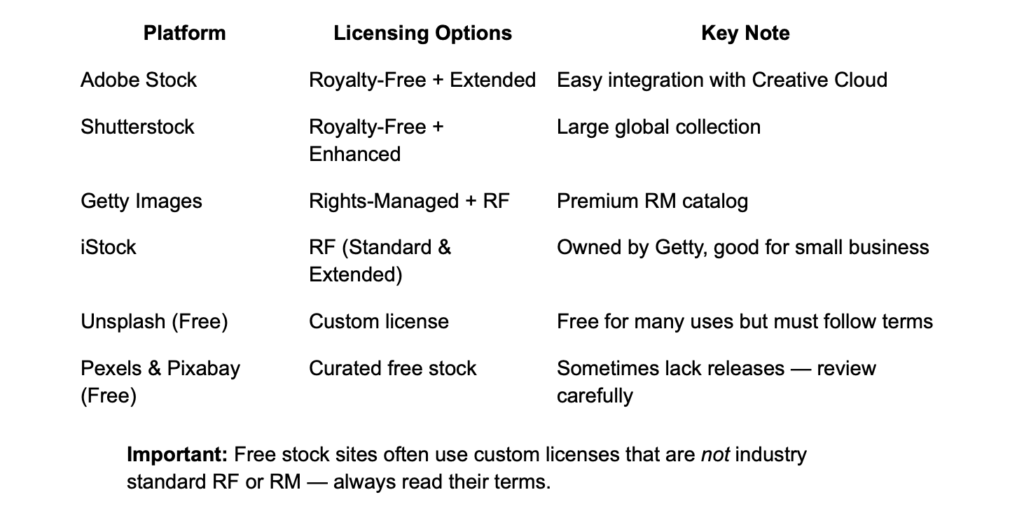
7. Popular Stock Photography Platforms and Their Licensing
Here are some common providers and the models they use:
8. Tips for Choosing the Right License
Ask These 5 Questions:
- What am I using the image for?
- Website? Print? Ad? Merchandise?
- Where will it appear?
- Local? Nationwide? Global?
- How long will I need it?
- One campaign? Perpetual use?
- Do I need exclusivity?
- Will competitors using the same image matter?
- Are there identifiable people or logos?
- Ensure model/property releases are included.
9. Avoiding Common Mistakes
Mistake #1 — Using Editorial Rights for Ads
Just because you bought an image doesn’t mean it can be used commercially.
Mistake #2 — Ignoring Extended License Requirements
Selling T-shirts with a standard RF license can infringe rights.
Mistake #3 — Misinterpreting “Royalty-Free”
RF doesn’t mean image is free of charge or free of restrictions.
Mistake #4 — Failing to Keep Records
Always save license agreements for future reference.
10. Licensing for Creators: How to Protect Your Work
Photographers and designers also need to know how licensing affects revenue and protection.
Best Practices for Creators
- Choose the right marketplace: High-quality libraries pay better royalties.
- Understand license tiers: RF, RM, and extended each offer different earnings.
- Use clear metadata: Titles, tags, keywords help buyers find your work.
- Offer exclusivity selectively: Exclusivity can earn higher fees but limits future sales.
- Register copyrights when possible: Registration strengthens legal position.
Creators typically earn:
- A percentage of the sale price from each license
- Higher rates for exclusive content
11. Emerging Trends in Stock Licensing
AI-Generated Content
Some platforms now offer or regulate AI-generated imagery. Pay attention to:
- Ownership rights
- Ethical concerns
- Attribution requirements
Subscription Bundles
Unlimited licenses and enterprise plans are growing in popularity for agency and corporate use.
Blockchain & Smart Contracts
Newer licensing models automate rights and usage tracking via blockchain, though adoption is early.
12. Real-World Examples of Licensing Use Cases
Case: A Startup Website
A new SaaS company uses royalty-free images from a subscription plan for blogs and landing pages. They avoid extended licenses to keep costs low.
Case: A National Ad Campaign
A retail brand negotiates rights-managed licensing for a large hero image to ensure no competitor uses the same image during the campaign.
Case: E-Commerce Store
A print-on-demand store purchases extended licenses for images they will put on apparel and posters, required for merchandising.
13. How to Keep Licensing Records
Every license you buy should be stored and documented:
✔ Save receipts
✔ Archive the license agreement
✔ Record how and where the image is used
✔ Note expiration dates for time-limited rights
These records protect you from future legal disputes or audits.
14. Conclusion: Choose Licensing that Matches Your Goals
Stock photography licensing isn’t one-size-fits-all. Whether you’re a small business, agency, or photographer selling your work, understanding licensing options helps you:
- Stay legally compliant
- Control usage scope
- Optimize costs
- Protect your brand and assets
Start by auditing your current image use, identify what licenses you have versus what you need, and always read terms before downloading. With clear knowledge and careful practices, stock imagery can be a powerful and risk-free asset in your visual toolkit.