In modern scientific research, precision isn’t optional — it’s fundamental. Every variable, from compound structure to purity levels, can alter experimental outcomes. That’s why lab purity standards, particularly 99%+ purity, are considered the gold benchmark in professional research environments.
This threshold isn’t arbitrary. It’s the difference between reliable, reproducible data and inconclusive or misleading results. As laboratory science advances, maintaining uncompromised material purity has become a cornerstone of credible research.
1. What Are Lab Purity Standards?
Lab purity standards refer to the verified chemical integrity of substances used in experiments. These standards define the percentage of the intended compound present, minimizing impurities that can distort results or trigger unwanted reactions.
Key purity classifications include:
- Analytical Grade: Suitable for general laboratory analysis (95–98% pure).
- Reagent Grade: Used in most research applications (98–99% pure).
- High Purity/Ultra-Pure Grade: Ideal for advanced testing and biological research (≥99% pure).
Even trace contaminants can influence reaction rates, molecular stability, or cell behavior — making ultra-pure substances vital for precise experimentation.
2. Why 99%+ Purity Is the Gold Standard
The 99%+ threshold ensures that experimental variables remain consistent, allowing scientists to isolate true cause-and-effect relationships.
Here’s why it matters:
- Improved Reproducibility: Results are consistent across different labs and conditions.
- Enhanced Accuracy: Eliminates interference from impurities during molecular reactions.
- Safety and Compliance: Meets stringent regulatory and ethical research standards.
This is especially critical in biochemical and peptide-based research, where impurities as low as 0.1% can affect molecular folding or biological response. Many leading research institutions now exclusively rely on lab-test Research Peptides — formulations rigorously verified for purity, potency, and reproducibility. These products ensure that experimental results are not just significant but scientifically valid.
3. The Science Behind Testing for Purity
Purity validation is a sophisticated process involving multiple analytical methods to confirm both qualitative and quantitative composition.
Common techniques include:
- High-Performance Liquid Chromatography (HPLC): Separates compounds to quantify impurities.
- Mass Spectrometry (MS): Identifies molecular structure and verifies compound identity.
- Infrared Spectroscopy (IR): Detects functional group integrity and structural consistency.
Together, these methods ensure that every compound meets its declared purity specification — the foundation of credible laboratory work.
4. Purity and Biological Consistency: Why It’s Non-Negotiable
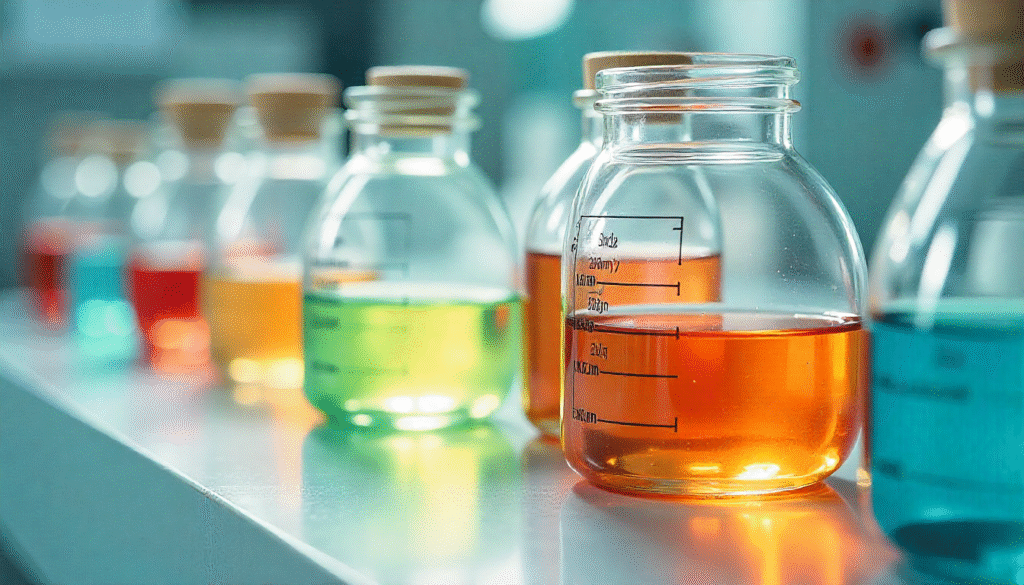
When working with live cells, enzymes, or peptides, even minimal contamination can skew biological response. Ultra-pure compounds help researchers observe authentic interactions without interference.
For instance, peptide purity directly impacts cell signaling studies, protein folding experiments, and metabolic assays. Researchers using high-purity biomaterials ensure that results represent biological truth, not chemical distortion.
In dermatological and biochemical testing, such precision also aids in understanding sensitive physiological responses — including those observed in studies about causes and symptoms of miliaria crystallina, a skin condition triggered by heat and sweat gland blockage. Accurate purity ensures that observed reactions reflect genuine biological mechanisms rather than experimental noise.
5. How Labs Maintain Purity and Integrity
Maintaining purity isn’t a one-time process — it’s a continuous discipline involving quality assurance and environmental control.
Leading labs enforce strict measures:
- Controlled Storage Conditions: Stable temperature and humidity to prevent degradation.
- Batch Testing: Every production lot undergoes purity verification before use.
- Contamination Prevention Protocols: Use of sterile equipment and clean-room standards.
- Documentation and Traceability: Ensures full transparency from synthesis to testing.
By adhering to these practices, labs safeguard not just purity but the credibility of their scientific contributions.
6. The Future of Purity Standards: AI and Automation
Artificial intelligence and machine learning are transforming how labs detect and maintain purity. Automated chromatographic systems, predictive modeling, and AI-assisted spectral analysis now enable:
- Faster detection of micro-impurities.
- Real-time purity monitoring during synthesis.
- Predictive maintenance to prevent contamination risks.
As technology evolves, purity assurance is moving toward full automation — reducing human error and setting new benchmarks in scientific reliability.
Conclusion
In research, the smallest impurity can cause the greatest deviation. The 99%+ purity benchmark isn’t just a statistic; it’s a commitment to integrity, reproducibility, and scientific truth. Whether in pharmaceuticals, biochemistry, or materials science, purity is the invisible foundation that upholds every discovery.
By prioritizing uncompromised purity, today’s researchers are not just conducting experiments — they’re building the future of evidence-based innovation.