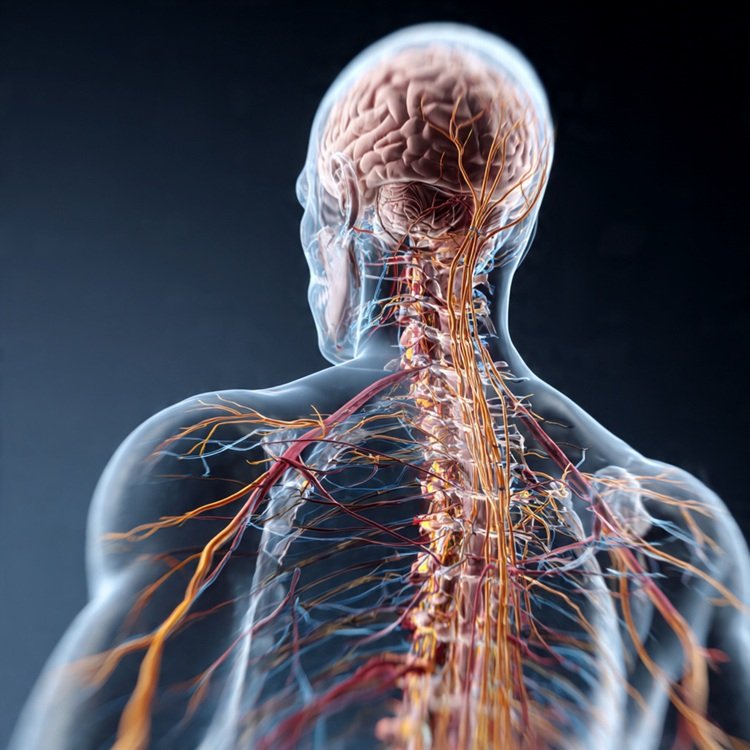
Human body is a very complex biological system that has ever existed and the nervous system is at the center of its functionality. All thoughts, feelings and movements are energized by this huge system of nerves and specialized cells which transmit the messages to the body. Nervous system controls and coordinates all the breathing, heartbeat, memory and sensation and forms the center of communication and control.
It is vital to understand the ways the nervous system regulates the functioning of each body part, not only to physiologists and neuroscientists but also to those who just want to know how wonderful human life is. It helps us to see the fine tuning of the alignment between the brain, spiral cord and the peripheral nerves of the body- and how accurately they are all synchronized to keep life going.
This article will discuss the structure and function of the nervous system, its various sections, the transmission of nerve impulses as well as the interaction of this system with other systems to ensure that there is balance in the body. We will also examine such disorders that may interfere with such processes and hence why the health of the nervous system is important in human survival.
The Structure and Function of the Nervous System
Nervous system is a complicated network that helps in the communication between other parts of the body and the brain. It consists of billions of specialized cells known as neurons which are designed to pass information fast and effectively. The nervous system may be subdivided into 2 major sections:
- Central Nervous System (CNS) : this is the command center which takes incoming information and gives out the commands; it is made of the brain and the spinal cord.
- The Peripheral Nervous System (PNS): the system that encompasses all the nerves that extend to the rest of the body off the CNS.
All the sections are critical. Sensory input is interpreted by the CNS and responses are developed and signals pass to and from the CNS by the PNS, which guarantees the body responds correctly to the internal and external stimuli.
To gain deeper knowledge about the necessity of such a topic, you may also study more about the structure and the functions of the nervous system provided in the extensive overview of Cleveland Clinic.
The Central Nervous System: The Body’s Command Center
The most significant organ in the CNS is the brain which processes and interprets information. It consists of a number of major sections:
- Cerebrum – regulates logic, memory and feelings as well as voluntary actions.
- Cerebellum – controls the balance, posture and coordination.
- Brainstem – is in charge of the simple functions of life like breathing, heart rate and blood pressure.
The spinal cord, however, plays a role of connecting the brain and the rest of the body via the conduct of the current messages. It is also involved in the control of reflexes which are automatic responses to specific stimuli so that the body may respond swiftly to danger without consideration.
The brain along with the spinal cord makes an information highway that ensures that the body operates well all the time throughout the day.
The Peripheral Nervous System: The Body’s Communication Network
The PNS relates the CNS with limbs and organs. It is broken down into two major parts:
- Somatic Nervous System (SNS): is in charge of willed movements, including movement of the muscles.
- Autonomic Nervous System (ANS): is a system that controls involuntary processes such as heartbeat, digestion and respiration.
ANS is further subdivided into:
- Sympathetic Division: runs the body for action (“flight or flight”).
- Parasympathetic Division: restores the body after it has been stressed (rest and digest).
This system ensures that all the organs receive the appropriate signal at the appropriate time; either whether to continue with the increased heart rate during physical activity or to reduce it during relaxation.
How Neurons Transmit Messages
The fundamental component of the nervous system is the neuron. The neurons have three primary components:
- Cell body (soma): this is where there is found the nucleus and other organelles.
- Dendrites: obtain the message of other neurons.
- Axon: passes the electric impulses off the cell body to other axons or to the muscles.
When a neuron gets a stimulus, it produces an electrical signal referred to as an action potential. This pulse moves to the axon to the synapse which is a small space between neurons. The message is passed on to the next neuron by releasing chemicals at the synapse which are called neurotransmitters.
This is an electrochemical reaction that enables information to move fast throughout the body and therefore reaction to stimuli can be almost instant- pulling out a hand off a hot surface or recalling a memory.
Coordination Between the Nervous System and Other Systems
The nervous system is not an isolated system. It is in a continuous interaction with other body systems in order to achieve homeostasis, or internal balance.
- The nervous system: Which coordinates with endocrine glands to balance hormones with the help of the Endocrine System. As an example, the hypothalamus of the brain regulates the pituitary gland, which affects growth, metabolism and reproduction.
- With the Muscular System: The CNS transmits via motor neurons, in order to contract muscles, which enables movement and control of posture.
- The Digestive System: The autonomic nervous system regulates the digestive system through the control of peristalsis and secretion of enzymes.
- The circulation system: The heart rate and blood pressure are controlled by the brain and there is sufficient blood flow to the organs.
This interrelatedness shows how the nervous system is the master control over the internal environment of the body.
Reflex Actions: The Body’s Instant Response
Reactions to particular stimuli are automatic and instantaneous reactions known as reflexes. They are realized without the direct participation of the brain in case they are fast. In our case, when you handle something hot, the sensory neurons will send a message to the spinal cord and this will instantly tell it to pull off your hand.
Such a shortcut is necessary because it is obligatory to survive and the body gets safeguarded.
The Role of the Brain in Maintaining Body Functions
Specialized roles in the brain are played by the different parts of the brain and these roles ensure the maintenance of life and functioning:
- The hypothalamus controls the temperature, hunger and thirst.
- The medulla oblongata controls the rate of the heart and breathing.
- The frontal lobe is dealing with reasoning, planning and problem solving.
- Auditory processing and memory – the temporal lobe processes.
All these structures act in harmony such that the body is kept in balance and alertness.
The Autonomic Nervous System in Action
The autonomic nervous system (ANS) is automatic, and it regulates processes that one does not need to think about. It is one of the key factors that are essential in creating the balance.
As an example, when a person is stressed the sympathetic nervous system is activated and secretions of adrenaline are released, which elevates the heart rate, respiration and blood sugar levels to get the body ready to act. After the threat is over, these levels are restored to normal by the parasympathetic system.
This repeated activation and relaxation makes the body to be adaptable and stable.
Disorders of the Nervous System
As a complex organ, the nervous system is prone to numerous disorders that may hinder the system of communication between the body and the brain. Common conditions include:
- Parkinson disease: the disease is caused by the loss of the neurons that produce dopamine, which causes tremors and rigidity.
- Alzheimer disease: This is a progressive degenerative disorder that leads to memory impairment and cognitive difficulties.
- Epilepsy: a condition of the brain where impulsive bursts of unusual electrical activity are experienced.
- Multiple sclerosis (MS): this is where the immune system is involved in attacking the myelin sheath, which covers and insulates neurons to interrupt the passage of signals.
- Stroke: this is a condition that is brought about by loss of blood flow to the brain leading to damage of neural tissue.
All these circumstances demonstrate the significance of early diagnosis, lifestyle, and the necessity of further studies in the field of neuroscience.
Maintaining a Healthy Nervous System
In an attempt to treat the nervous system, people should embrace healthy lifestyles that help in nurturing the body and brain:
- Nutrition: Take omega-3 fatty acids, vitamin B 12 and B E, antioxidants which protect nerve cells.
- Workout: Physical activity is also good to exercise and maintain a healthy circulation and release of endorphins, which boosts mood and nerve strength.
- Sleep: Sleep helps to improve memory consolidation and enables the neurons to heal.
- Mental Stimulation: Reading, puzzle-solving, the acquisition of new skills stimulate neural connections.
- Stress Management: Chronic stress is able to impair neurons; it can be reduced with mindfulness and relaxation methods.
Advances in Neuroscience
The neuroscience today still discovers more and more about the functioning of the nervous system. Functional MRI (fMMRI), neuroprosthetics, brain-computer interfaces (BCIs) are bringing new technologies to the treatment and study of neurological diseases.
Studies on neuroplasticity or the brains capacity to rearrange itself have demonstrated that the nervous system is capable of changing and healing following an injury. The finding has provided hope to stroke patients, victims of spinal cord injury, or degenerative disease victims.
The Nervous System and Behavior
The nervous system has a significant impact on behavior, feelings, and decision-making in addition to physical control. The limbic system, containing such structures as amygdala and hippocampus, is important in the process of emotions processing and memory formation.
The mood and motivation are under the control of such chemical messengers as dopamine, serotonin, and norepinephrine. These neurotransmitters are imbalanced in association with mental illnesses like depression and anxiety which shows the close relationship between physiology and psychology.
The Future of Nervous System Research
With the growing progress in technology, the science of the nervous system is in a very thrilling phase. Artificial neural networks that replicate the behavior of the brain are being developed by scientists to enhance AI and robotics. Stem cell therapy and gene editing have potential to restore the damaged neurons and neurodegenerative conditions.
There is no need to stress that learning about how the nervous system regulates the work of the human body is not only a scientific challenge anymore, but also a gateway to better human health, life, and longevity.
Conclusion
The nervous system is the final system of human body communication which coordinates all actions, thoughts and responses. It provides the coordination of all organs in its complex network of neurons and pathways. The nervous system determines all of our aspects, whether voluntary or not, emotional or cognitive.
We can take better care of our mental and physical bodies by valuing its structure and knowing its purpose. Further investigation and learning regarding this essential system do not only enhance science but it also enhances the knowledge we have about life.