The importance of imaging is critical in the way human beings view, interpret and perceive the world. Since it has been used in taking ordinary photographs to detection of life threatening diseases and even checking other parts of the industry, imaging technologies have become fundamental in various industries. Over the years, these technologies have developed into a complex digital, medical and industrial imaging technology, which was not previously complex.
In this article, the authors discuss the key types of imaging technologies with their principles, strengths, and weaknesses. It goes further to show the practical use of each type in real-life scenarios in the area of healthcare diagnosis, quality control in manufacturing, security, and scientific studies. The comparison of these technologies helps a reader to get a better idea as to why certain imaging techniques are selected in certain applications.
Learning Imaging Technologies
Imaging technologies apply to the process and systems that produce images of things, constructions, or processes that cannot be seen by the human eye directly. Representations may be recorded by use of light, sound wave, electromagnetic wave or any other physical signal.
Finally, all imaging systems are based on a workflow:
Energy emission or lighting (light, X-rays, sound waves, etc.)
Essay with the object or subject.
Signal detection
Formation and processing of images.
Nevertheless, the nature of energy consumed and signal processing vary considerably among imaging categories resulting in different strengths, weaknesses and applications.
The reference to authoritative sources on the issue of imaging technologies, especially in the sphere of medical and scientific use when accuracy and reliability are of paramount importance, deserves to be mentioned in the first half of this article.
Optical Imaging Technologies
Fundamentals of Optical Imaging
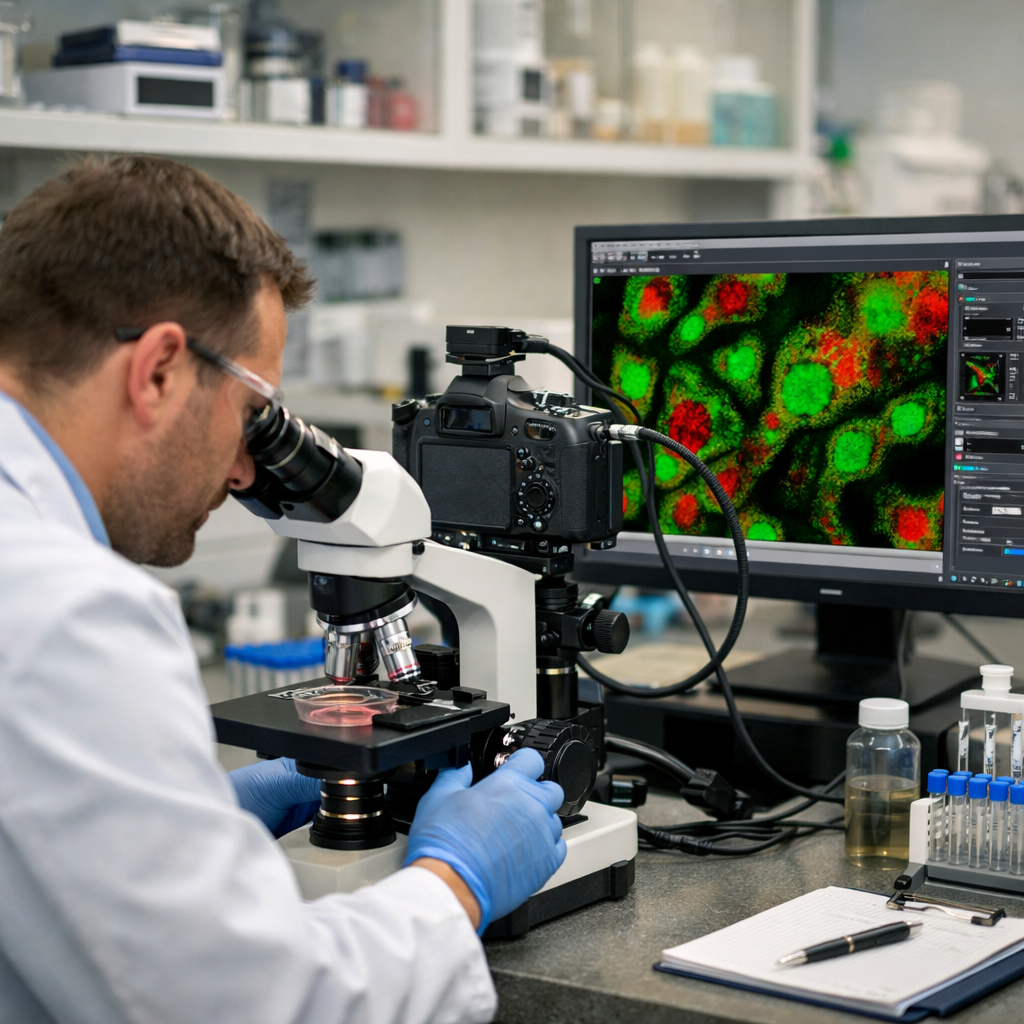
One of the most intuitive and the oldest types of imaging is optical imaging. It is based on visible or near-visible light which interacts with objects and gets imaged by lenses and sensors. Optical imaging systems include traditional cameras, microscopes and telescopes.
The principle is the following:
Light radiating on an object.
The light is reflected, refracted or not.
Lenses used to collect and focus light.
Creation of a picture on a film or sensor.
Optical Imaging Strengths
Optical Imaging has a number of strengths.
Optical imaging has a number of benefits:
Good visual clarity in the right conditions of lighting.
Natural color imaging, and thus, interpretation is instinctive.
Real time imaging, which is applicable in monitoring and observation.
Considerably inexpensive in comparison to high-tech imaging modes.
Due to such advantages, optical imaging is readily available and simple to operate.
Optical Imaging Disadvantages
Optical imaging despite its usefulness has significant limitations:
Reliance on the lighting conditions.
Low imaging capabilities using opaque substances.
Limited penetration in depth.
Proneness to distortion and noises.
These constraints render optical imaging inapplicable to a lot of internal or underground investigations.
Applications of Optical Imaging in Practice
Optical imaging is normally applied in:
Photography and videography.
Biological and material microscopy.
Use of astronomy to view heavenly bodies.
Security Systems and surveillance systems.
Education and literature.
The optical microscopes used in scientific studies allow studying cells, tissues, and microstructures, whereas the optical cameras allow situational awareness in both public and private areas in security.
Digital Imaging Technologies
Concepts of Digital Imaging
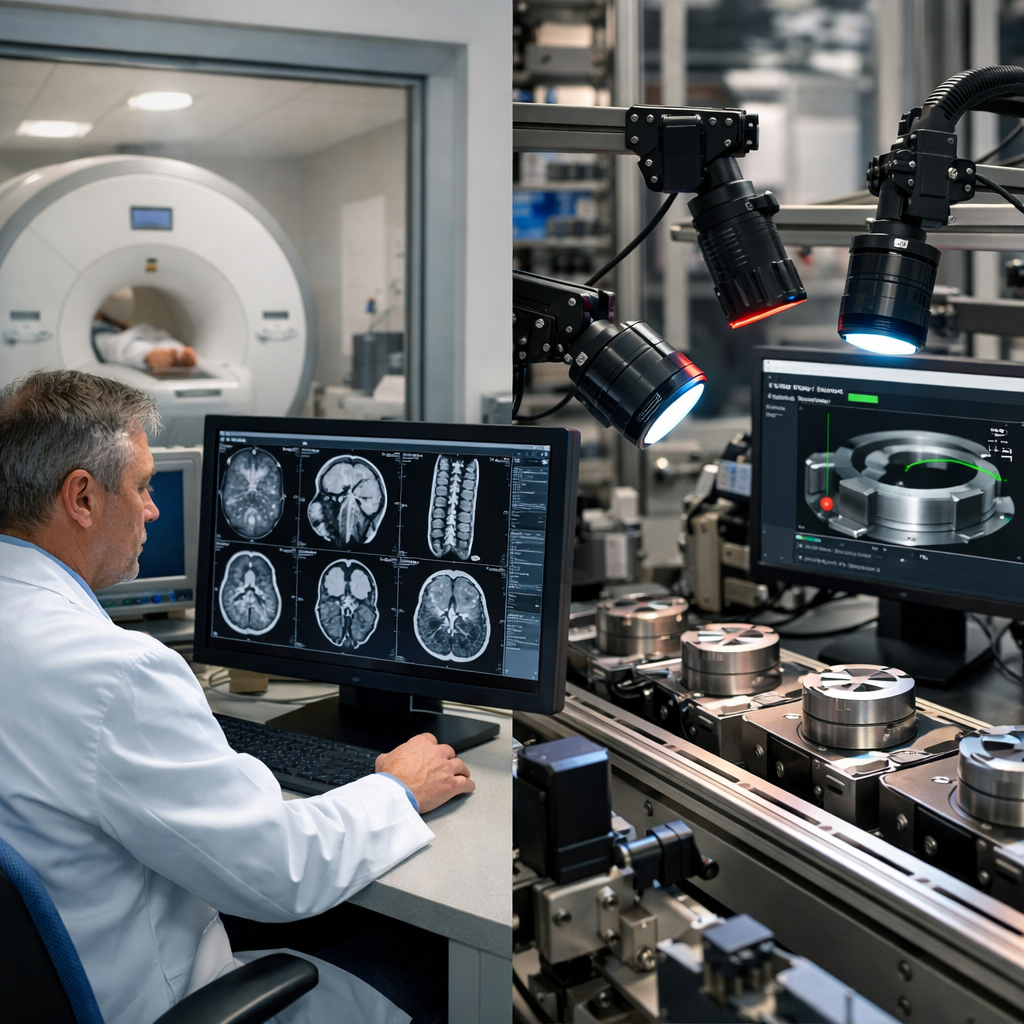
Digital imaging is an extension of optical imaging, in which the film has been substituted with an electronic sensor, CCD (charge-coupled device) or CMOS (complementary metal-oxide semiconductor). The light signals captured are changed to digital data that can be processed, stored and sent electronically.
Digital imaging systems entail:
Light capture by sensors
Transformation of analog signals into digital form.
Software improvement of images.
Archiving and distribution through cyberspace.
Strengths of Digital Imaging
The major advantages of digital imaging are:
Review and acquisition of images instantly.
Simple storage and replication without any loss of quality.
Image processing (advanced image processing, contrast enhancement, noise reduction, etc.).
Computer system and network integration.
These aspects have transformed communication, data analysis and documentation.
Digital Imaging Weaknesses
Digital imaging is not an exception:
Relying on resolution and quality of sensors.
Digital noises and artifacts possibilities.
Data storage and cybersecurity issues.
The short depth of normal 2D images.
Although it is a powerful technology, the digital imaging process tends to need other complementary technologies to perform more complex analysis.
Analytical Applications of Digital Imaging
Digital imaging finds its application in:
Electronics (smartphones, cameras) consumed by the consumer.
Media and entertainment
Remote sensing and satellite imaging.
The visualization of scientific information.
Medical record management
Digital imaging has been used in scientific studies to calculate and analyze huge data sets, whereas digital systems in security have been used to monitor and automatically identify.
Medical Imaging Technologies
Medical Imaging Principles
Medical images deals with the visualization of the inside structures of the human body with a view of diagnosing, treatment planning and research. Medical imaging, unlike optical imaging, may make use of non-visible energy like X-rays, sound waves, or magnetism.
The common medical imaging modalities are:
X-ray imaging
Computed Tomography (CT)
Magnetic Resonance Imaging (MRI)
Ultrasound imaging
Nuclear medicine imaging
Both modalities rest on the varying physical principles and are applicable to particular diagnostic tasks.
Strong Suits of Medical Imaging
Medical imaging has very important benefits:
Non-invasive internal visualization.
High diagnostic accuracy
Early disease detection
Surgical and therapeutic instructions.
All these strengths render medical imaging to be indispensable in the current healthcare settings.
Medical Imaging Limitations
Medical imaging has limitations however:
High equipment and maintenance expenses.
Professional training required.
Possible exposure to ionizing radiation (in certain forms)
Poor access in poor-resource conditions.
The benefits against risks are one of the most important considerations of medical imaging practice.
Applications to Healthcare Diagnostics
Medical imaging is applied in large quantities to:
Identifying fracture, tumor and infections.
Observing the course of the disease.
Directing least invasive surgeries.
Funding medicine and medical training.
Imaging technologies are used in healthcare diagnostics to help achieve better patient outcomes in order to make the right decisions in a timely fashion.
Industrial Imaging Technologies
Theories of Industrial Imaging
Industrial imaging is aimed at inspection, measurement, and monitoring of objects in the manufacturing and industrial applications. Such systems usually employ machine vision, high-speed cameras and specialized sensors in taking detailed pictures under controlled situations.
The industrial imaging systems usually entail:
Controlled illumination
Single-digit sensors or high- speed sensors.
Automated image analysis
Combination with production systems.
Industrial Imaging Strengths
There are some advantages of industrial imaging:
Large accuracy and reliability.
Non-contact inspection
Automation and scalability
Better quality and safety of products.
The modern manufacturing cannot be done without these strengths.
Weaknesses of Industrial Imaging
Limitations include:
High initial setup costs
Environmental sensitivity.
Calibration and maintenance requirements.
Difficulty of system integration.
Although these problems occur, the benefits usually tend to be more in the long-run than the costs.
Applications in Manufacturing Quality Control
Industrial imaging has wide application in:
Flaw inspection and detection.
Dimensional measurement
Label verification and barcode verification.
Guidance in robotics and automation.
Imaging systems are used in the manufacturing quality control to minimize waste, enhance efficiency, and quality conformity.
Surveillance and Security Imaging Technologies
Technology in imaging is very important in security. Monitoring of the public spaces is done through the use of optical and digital imaging systems, and there are advanced ways of imaging like infrared and thermal imaging which identify activity in low-visibility conditions.
Security imaging applications are:
Surveillance cameras
Facial recognition systems
Night-vision imaging
Monitoring of the border and infrastructure.
Imaging is predominantly strong in increasing situational awareness but there are issues of privacy and data security which are also critical constraints.
Imaging Technologies in Scientific Research
Scientific studies are also relying greatly on imaging to view phenomena that cannot be viewed directly. Imaging technologies provide the possibility of the discovery and innovation of both microscopic structures and the distant galaxies.
Scientific research Applications:
Cellular and molecular biological imaging.
Materials science analysis
Environmental monitoring
Space exploration and astronomy.
Its principal benefit lies in the possibility to visualize and measure complicated processes and the weaknesses are usually associated with resolution, cost, and interpretation of the data.
Comparison of Imaging Technology
Principles Comparison
The light used in optical imaging is visible.
Digital imaging is concerned with electronic signal processing.
Medical imaging involves different sources of energy that are used to visualize the inside.
Industrial imaging focuses on automation and accuracy.
Strengths Comparison
Optical imaging is the best when it comes to simplicity and clarity.
The digital imaging is flexible and connected.
Diagnostic depth is given in medical imaging.
Consistency and quality are guaranteed by the industrial imaging.
Limitations Comparison
Optical imaging has difficulties in penetration.
There is reliance of digital imaging on sensor and data quality.
Medical imaging is expensive and complicated.
The imaging in industries demands controlled conditions.
Conclusion
The imaging technologies have changed the way man perceives, interprets and engages with the world. The different types of imaging, namely optical, digital, medical and industrial imaging, can be used in different ways in respect to their principles, strengths and weaknesses.
In imaging, in healthcare diagnostics, imaging facilitates the accurate and non-invasive evaluation of the inner structures. Industrial imaging produces precision and efficiency in quality control in the manufacturing process. Imaging supports consciousness and innovation in the field of security and scientific studies.
This knowledge of the variations and uses of imaging technologies will enable professionals and researchers to make the most suitable choices of the tools. Technology is ever pushing forward and with this, the imaging systems will become further integrated, intelligent and effective in all areas.