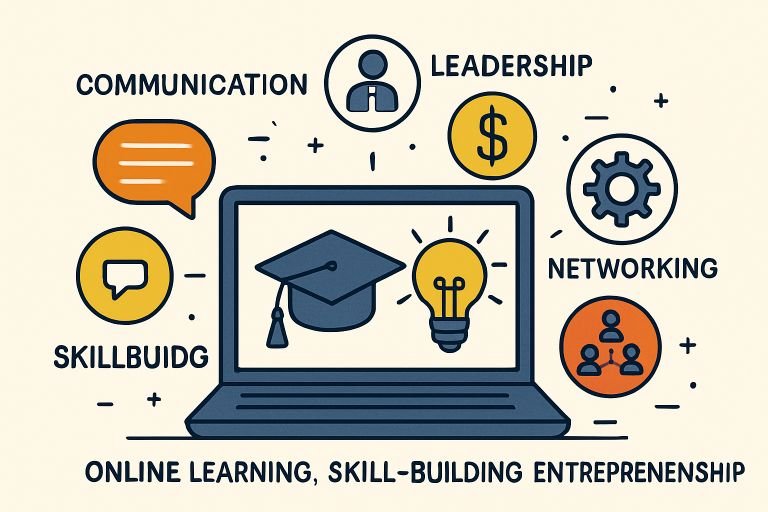
Key Takeaways
- Online entrepreneurship degrees offer flexibility, accommodating various lifestyles and schedules, allowing students to balance their education with other commitments.
- Cost savings and expanded access make these programs an attractive option for ambitious learners, democratizing educational opportunities for aspiring entrepreneurs worldwide.
- Critical business skills, from leadership to digital fluency, are core elements of the online curriculum, preparing graduates for both immediate impact and long-term growth.
- Students benefit from access to funding, mentorship, and high-impact networking opportunities that are rarely available through self-study or traditional paths.
- Innovative technology, such as AI and interactive simulations, elevates the depth and relevance of online business education, preparing students for the realities of the marketplace.
As the business landscape continues to transform at a rapid pace, more future-focused professionals are considering an entrepreneurship degree online to equip themselves with the tools and adaptability needed to thrive. By 2026, advancements in educational technology and a growing emphasis on entrepreneurial skills across industries will make this path even more attractive and relevant. The entrepreneurial journey is no longer reserved for a select few; it has become a compelling path for anyone passionate about shaping the future, whether that involves starting a new venture, joining a fast-growing startup, or leading innovation within established companies. Earning an entrepreneurship degree online opens up new worlds of possibility and opportunity, allowing individuals to take charge of their own destinies in a dynamic, rewarding field.
Online entrepreneurship programs provide a modern approach to learning, breaking down barriers that have traditionally limited access to quality business education. The accessibility of virtual learning enables people from diverse backgrounds, locations, and walks of life to acquire business skills without the traditional obstacles of campus-based programs. This digital approach grants learners the flexibility to study from anywhere, while also providing them with access to top-tier instruction, rich peer networks, and the latest in business technology. The fundamental shift to online learning isn’t just a matter of convenience—it’s a strategic advantage for emerging business leaders who seek to compete in a global market that is increasingly shaped by technology, change, and creative collaboration. For those committed to lifelong learning, the online environment keeps educational opportunities at their fingertips, allowing them to adapt, lead, and succeed in any arena.
Flexibility and Convenience
One of the primary reasons so many aspiring entrepreneurs choose online programs is the immense flexibility they afford. Coursework and lectures are accessible on demand, allowing learners to fit their studies around work schedules, family responsibilities, or even current entrepreneurial ventures—making advanced business education attainable for busy professionals and parents alike. This self-paced structure is ideal for motivated individuals who want to custom-tailor their education to their lifestyle—without sacrificing quality or momentum. Furthermore, this flexibility extends to how students engage with materials, allowing them to choose when and where to participate in live discussions, complete assignments, or take exams. The result is a transformative educational experience that adjusts to your rhythm, not the other way around.
Cost-Effectiveness
For many, the financial implications of earning a degree are a key consideration. Online entrepreneurship programs typically come with lower tuition fees compared to traditional in-person programs, helping students minimize or even avoid student debt. There are additional savings related to commuting, relocating, or paying for campus housing—expenses that can quickly add up in traditional university settings. Digital course materials often replace costly textbooks, further contributing to a reduction in overall expenses. This democratizes access to higher education by removing many of the financial barriers that have historically limited opportunities for those from lower-income backgrounds. By investing wisely in their education, students are better equipped to allocate precious resources toward launching their own ventures or building their personal and professional capacities.
Development of Essential Skills
Today’s business world demands a unique mix of skills. Online entrepreneurship degrees emphasize leadership, clear communication, digital literacy, and problem-solving skills, all of which are critical for navigating the complexities of modern business. Through innovative course structures, including project-based learning and virtual teamwork, students develop both the soft and hard skills they need to lead teams, pitch ideas, manage operations, and drive innovation. Courses are designed to foster creative thinking, adaptability, and ethical decision-making—attributes that employers seek and are invaluable for those entering the business world. These capabilities are not only vital to entrepreneurs but are also increasingly valued by employers across various industries, as highlighted by Forbes reporting. The online setting also enables students to become comfortable with digital collaboration tools, preparing them for the realities of a workforce that is becoming increasingly hybrid and globalized each year.
Access to Diverse Funding Channels
Beyond classroom learning, many online entrepreneurship programs connect students with funding opportunities that are rarely available to independent business owners. These channels can include university-sponsored seed funds, business plan competitions with real financial stakes, and curated introductions to angel investors and venture capitalists from the institution’s extensive alumni and professional networks. Online students may also have access to grants specifically designed for digital entrepreneurship, as well as resources tailored to women, minorities, and other underrepresented groups within the entrepreneurial ecosystem. These resources can be essential for transforming bold ideas into incubated startups and scalable enterprises. Exposure to these funding channels during your academic journey allows students to gain practical pitching experience, receive valuable feedback, and potentially secure early-stage capital for their businesses—opening doors that would otherwise be difficult to access on your own.
Networking Opportunities
Networking is a cornerstone of entrepreneurial success, and far from being isolated, online programs often foster robust, interactive communities. Students collaborate with peers from around the globe, exchanging diverse perspectives and forging bonds that cross industries and continents. They work directly with industry mentors, gaining insights from professionals who have successfully navigated the paths they hope to follow. Additionally, online learners are invited to virtual networking events, career fairs, and webinars featuring leading experts and entrepreneurs. Such professional experiences and connections often prove just as valuable as the content of the coursework itself—and can be pivotal in securing partnership opportunities, sourcing co-founders, or launching one’s venture. Research shared by Forbes underscores the life-changing impact of peer-to-peer learning and networking for entrepreneurs. These dynamic online communities set the stage for lifelong friendships, impactful collaborations, and career-defining opportunities.
Technological Advancements in Education
Modern online entrepreneurship programs are powered by cutting-edge educational technology. Adaptive AI learning platforms can personalize coursework to address students’ strengths and weaknesses in real-time, providing immediate feedback and targeted resources. Sophisticated virtual simulations empower learners to navigate real-world business challenges in a risk-free environment, developing confidence that translates seamlessly into the real world. Emerging tools, such as business analytics dashboards, collaborative project management suites, and integrated financial modeling applications, ensure that graduates are fluent in the technologies that now drive the business world. This technological immersion allows students to experiment and innovate safely, building a toolkit of digital skills that is essential for today’s business builder. Online classrooms foster an environment that mirrors the digital-first, fast-paced realities of the startup ecosystem, making graduates not only knowledgeable but also agile and tech-savvy.
Adaptability and Continuous Learning
Adaptability is perhaps the defining trait of successful entrepreneurs, and online programs facilitate continuous upskilling and agility. Curricula are often updated regularly to reflect the latest trends, regulations, and best practices, ensuring students engage with the realities of today’s economy rather than outdated theories. The culture of online learning emphasizes active participation in forums, group projects, and real-world problem-solving, further reinforcing adaptability. This commitment to hands-on, relevant learning empowers graduates to remain competitive, resilient, and curious as they grow their businesses—or their careers—forward. An entrepreneurial education delivered online can serve as a springboard for lifelong growth, positioning alumni to not only meet challenges but to anticipate and seize new opportunities as they arise.
Conclusion
Pursuing an online entrepreneurship degree in 2026 means more than earning a credential—it’s a strategic step toward mastering modern business, building lasting networks, and acquiring skills and mindsets valued by companies and investors alike. As technology reshapes how we work and connect, this mode of learning acknowledges and leverages those shifts, turning challenges into advantages. The combination of flexibility, accessibility, advanced learning tools, and direct access to mentoring and funding makes now the ideal time to take the next step in your entrepreneurial journey. Begin transforming your business ideas into action and set the foundation for a successful, purpose-driven career in entrepreneurship.