Gastric sleeve surgery is one of the most effective weight loss procedures performed in Australia, providing significant and sustained results for people struggling with obesity. The operation reduces the size of your stomach and affects hunger-regulating hormones, but the surgery is only one part of the journey. Long-term success depends greatly on how well patients follow their recovery guidelines. Even small mistakes during this period can impact staple-line healing, nutrition, digestion, and overall weight-loss results. To achieve the best outcomes, it is essential to follow the recommendations of a trusted bariatric surgeon in Melbourne throughout your recovery journey.
However, achieving those results requires consistent adherence to medical guidelines. Understanding common gastric sleeve post-op mistakes can help patients avoid complications and maintain steady progress in the weeks, months, and years following surgery.
In this blog, we will highlight seven post-op mistakes that can impact your long-term success and what you should do instead.
Common Gastric Sleeve Post-op Mistakes to Avoid
Here are some of the most common gastric sleeve post-op mistakes patients should avoid for a safer recovery and better long-term weight loss results, along with guidance on what not to do after gastric sleeve surgery:
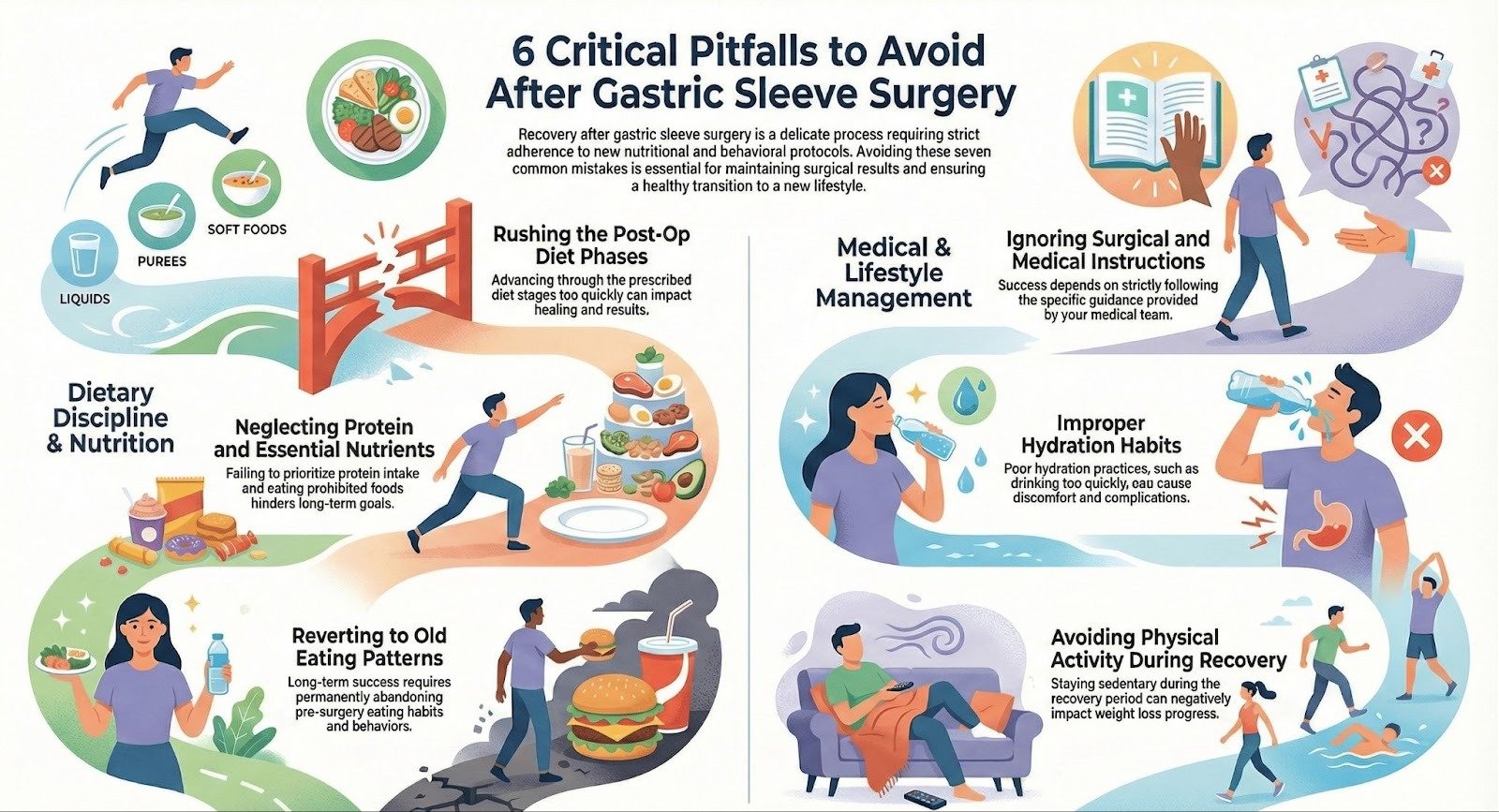
1. Not Following Surgical and Medical Instructions Properly
After gastric sleeve surgery in Melbourne, patients receive structured and detailed instructions from the medical team to support safe healing and long-term weight-loss success. Failing to follow these guidelines is one of the most common factors contributing to complications and suboptimal results.
Surgeons offer detailed guidance on wound care, prescribed medications, hydration goals, diet progression, and the right activity levels for each stage of recovery. When these instructions are ignored or followed inconsistently, the risk of complications increases, including:
- Staple line irritation
- Dehydration
- Nutrient deficiencies
- Slower healing
- Gastrointestinal discomfort
Many patients commonly ask, How long does it take for the staple line to heal after gastric sleeve?
In most cases, the staple line takes several weeks to strengthen fully. During this period, patients must avoid lifting, bending, or advancing to solid food textures until their bariatric surgeon or their treating medical team provides clearance. Stressing the stomach too early can impact proper healing and increase the likelihood of complications.
2. Advancing Through the Post-Op Diet Too Quickly
The post-operative diet plan is essential for protecting the stomach and promoting proper healing. A structured transition from clear liquids to pureed foods, soft foods, and eventually solid meals supports the stomach’s reduced size and promotes safe intake.
Rushing through these stages is one of the most common post-op mistakes with the gastric sleeve. Each stage of post-surgery food progression has a purpose:
- Protecting the staple line
- Minimising nausea and vomiting
- Encouraging adequate hydration
- Preventing obstruction
Patients must adhere to a recommended bariatric weight loss diet plan and avoid advancing food textures without medical approval. Introducing solids too early may cause pain, vomiting, or pressure build-up in the stomach.
Recommended early foods to eat after bariatric surgery include:
- Broths
- Protein shakes
- Pureed lean meats
- Low-fat Greek yogurt
- Smooth pureed vegetables
Following the recommended diet after gastric sleeve surgery is crucial for a smooth recovery. It protects your healing stomach, lowers the chances of complications, and lays the foundation for long-term weight control.
3. Eating Foods That Should Be Avoided After Surgery
Knowing which foods to avoid after surgery is essential because the stomach is extremely sensitive in the early phases of recovery. Some foods can irritate the stomach lining, slow digestion, or trigger reflux.
Foods commonly restricted during early recovery include:
- Tough meats
- Bread and doughy foods
- Fried or high-fat meals
- Sugary foods
- Raw vegetables
- Carbonated beverages
Eating these foods can cause stomach pain, vomiting, or even blockages. They can also lower the nutrition you get, just when your body really needs protein and important nutrients.
4. Poor Hydration Practices, Including Drinking Too Quickly
Staying hydrated is a top priority after gastric sleeve surgery, but drinking the wrong way can lead to discomfort and even complications.Patients are often concerned about hydration volume, leading to the question: Can you drink too much water after a gastric sleeve?
While water is essential, drinking large amounts at once or consuming fluids too quickly can cause nausea, vomiting, and pressure on the stomach. Early after surgery, the stomach can tolerate only small, slow sips.
Hydration guidelines typically include:
- Sipping water throughout the day
- Avoiding the consumption of large volumes at once
- Separating fluid intake from meals to prevent discomfort
Hydration mistakes may also cause dehydration, which is one of the most common reasons for re-admission after bariatric surgery.
5. Failing to Prioritise Protein and Essential Nutrients
Protein is the primary focus during early recovery because it supports healing, maintains muscle mass, and stabilises metabolic function. Inadequate protein intake is a frequent issue among patients who do not follow a structured diet plan.
A medically appropriate bariatric weight loss diet plan emphasises:
- lean meats
- eggs
- low-fat dairy
- protein shakes
- legumes
- soft fish
Prioritising protein reduces the risk of muscle loss, fatigue, and nutritional deficiencies. It also assists long-term weight control by promoting satiety.
Patients must also follow prescribed vitamin and mineral supplementation to avoid deficiencies commonly associated with bariatric surgeries.
6. Returning to Pre-Surgery Eating Patterns
Gastric sleeve surgery alters stomach size but does not change behavioural habits. One of the major gastric sleeve post-op mistakes is returning to high-calorie foods, snacking, grazing, or emotional eating.
Hydration mistakes can also lead to dehydration, which remains one of the most common reasons for hospital readmission after bariatric surgery. Even though the stomach is smaller, consuming calorie-dense liquids, processed foods, or frequent snacks can slow or reverse weight loss.
Understanding which foods are appropriate after surgery and following a structured meal pattern are essential for maintaining steady progress. Monitoring portion sizes, eating slowly, and avoiding distractions during meals are standard bariatric care strategies that help minimise discomfort and reduce the risk of complications.
7. Avoiding Physical Activity During Recovery
Physical activity is gradually reintroduced only after the surgeon’s approval. Some patients avoid exercise entirely, while others resume intense activity too soon; both can impact the recovery process.
Lack of movement slows metabolism, contributes to fatigue, and may reduce expected weight loss outcomes. Conversely, vigorous exercise too early can strain the abdominal area and interfere with staple line healing.
A balanced activity plan typically includes:
- Short, frequent walks in early recovery
- Low-impact aerobic activity once cleared
- Gradual incorporation of strength training
Exercise supports your progress beyond the initial gastric sleeve before-and-after stages and helps sustain long-term weight-loss results.
Take Away
Avoiding these seven common mistakes after gastric sleeve surgery can help you recover safely and get the best long-term results. Stick to your doctor’s instructions, follow the right diet steps, eat the foods recommended for you, drink enough water, focus on getting the nutrients you need, develop healthy eating habits, and start moving slowly. Doing these things can make your recovery smoother and more successful, whether you have gastric sleeve surgery in Melbourne or anywhere else.
If you are preparing for recovery, seeking guidance, or needing structured support, consider exploring medically reviewed resources to help you follow the correct nutrition, behaviour, and lifestyle practices after bariatric surgery.
You can also consult an experienced bariatric surgeon, who can provide guidance on weight loss surgery, post-operative care, and other important considerations.